 Save to Pinterest
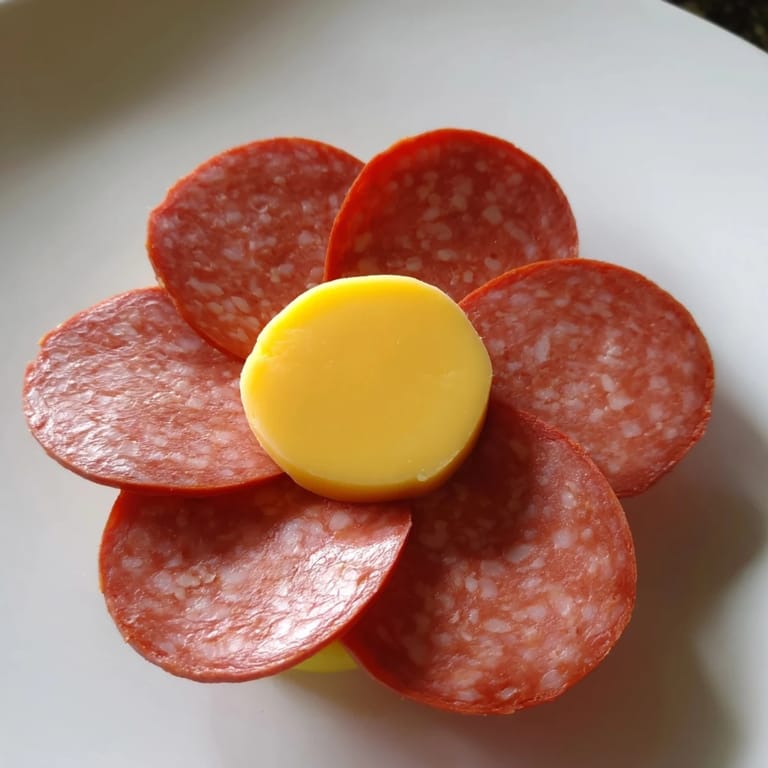
 I discovered this little trick at a dinner party where I was frantically assembling a charcuterie board with five minutes to spare. Someone had arranged their salami and cheese into a flower shape, and I thought, how clever—something so simple that looks like you've spent hours crafting it. Now whenever I need to impress without the fuss, this Tudor Rose appears on the plate, and I watch people's faces light up at the geometry of it all.
My sister brought this to a potluck once and set it down on the table without fanfare, but three people circled back for seconds. She told me later that someone asked for the recipe because they assumed it was some fancy technique, and she just laughed. That's when I realized this little rose had genuine staying power.
Ingredients
- 5 slices of salami (6–8 cm diameter): The quality of your salami matters more than you'd think—look for something with good color and marbling that will hold its shape and add visual richness to the plate.
- 1 small round slice of yellow cheese (3–4 cm diameter, about 0.5 cm thick): Gouda or aged Cheddar works beautifully because they're firm enough to sit proudly in the center without collapsing, and the pale yellow creates that perfect contrast against the deep red salami.
Tired of Takeout? 🥡
Get 10 meals you can make faster than delivery arrives. Seriously.
One email. No spam. Unsubscribe anytime.
Instructions
- Arrange your petals:
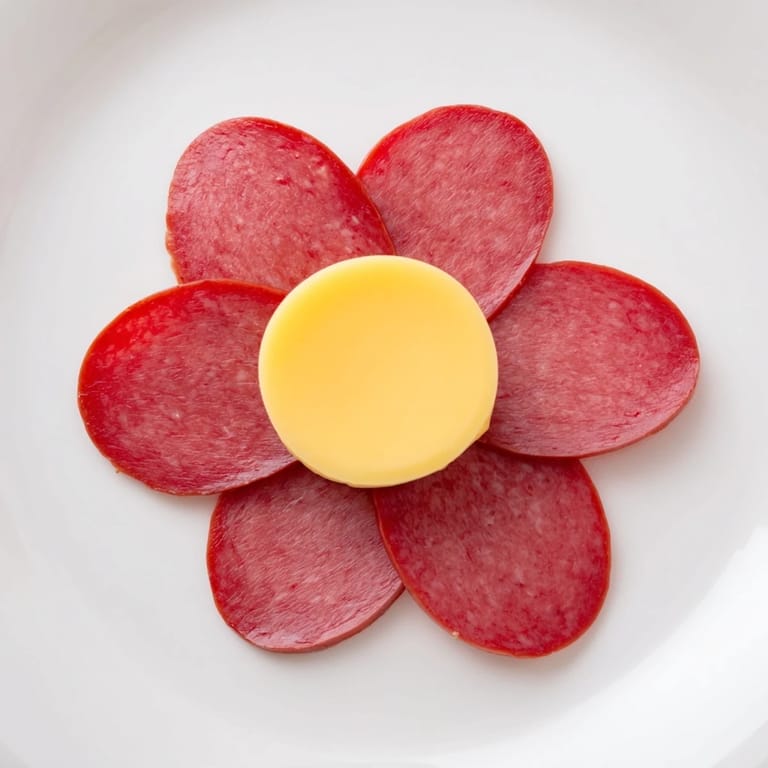
- Lay the five salami slices on your plate in a circle, letting each one overlap the next just slightly—you want them to fan out like flower petals naturally finding their place. This overlap is what holds everything together visually.
- Crown it with cheese:
- Nestle that yellow cheese round in the very center, letting it cover where all those salami edges meet. Step back and look—you'll see the flower shape come to life instantly.
- Perfect the symmetry:
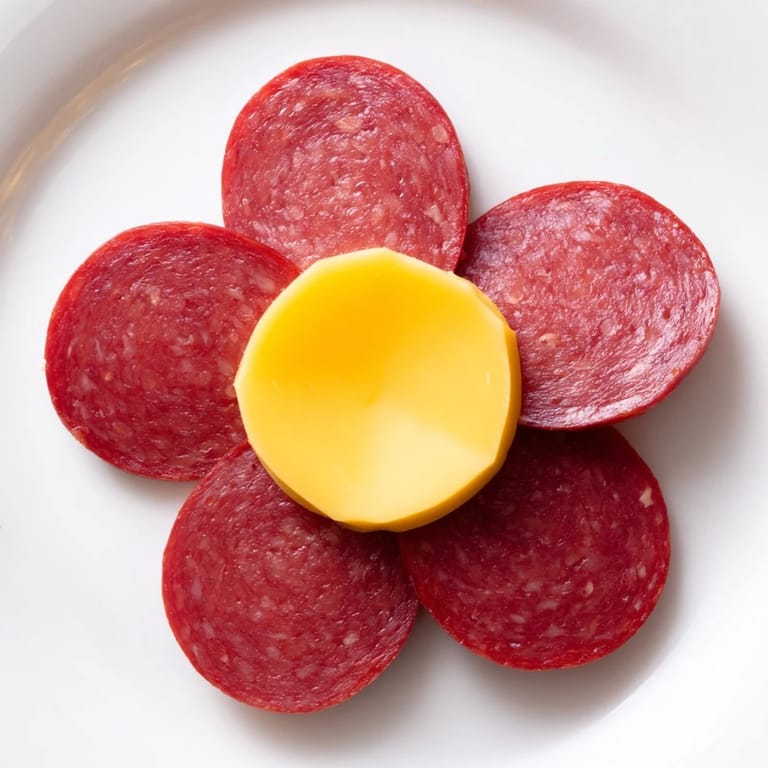
- Adjust any petals that look too bunched or too spread, aiming for that satisfying five-pointed balance. It doesn't need to be mathematical, just intentional enough that people notice the care.
- Serve right away:
- This is a fresh plate moment—arrange it just before guests arrive so the colors stay vibrant and the cheese hasn't started to weep.
 Save to Pinterest
 The first time someone asked me to bring an appetizer to a holiday gathering, I made three of these roses on one platter, arranged in a triangle. By the end of the night, my plate was completely empty while others still had half their dishes left. That's when I understood this little thing had genuine appeal beyond just looking pretty.
Playing with Color and Garnish
Once you've mastered the basic rose, it becomes a canvas for small touches. A whisper of fresh basil tucked between the petals adds a green note, or a few peppery arugula leaves create movement. I've seen people add a tiny dot of something—Dijon mustard, a single olive slice, edible flowers—and suddenly the rose feels even more intentional.
Variations Worth Trying
The structure works just as well with prosciutto, spicy soppressata, or even smoked salmon if you want to switch things up. For cheese, I've used sharp aged Cheddar, Comté, or even a pale fontina, each one bringing its own personality to the center. The geometry stays the same, but the flavor story shifts with each choice.
Building a Platter Around It
This rose becomes even more impressive when it's the anchor of a larger board—surround it with crackers, some fresh fruit, maybe a small dish of fig jam or honeycomb. People build their bites around it, and suddenly you've got a composed, intentional spread rather than just random items. The Tudor Rose teaches you that sometimes one beautiful thing makes everything around it feel more deliberate.
- Set it in the center of your board so it draws the eye immediately.
- Leave breathing room around it so the flower shape doesn't get lost in the crowd.
- Place it just before people arrive so the colors stay bright and the presentation feels fresh.
 Save to Pinterest
 This rose reminds me that sometimes the most elegant moments come from simplicity and attention to detail. It's the kind of thing that makes people slow down and actually look at their food.
Questions & Answers
- → How do I create the flower shape with salami?
Arrange five salami slices in a slightly overlapping circle on a serving plate to mimic symmetrical petals.
- → What type of cheese works best for the center?
A small round slice of firm yellow cheese like Gouda or Cheddar provides a perfect contrast and shape for the center.
- → Can I use other cured meats instead of salami?
Yes, alternatives like pepperoni or chorizo slices can be used, but ensure they hold shape when arranged.
- → Should the petals overlap tightly or loosely?
They should overlap slightly to create a neat, symmetrical floral appearance without gaps.
- → How can I garnish this platter for added appeal?
Fresh herbs such as basil or parsley tucked between petals add color and freshness to the presentation.