 Save to Pinterest
 The aroma of caramelizing butternut squash filling my kitchen on the first truly cold day of autumn is something I look forward to every year. Last October, when the maple outside my window had just turned fiery orange, I found myself craving warmth and comfort—this soup was born from that moment. What started as a simple recipe scribbled on the back of an envelope has evolved through countless Sunday afternoons into something that feels like a warm hug in a bowl.
I remember bringing this soup to my neighbor who had just moved in next door during a particularly brutal cold snap. She called me later that evening, still cradling the empty bowl, asking if I would share the recipe. We stood in her half-unpacked kitchen laughing about how soup has this magical way of making a new space instantly feel like home. That moment cemented a friendship that started over steaming bowls of butternut comfort.
Ingredients
- Butternut squash: Look for one with a matte finish rather than glossy skin which tells you its perfectly ripe and will give you that deep nutty flavor that makes this soup special.
- Yellow onion: The natural sugars in yellow onions caramelize beautifully during roasting, giving the soup its subtle sweetness without needing to add any sugar.
- Garlic cloves: Roasting them whole mellows their sharpness into this gorgeous buttery flavor that blends seamlessly into the background.
- Vegetable broth: I like using low-sodium so I can control the saltiness myself some broths can overwhelm the delicate squash flavor.
- Nutmeg: Just a hint transforms the soup from good to magical its the secret ingredient that makes people ask what makes it taste so cozy.
Tired of Takeout? 🥡
Get 10 meals you can make faster than delivery arrives. Seriously.
One email. No spam. Unsubscribe anytime.
Instructions
- Prep your veggies:
- Tackle the butternut squash first by cutting off both ends, then standing it upright to peel with a sharp vegetable peeler. The more evenly you cube it, the more evenly it will roast.
- Roast until caramelized:
- Spread everything in a single layer on your baking sheet not crowding them is the secret to getting those gorgeous brown edges. Youll know theyre ready when your kitchen smells like sweet autumn and the edges turn a deep golden brown.
- Build your flavor base:
- Transfer everything to your pot while still hot to capture all those roasted flavors. The sizzle when you add the broth is one of my favorite kitchen sounds.
- Blend until silky:
- If using an immersion blender, start on low to avoid hot soup splatters. I learned this the hard way with a butternut splatter that reached the ceiling.
- Garnish with intention:
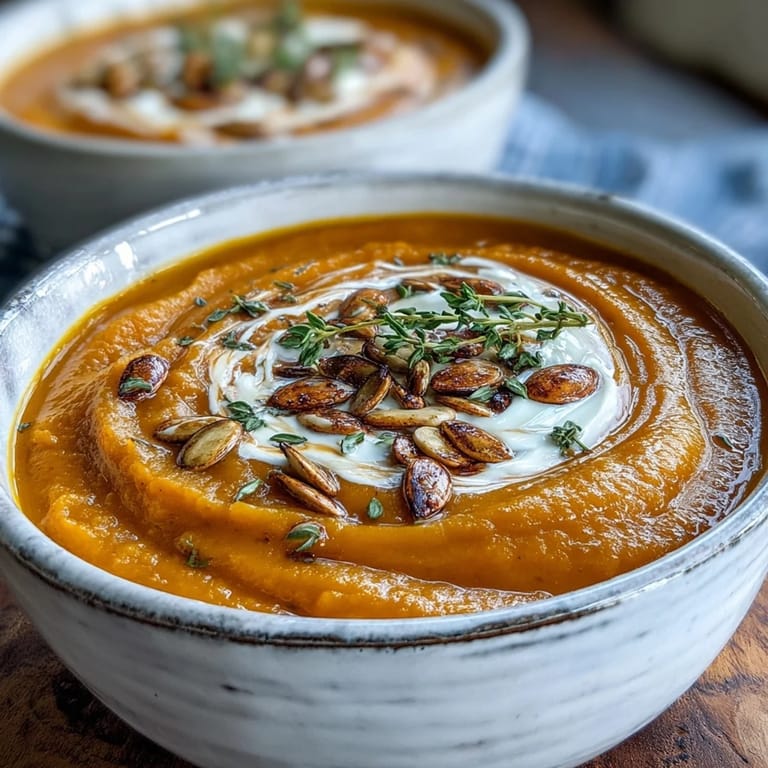
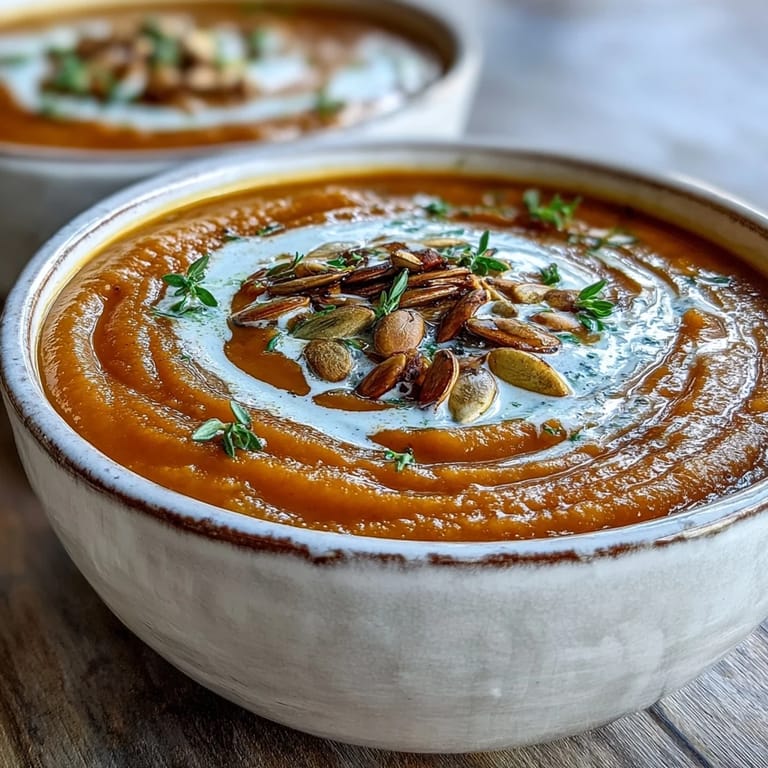
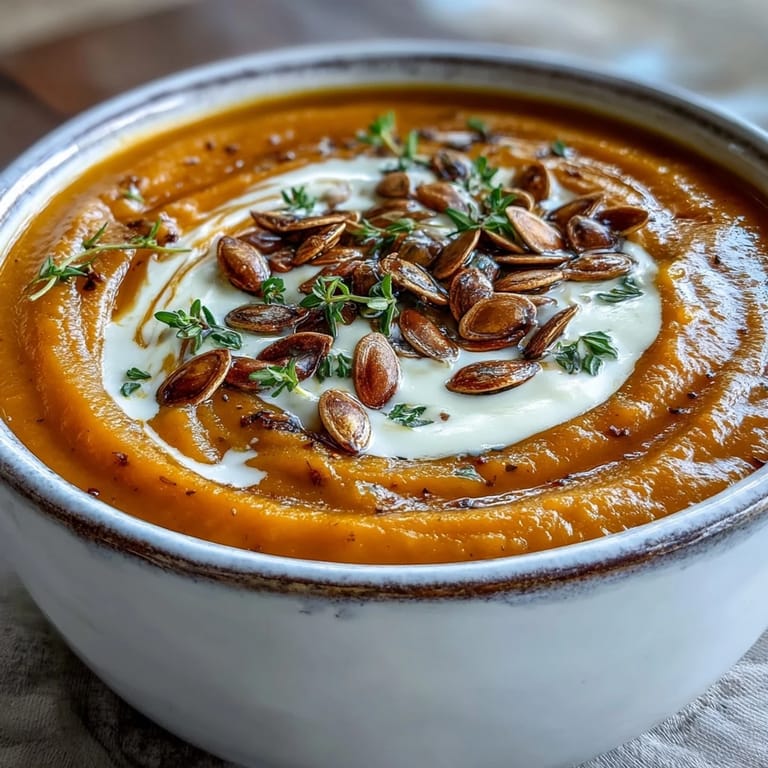
- The contrast between the smooth soup and crunchy pumpkin seeds creates a wonderful textural experience. A light drizzle of cream creates those beautiful swirls that make everyone pull out their phones for a picture before digging in.
 Save to Pinterest
 Last Thanksgiving, my usually picky nephew kept coming back to the soup pot for more, bypassing all the traditional holiday dishes. My sister-in-law looked at me with wide eyes, whispering that hed never voluntarily eaten vegetables before. We silently clinked our spoons together in a tiny celebration of this culinary victory. Sometimes the simplest foods create the most unexpected connections.
Make-Ahead Options
This soup actually improves after a day in the refrigerator, making it perfect for busy weeknights. I often make a double batch on Sunday, portioning it into mason jars for grab-and-go lunches throughout the week. The flavors meld and deepen overnight, with the spices becoming more pronounced yet harmonious. Just be sure to reheat gently over medium-low heat to preserve the velvety texture that makes this soup so special.
Seasonal Variations
In early fall when apples are at their peak, I sometimes toss in a honeycrisp apple to roast alongside the vegetables, adding a subtle sweetness and depth. Winter versions in my house often include a tablespoon of maple syrup and extra nutmeg, while spring calls for lighter herbs like chives sprinkled on top. Summer might seem too warm for soup, but on rainy days, I make a thinner version with a squeeze of lemon and fresh basil that somehow feels appropriate even when the air is thick with humidity.
Serving Suggestions
This soup deserves to be the star of the show, but it plays well with others too. The subtle sweetness pairs beautifully with savory grilled cheese sandwiches made with sharp cheddar and a thin slice of apple tucked inside. For dinner parties, I serve smaller portions in espresso cups as an elegant starter that sets the tone for the meal to come.
- Try serving in hollowed-out mini pumpkins for a showstopping presentation that requires minimal extra effort.
- A swirl of harissa paste on top creates a beautiful color contrast and adds a welcome heat that cuts through the richness.
- Keep some toasted sourdough croutons on hand for adding last-minute crunch that elevates each bowl.
 Save to Pinterest
 This soup reminds me that sometimes the most nourishing things come from the simplest ingredients treated with care. I hope it brings as much comfort to your table as it has to mine.
Questions & Answers
- → Can I make this soup ahead of time?
Absolutely. This soup actually tastes better the next day as flavors meld together. Store in an airtight container in the refrigerator for up to 5 days. Reheat gently on the stovetop, adding a splash of broth or cream if needed to adjust consistency.
- → Can I freeze butternut squash soup?
Yes, freeze this soup for up to 3 months. Let cool completely before transferring to freezer-safe containers, leaving space for expansion. Thaw overnight in the refrigerator and reheat on the stovetop. If you added cream, the texture might separate slightly but will smooth out when reheated with stirring.
- → What can I use instead of butternut squash?
Other winter squash varieties work beautifully here. Try acorn squash, kabocha, delicata, or even pumpkin. Sweet potatoes also make an excellent substitution. The roasting time might vary slightly depending on the vegetable density.
- → How do I get the smoothest texture?
Roasting the vegetables first creates natural sweetness and depth. When blending, let the soup cool slightly for safety. Use an immersion blender directly in the pot for convenience, or work in batches with a high-speed countertop blender for ultra-smooth results. Blend for 2-3 minutes to eliminate any remaining texture.
- → What should I serve with this soup?
Crusty bread, sourdough, or baguette slices are perfect for dipping. Grilled cheese sandwiches create a classic pairing. A simple green salad with vinaigrette balances the richness. For protein, add roasted chickpeas or serve alongside quinoa-stuffed acorn squash.
- → Can I make this without an immersion blender?
Certainly. Use a countertop blender working in batches—never fill hot liquid more than halfway. Remove the center cap and cover with a kitchen towel to let steam escape. A potato masher can create a rustic chunky version, or use a food processor for smooth results.