 Save to Pinterest
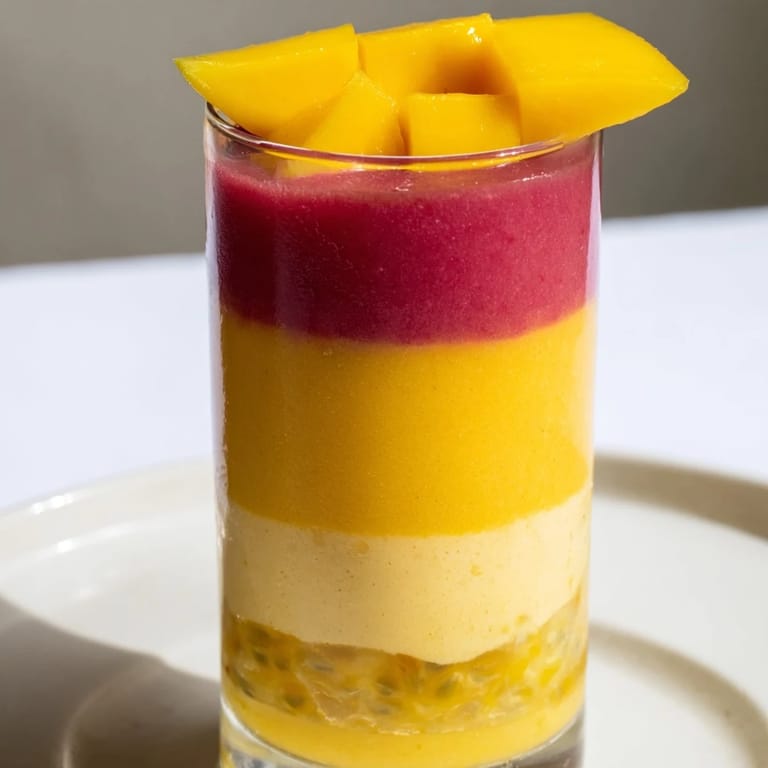
 One afternoon, I was racing against the clock to make something that looked fancy for unexpected guests, and I remembered a café in Costa Rica where the smoothies came in layers like a sunset painting. Mango at the bottom, passion fruit in the middle, orange on top—each color more vibrant than the last. I had yogurt, fresh fruit, and ten minutes. What started as improvisation became a signature moment in my kitchen, the kind where friends' eyes light up before they even take a sip.
I made this for my sister on her birthday morning, and she actually paused mid-conversation to just look at it. That's when I realized layered smoothies aren't just about taste—they're about creating a moment of beauty before breakfast. We ended up making a second round because she wanted to photograph it properly, and I didn't mind one bit.
Ingredients
- Ripe mango, peeled and diced (1 cup, fresh or frozen): The foundation flavor—frozen mango creates denser layers that don't blur together, a trick I learned after my first watery attempt.
- Passion fruit pulp (1/2 cup from 3–4 fruits): This is where the magic lives; those tiny seeds give texture and that tart-sweet complexity that makes people ask what the secret ingredient is.
- Freshly squeezed orange juice (3/4 cup): Freshly squeezed matters here because store-bought tends to be thinner and won't layer as beautifully.
- Plain Greek yogurt (1 cup total across all layers): The creamy glue that holds your vision together; regular yogurt works but Greek yogurt creates sturdier, more defined lines.
- Honey (1 tablespoon per layer, optional): Adds sweetness and helps the layers stay cohesive; skip it if you want to taste the fruit's natural tartness.
- Water (2–3 tablespoons for mango layer only): Sometimes necessary to loosen the mango so it's pourable but still thick enough to sit at the bottom without instantly mixing.
Tired of Takeout? 🥡
Get 10 meals you can make faster than delivery arrives. Seriously.
One email. No spam. Unsubscribe anytime.
Instructions
- Gather your vessels:
- Grab two clear glasses—the whole point is watching those layers come alive. If you're using one blender, have a small container or measuring cup ready to hold each finished layer while you blend the next one.
- Blend the mango base:
- Combine mango, yogurt, honey, and water in your blender and pulse until it's smooth and thick like soft-serve ice cream. You want it pourable but dense enough to sit on the bottom of the glass without immediately sinking.
- Pour the first layer:
- Divide the mango mixture evenly between your two glasses, letting it settle completely on the bottom. This is your foundation.
- Blend the passion fruit middle:
- Rinse your blender or use a fresh container, then blend passion fruit pulp with yogurt and honey until completely smooth and creamy. Take a breath here—this is the moment that separates nice smoothies from show-stoppers.
- Layer with intention:
- Using the back of a spoon, slowly pour or gently spoon the passion fruit layer over the mango, tilting your glass slightly if needed. Pour slowly enough that it settles in a visible line rather than immediately swirling together.
- Top with orange:
- Blend orange juice, yogurt, and honey until silky, then repeat the careful layering technique with the orange mixture. This final layer should crown the glass with that sunset gold color.
- Finish and serve:
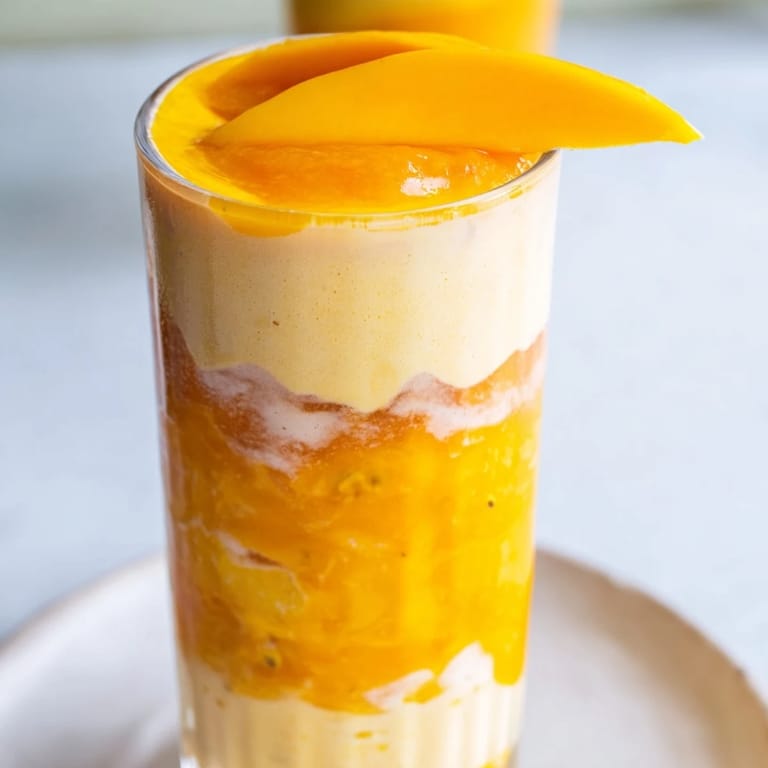
- Crown each glass with a slice of fresh mango, a few passion fruit seeds scattered on top, or a sprig of mint if you have it. The visual is half the enjoyment, so don't skip the garnish.
 Save to Pinterest
 There's something quietly satisfying about watching someone choose to sip slowly instead of mixing it all up immediately. The first time someone told me they appreciated each layer separately, I understood that these aren't just smoothies—they're an invitation to slow down and notice the small work you've done.
The Ombré Technique Explained
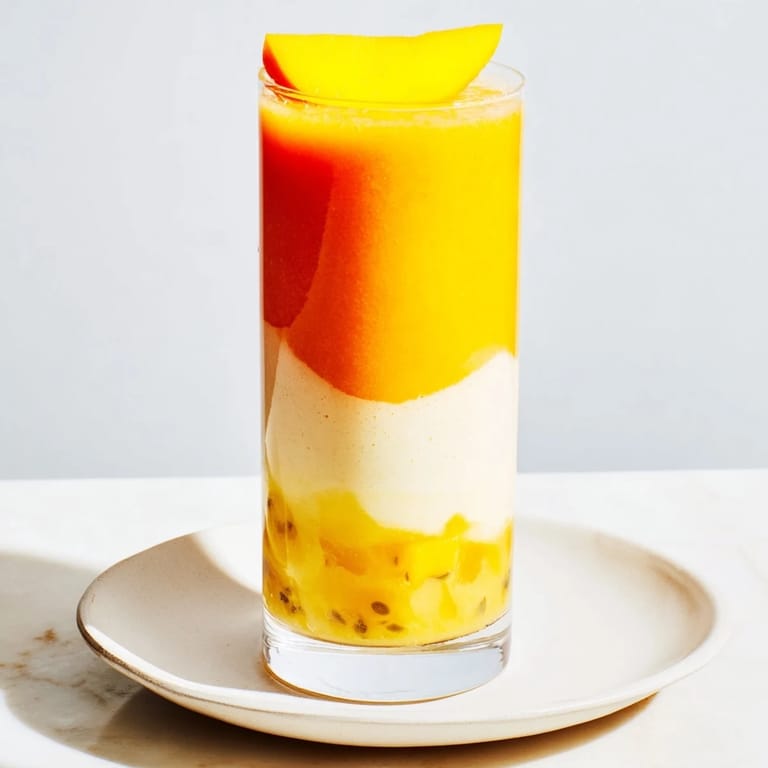
The ombré effect isn't about perfect culinary timing as much as understanding density. Mango yogurt blend is the densest, so it sinks and stays. Passion fruit mixture is middle-weight, settling above the mango but below the thin orange juice. If your layers blur together, it's usually because you poured too quickly or your fruit wasn't processed smoothly enough. The technique itself is gentle—imagine you're building layers of color in a watercolor painting, not dumping ingredients into a blender.
Making It Your Own
This smoothie is actually a starting point for experimentation. I've played with pineapple instead of passion fruit, added a touch of vanilla to the yogurt layers, and even stirred in a tiny bit of ginger for warmth. The structure stays the same—three layers, three textures—but the flavors can be whatever fruits you're excited about. One friend of mine made a berry version using blackberry, raspberry, and strawberry, and honestly, it was prettier than the original.
Serving and Timing
These smoothies are best served immediately, while the layers are still clearly defined and the chill is at its peak. If you're making them for guests, assemble them right before serving and hand them over with a brief moment to admire before the first sip. I once made them thirty minutes early for a photo, and by the time everyone arrived, the layers had started their inevitable blend—beautiful still, but not quite the same magic.
- For extra chill without watering things down, freeze yogurt in ice cube trays and blend those instead of adding water to the mango layer.
- If you can't find fresh passion fruit, frozen passion fruit pulp or even a good-quality passion fruit coulis works in a pinch.
- Clear glasses aren't just a preference—they're essential; opaque mugs hide all your beautiful work.
 Save to Pinterest
 A smoothie that takes ten minutes to make and stops the conversation when it arrives is a small kind of joy worth repeating. Every time someone asks how you made the layers stay so distinct, you'll feel a little bit like a magician.
Questions & Answers
- → How do I achieve the layered ombré effect?
Blend each fruit layer separately and pour slowly into the glass using the back of a spoon to prevent mixing. Tilt the glass slightly for better layering.
- → Can I use frozen fruit for this drink?
Yes, frozen mango or passion fruit can help create thicker, more defined layers and a colder, refreshing texture.
- → What alternatives exist for plain yogurt?
Plant-based or coconut yogurt can be used for dairy-free or vegan options without compromising creaminess.
- → Is honey necessary for sweetness?
Honey is optional and can be adjusted or omitted depending on your preferred sweetness level.
- → How should I serve this tropical drink?
Serve immediately after layering, optionally garnished with fresh fruit slices or a mint sprig for added freshness.