 Save to Pinterest
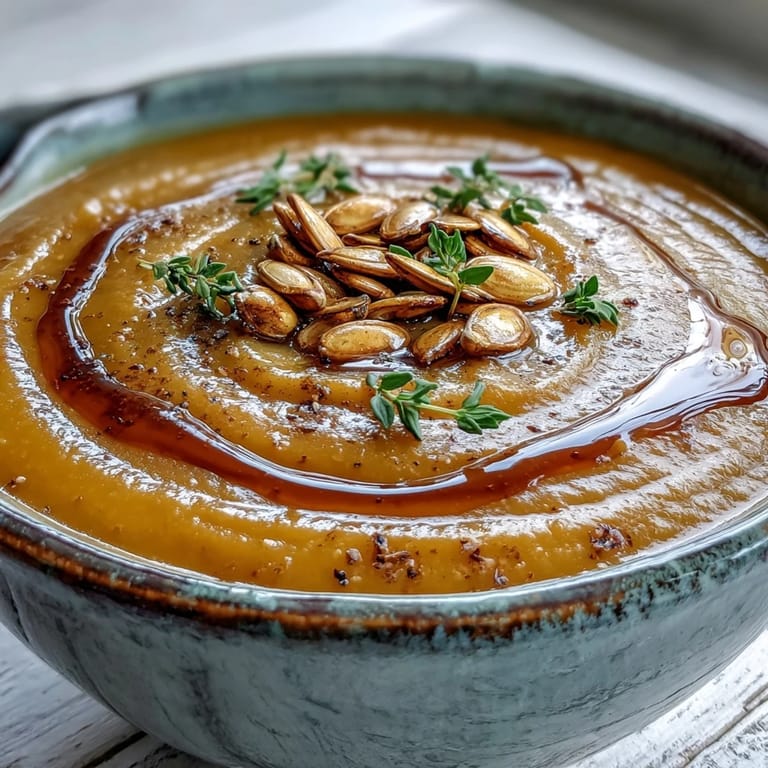
 Autumn chill was creeping through our home when I first experimented with this butternut squash soup. The knife slid through the golden flesh of the squash, releasing that subtle, earthy aroma that always signals the changing seasons. My kitchen windows fogged as the roasted pieces simmered away, transforming from firm orange cubes to a velvety concoction. The addition of maple syrup wasn't planned that first time, but has since become the secret ingredient that everyone asks about.
Last November, my neighbor dropped by unexpectedly just as I was blending this soup to velvety perfection. The immersion blender whirred away as we chatted over the kitchen counter, and before I knew it, she was asking for a taste. Her eyes widened at the first spoonful, and within minutes, I was jotting down the recipe on the back of an envelope. Now whenever the maple leaves start to turn, I get a text asking if the butternut soup season has officially begun.
Ingredients
- Butternut squash: Look for one with a matte, tan skin without green lines, which indicates its perfectly ripe and will give you that gorgeous natural sweetness.
- Maple syrup: Please use pure maple syrup rather than pancake syrup, as the authentic flavor makes all the difference in balancing the earthiness of the squash.
- Coconut milk: The subtle tropical notes somehow enhance the warmth of the cinnamon and nutmeg without overpowering the squash itself.
- Nutmeg and cinnamon: Freshly grated nutmeg has completely transformed this recipe for me, offering complex aromatic notes that pre-ground spices simply cant match.
- Vegetable broth: I started making my own from saved vegetable scraps, and the difference in the final soup is remarkable, though a good quality store-bought works beautifully too.
Tired of Takeout? 🥡
Get 10 meals you can make faster than delivery arrives. Seriously.
One email. No spam. Unsubscribe anytime.
Instructions
- Roast that squash:
- Spread your cubed butternut squash on the baking sheet with plenty of room between pieces, which ensures they caramelize rather than steam. Youll know theyre perfect when the edges turn a deep golden brown and they smell like autumn itself.
- Build your flavor base:
- As the onions sauté, theyll start to release their sweetness, turning translucent and soft. When you add the garlic, the kitchen will fill with that incredible aroma that signals something wonderful is coming.
- Bring everything together:
- After adding your roasted squash to the pot with the broth and spices, let the flavors mingle and dance together. The maple syrup will melt into the mixture, adding subtle complexity rather than obvious sweetness.
- Blend to perfection:
- If using an immersion blender, keep it submerged to avoid splattering hot soup everywhere. The transformation from chunky to silky happens quickly, but take your time to ensure every bit is perfectly smooth.
- Add the finishing touch:
- When you stir in the coconut milk or cream, the soup will lighten to a gorgeous golden hue. Let it warm through gently without boiling to preserve the creamy texture.
 Save to Pinterest
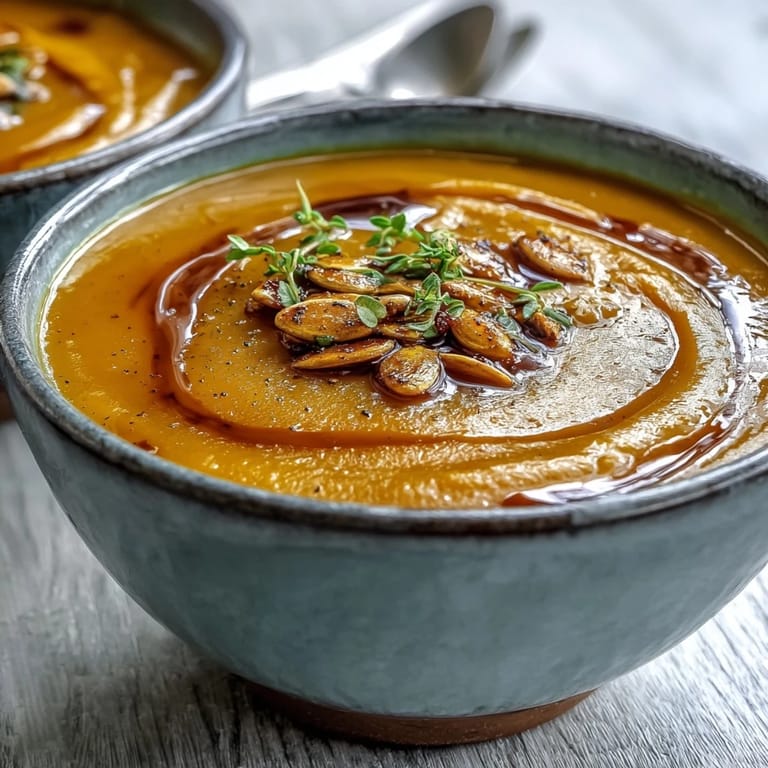
 My daughter had been surviving on campus dining hall food for months when she came home for fall break last year. The kitchen filled with the aroma of this soup simmering on the stove, and she wandered in, following her nose. We sat at the kitchen island, steam rising from our bowls, and she told me about her classes between appreciative spoonfuls. Sometimes the simplest foods create the spaces where real conversations happen.
Make-Ahead Options
This soup actually improves with time, developing deeper flavors as it rests. I often make a double batch on Sunday afternoons, refrigerating half for midweek dinners when time is tight. Just hold off on adding the coconut milk or cream until youre reheating, which prevents any separation or texture issues. The base freezes beautifully in individual portions, perfect for those evenings when you need comfort food but lack the energy to cook.
Serving Suggestions
While perfect on its own, this butternut squash soup becomes a complete meal with the right accompaniments. A rustic loaf of olive bread for dipping transforms it into a satisfying dinner, while a simple arugula salad with toasted walnuts and goat cheese adds textural contrast. For dinner parties, I serve smaller portions in teacups as an elegant starter before the main course, often garnished with a few drops of chili oil for visual drama and a hint of heat.
Storage and Reheating
The way you store and reheat this soup can significantly impact its texture and flavor profile. When refrigerating leftovers, allow the soup to cool completely before transferring to airtight containers to prevent condensation from diluting those perfect flavors. Gentle reheating is essential, ideally in a saucepan over medium-low heat rather than microwave bursts that can create hot spots.
- If the soup thickens too much in storage, add a splash of broth rather than water to maintain flavor balance.
- A fresh garnish on reheated soup makes it feel brand new, try a different topping each day for variety.
- If freezing portions, label with both the date and the specific type of milk or cream used, which helps when serving guests with dietary restrictions later.
 Save to Pinterest
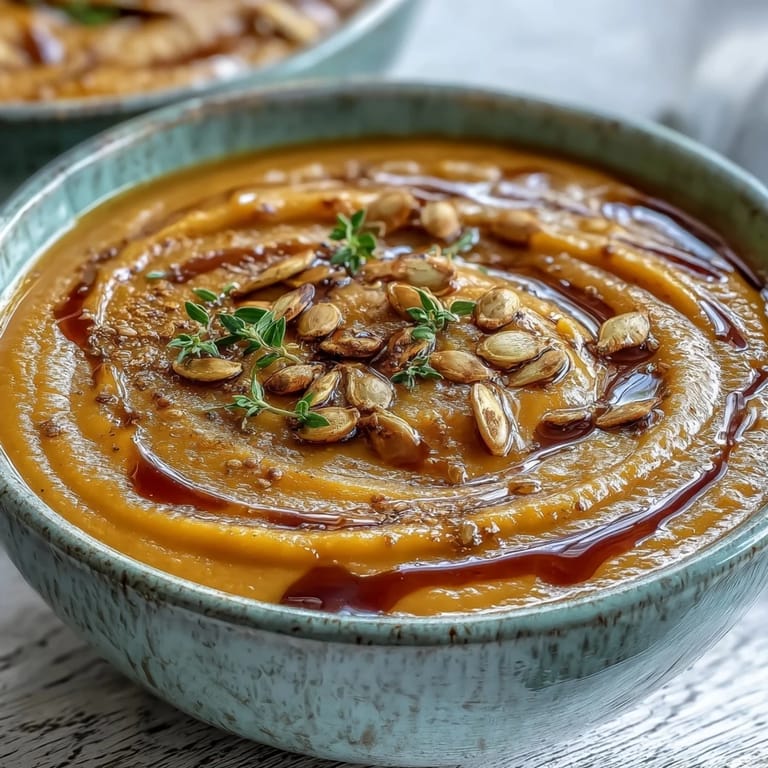
 This butternut squash soup has been my faithful companion through countless autumn evenings, adapting to whatever my kitchen or heart needs that day. Its equally at home in a thermos on a hiking trail or in my grandmother's china for special gatherings.
Questions & Answers
- → Can I make this soup ahead of time?
Absolutely. This soup actually tastes better the next day as flavors have more time to meld. Store in an airtight container in the refrigerator for up to 4 days. Reheat gently over low heat, adding a splash of broth or water if needed to adjust consistency.
- → What's the best way to peel and cube butternut squash?
Use a sharp vegetable peeler to remove the skin, then cut the squash in half lengthwise. Scoop out the seeds with a spoon, then cut into cubes. For easier handling, you can microwave the whole squash for 2-3 minutes to soften slightly before peeling.
- → Can I substitute the maple syrup?
Honey works beautifully as a substitute, though it will add a slightly different floral note. For a vegan option, agave nectar or brown sugar can be used. The sweetness helps balance the earthiness of the squash and warmth of the spices.
- → How do I achieve the smoothest texture?
Roasting the squash first is key—it breaks down fibers for easier blending. Use an immersion blender directly in the pot for convenience, or a high-speed blender in batches for extra creaminess. For the silkiest results, blend until completely smooth before adding the coconut milk.
- → Can I freeze this soup?
Yes, freeze cooled soup in airtight containers or freezer bags for up to 3 months. Leave some headspace for expansion. Thaw overnight in the refrigerator before reheating. Note that the texture may be slightly thicker after freezing—thin with a bit of broth when reheating.
- → What can I serve with this soup?
Crusty bread, garlic knots, or warm dinner rolls are perfect for dipping. A side green salad with vinaigrette balances the richness. For heartier fare, grilled cheese sandwiches or savory scones complement the sweet, spiced flavors beautifully.