 Save to Pinterest
 I discovered the power of a single line while plating for a small dinner party, when a guest asked me to show what I'd been learning about color and form on a plate. Instead of crowding the board with components, I grabbed an offset spatula and drew one deliberate stripe of beet purée down the center. The confidence of that single gesture—the way the deep crimson commanded attention without apology—changed how I think about presenting food. That night, I realized that sometimes restraint speaks louder than abundance.
My friend Maya came over one evening skeptical about vegetable purées, convinced they'd taste like baby food. When she tasted the layered sweetness of the beet and carrot against the buttery smoothness of avocado cream, her expression shifted entirely. She asked if I could teach her how to make it. Now it's her signature dish at potlucks, and she always credits me with a knowing smile—though we both know the real magic is in understanding that every vegetable has its own story to tell on the plate.
Ingredients
- Medium beets (2, peeled and diced): Choose ones that feel firm and heavy for their size; they'll roast into concentrated sweetness and create that stunning deep purple base.
- Olive oil (1 tbsp for beets, plus more for carrot purée if vegan): Good oil carries flavor and helps the vegetables develop depth as they cook.
- Sea salt (1/4 tsp per purée): Flaky salt at the end tastes alive on your tongue; table salt disappears into the background.
- Fresh lemon juice (1 tsp): A squeeze of acid prevents the beet purée from tasting flat and one-dimensional.
- Large carrots (3, peeled and sliced): The fresher the carrot, the sweeter the purée; this is where quality actually matters.
- Fresh ginger (1 tsp grated): The warm spice wakes up the carrot's natural sweetness and prevents the whole dish from feeling heavy.
- Unsalted butter (1 tbsp) or olive oil for vegan: Butter creates a silky mouthfeel that oil alone cannot achieve; if you skip it, your carrot purée will taste thinner.
- Ripe avocado (1): Test ripeness by gentle pressure near the stem; a ripe avocado yields slightly and tastes creamy, not watery.
- Greek yogurt (2 tbsp) or coconut yogurt for vegan: This adds tang and helps the avocado spread like silk without becoming gluey.
- Lime juice (1 tsp): Different from lemon, lime gives the green cream a subtle tropical brightness.
- Microgreens, edible flowers, crushed pistachios, and flaky sea salt for garnish: These finish the dish with texture and visual drama; don't skip them.
Tired of Takeout? 🥡
Get 10 meals you can make faster than delivery arrives. Seriously.
One email. No spam. Unsubscribe anytime.
Instructions
- Roast the beets until they collapse:
- Preheat your oven to 400°F, toss the diced beets with olive oil and sea salt, spread them on a baking tray, and slide them into the heat for 30 to 35 minutes. You'll know they're ready when a fork pierces them without resistance and their edges have caramelized slightly.
- Cook the carrots until they soften completely:
- While the beets roast, steam or boil the carrot slices until they're so tender they practically dissolve on your tongue, about 15 to 20 minutes. Drain well and let them cool just enough to handle.
- Blend the beet purée until it's impossibly smooth:
- Transfer the roasted beets and lemon juice to your blender, and blend until the mixture is completely seamless, adding only a splash of water if it resists. The texture should feel like liquid silk.
- Create the carrot & ginger purée with warmth and body:
- Blend the cooled carrots with the grated ginger, butter, and salt until they transform into a velvety cream. Taste and adjust the salt; the ginger should be present but not overpowering.
- Prepare the avocado cream with precision:
- Mash the ripe avocado with the yogurt, lime juice, and salt in a small bowl until it reaches a silky consistency without any lumps. Transfer it to a piping bag or squeeze bottle so you can apply it with intention.
- Compose the stripe with intention:
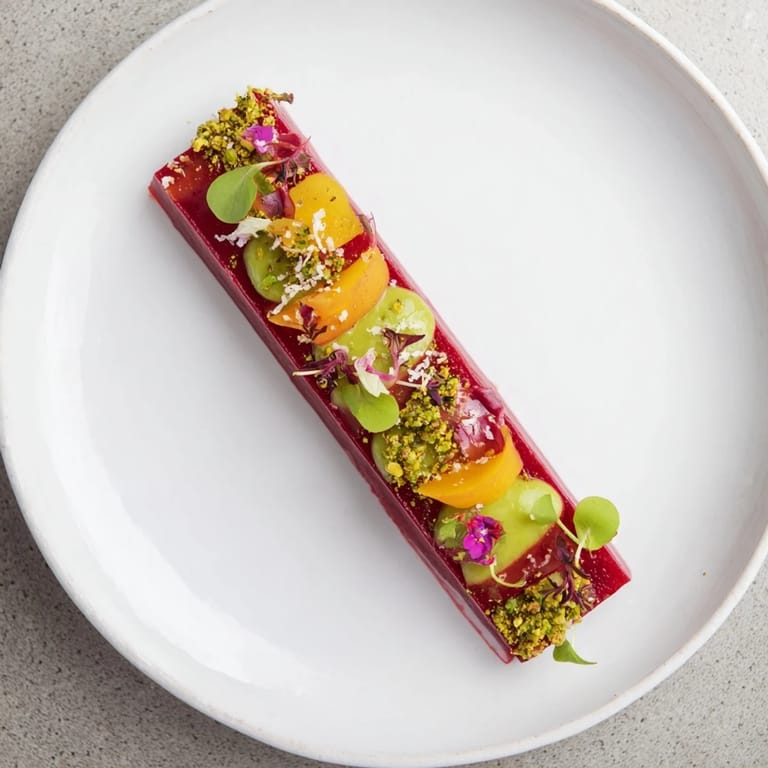
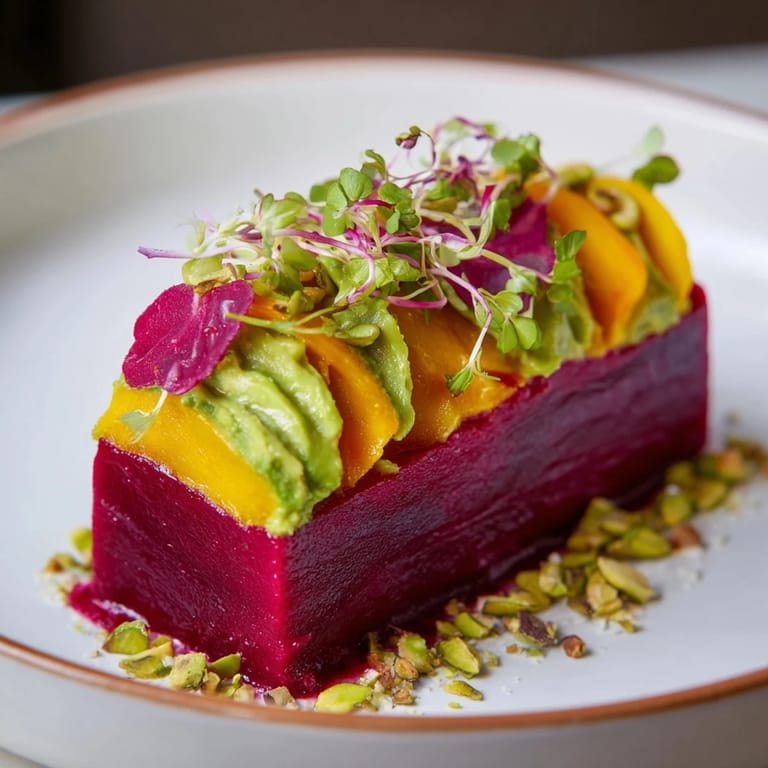
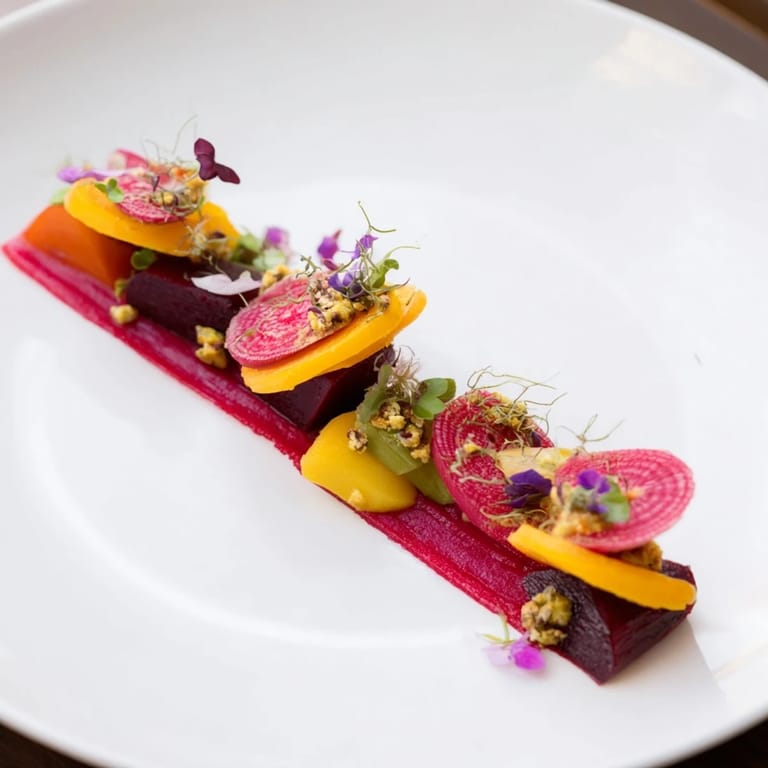
- On a clean, dry serving board, use an offset spatula or the back of a large spoon to draw a thick, 3-inch-wide stripe of beet purée straight down the center, as though you're signing your name. This single gesture sets the tone for the entire plate.
- Layer the remaining purées with artistic confidence:
- Pipe or drizzle the carrot purée and avocado cream along the beet stripe in whatever pattern feels right—dots, strokes, or delicate waves. There's no wrong way as long as your hand is steady and your eye is satisfied.
- Finish with garnish that catches the light:
- Crown the stripe with microgreens, edible flowers, crushed pistachios, and a final pinch of flaky sea salt, distributing them so every section of the stripe shows its own character.
- Serve immediately and watch:
- Bring the board directly to the table, encouraging your guests to scoop straight from the stripe with whatever they're holding. The warmth and freshness matter here.
 Save to Pinterest
 I'll never forget when a guest who usually skipped vegetables dipped their bread into the avocado cream, then into the beet purée, and suddenly understood that vegetables could be a destination, not an afterthought. That moment reminded me why I love cooking—it's not about impressing people with technique, it's about shifting how they see the ingredients.
The Art of the Stripe
The stripe is a statement—clean, bold, unapologetic. It says you know what you're doing without needing to hide behind clutter. When I first tried this concept, I was terrified that three purées wouldn't feel like enough, that the plate would look sparse. But then I realized that simplicity is its own kind of abundance. The eye finds rest in that single line, and the palate experiences each flavor with clarity. Modernist cooking isn't about rejection; it's about love expressed through subtraction.
Making the Purées Sing
Each purée is its own small masterpiece, and that's where the real magic lives. The beet purée tastes of earth and sweetness, the carrot purée brings warmth and subtle spice, and the avocado cream arrives like a cool whisper. But they only sing in harmony when each one is fully developed on its own. A blender is your best friend here; it transforms cooked vegetables into something that feels refined without any cream or cheese needed. If your purée tastes thin, it's often because the vegetables weren't cooked long enough. There's no rushing this part.
Variations and Additions
Once you understand the stripe, you'll start seeing it everywhere. Try roasted sweet potato, steamed pea, or charred squash purées for entirely different color stories. Add texture by folding roasted chickpeas or pickled onions into the garnish. Some nights, a drizzle of aged balsamic or a whisper of truffle oil elevates the whole dish into territory that feels almost decadent.
- Sweet potato creates a warmer, more autumn-leaning stripe with caramel notes.
- Fresh pea purée brings a bright, grassy counterpoint to root vegetables.
- Pickled onions add sharp acid and crunch that cuts through the richness beautifully.
 Save to Pinterest
 This dish lives in that beautiful space between impressive and approachable, where a little bit of focus and intention creates something that tastes and looks like it came from somewhere that knows itself. Serve it with a crisp white wine like Sauvignon Blanc, and watch the moment when someone realizes that vegetables alone can be the entire story.
Questions & Answers
- → What vegetables are used for the purées?
Roasted beets, carrots with ginger, and avocado form the core purées, each contributing unique flavors and textures.
- → How is the dish plated for impact?
A wide stripe of beet purée is laid down first on a clean serving board, topped with layers of carrot and avocado purées in artistic strokes or dots.
- → What garnishes complement this dish?
Microgreens, edible flowers, crushed pistachios, and flaky sea salt are used to enhance both visual appeal and texture.
- → Can this dish accommodate dietary restrictions?
Yes, plant-based yogurt and oil can replace dairy ingredients, and pistachios can be omitted to prevent nut allergies.
- → What cooking techniques are required?
Roasting, steaming, blending, and precise plating with tools like an offset spatula and piping bag are used to create the layers and textures.