 Save to Pinterest
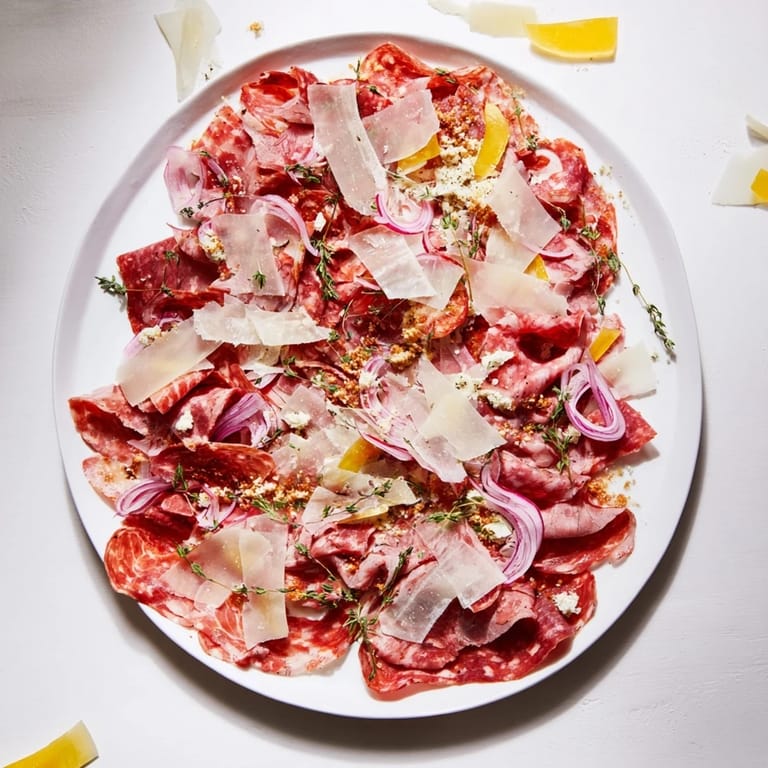
 There's something about the contrast of rough and refined that stopped me mid-thought one autumn evening when a friend brought over a board she'd assembled in minutes. She'd torn the smoked beef with her bare hands, shaved the cheese so thin you could nearly see through it, and suddenly this simple arrangement of pantry staples felt like a tiny celebration. I realized that night that the best platters aren't about perfection—they're about letting each ingredient show up as itself, bold or delicate, and trusting that the juxtaposition makes the magic.
I made this for the first time when my neighbor mentioned she was tired of bringing store-bought platters to book club. Twenty minutes later, standing in my kitchen with the cheese plane in one hand and a wedge of Gruyère in the other, I got completely absorbed in creating these impossibly thin sheets of cheese. When she came by to pick it up, she looked at the board so long without saying anything that I thought I'd made a mistake—then she laughed and said it looked too pretty to eat. It absolutely didn't stay that way.
Ingredients
- Smoked beef (120 g, thickly sliced or hand-torn): The backbone of your platter—look for a quality smokehouse version with real smoke flavor, and don't worry about neat presentation; the rough torn edges actually look more inviting.
- Rustic country ham (120 g, roughly chopped): This is where the deeper, almost gamey notes come in; rough chop it to show you didn't overthink it.
- Smoked sausage (120 g, thick-cut rounds or wedges): Choose one with good marbling and a sturdy casing that holds its shape—it's the visual anchor that holds the platter together.
- Parmigiano Reggiano (60 g, thinly shaved): Use a cheese plane rather than a box grater; the delicate ribbons are half the appeal, and the nutty sharpness cuts through the richness beautifully.
- Aged Manchego (60 g, thinly shaved): Its creamy, slightly sweet undertone balances the smokiness of the meats in a way that feels almost accidental but completely intentional.
- Gruyère (60 g, thinly shaved): The most forgiving of the three—it shaves easily and its complexity deserves that translucent presentation.
- Cornichons (1 small handful): These tiny pickles are your flavor reset button; don't skip them.
- Red onion (1 small, thinly sliced): A thin slice offers sharp brightness without overwhelming; let them sit for a minute or two after slicing to mellow slightly.
- Grainy mustard (2 tbsp): The texture matters here—those visible seeds add visual interest and a clean punch that wakes up every bite.
- Fresh thyme or rosemary sprigs (1 small bunch): This is about aroma as much as taste; brush your hand through it as you arrange and notice how it shifts the whole mood of the board.
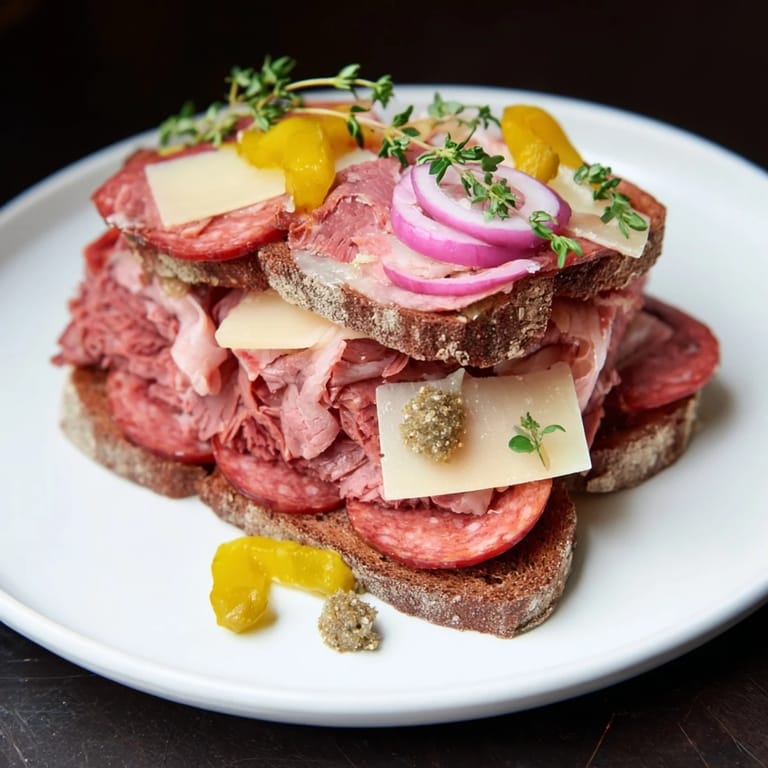
- Rustic country loaf or crusty baguette (optional, sliced): If you include bread, choose something with actual crust and crumb texture—it deserves something that won't crumble into dust on your guests' plates.
Tired of Takeout? 🥡
Get 10 meals you can make faster than delivery arrives. Seriously.
One email. No spam. Unsubscribe anytime.
Instructions
- Build your foundation with meats:
- Spread the smoked beef, country ham, and sausage across your board in overlapping, slightly chaotic layers. Don't arrange them in neat rows—the rusticity is the whole point, and your hands know better than a ruler.
- Shave and drape the cheeses:
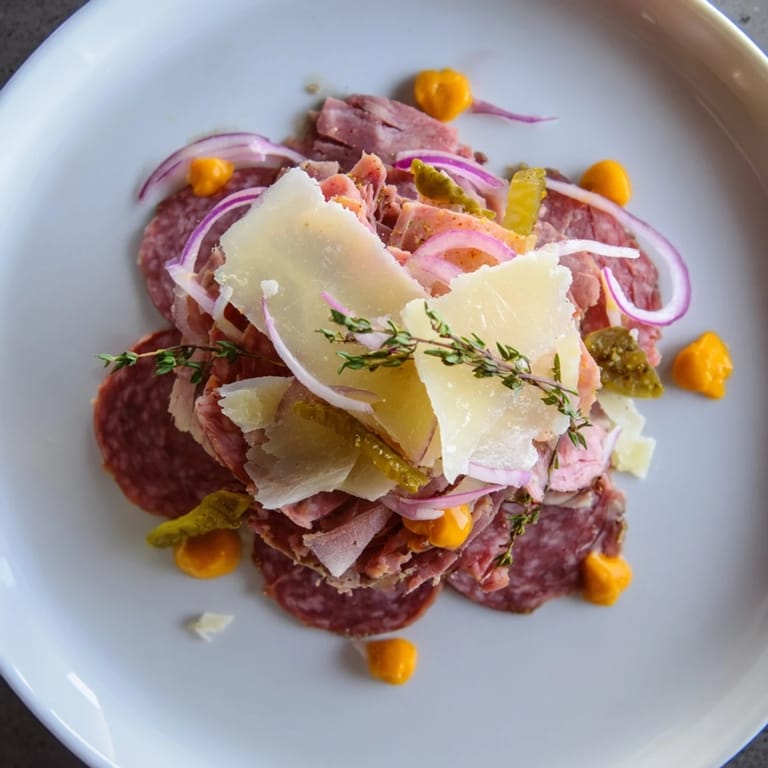
- Using a cheese plane or vegetable peeler, draw it slowly toward you to create those thin, translucent ribbons. Drape them loosely over the meats and in the spaces between—they should look like they floated there, not like you placed them with tweezers.
- Scatter the bright accents:
- Nestle the cornichons between the meat piles and scatter the red onion slices for flashes of color. Place small dollops of grainy mustard where you'd naturally want a flavor boost, around the board in an uneven pattern.
- Add the aromatics:
- Tuck the thyme or rosemary sprigs throughout, letting some stand upright and some recline against the meats. This is where the board stops being just food and starts being something to experience with all your senses.
- Serve with intention:
- If you're including bread, arrange slices on the side or pass them separately. Bring everything to the table while it's still at room temperature and let people eat with their hands—this is not the time for small plates and restraint.
 Save to Pinterest
 I watched my father, someone who usually picks at cheese and moves on, actually close his eyes while eating a bite of Manchego with the smoked beef last year. He said something about how textures matter—how the creamy cheese against the firm, smoky meat made each one taste better than it would alone. That's when I understood this dish is really about respect: honoring each ingredient enough to let it be itself, and trusting that the company and the combination will do the rest.
The Art of the Empty Space
One of the mistakes people make with these platters is packing them too densely, treating empty wood as something to fill. But those gaps are actually what make your eye travel across the board, what give your guests permission to explore rather than just grab the nearest thing. When you arrange this thoughtfully, you're not just feeding people—you're inviting them into a small, edible landscape.
Pairing Beyond the Board
This platter is generous enough to stand alone as an appetizer, but it sings when paired with the right drinks. A bold red wine will actually complement the smokiness of the meats, pulling out notes you didn't know were there, while a crisp white wine creates this unexpected freshness against the richness of the aged cheeses. I've also learned that sparkling cider works beautifully if you're serving people who aren't drinking wine, and it costs a fraction of the wine.
Making It Your Own
The beauty of a platter like this is that it's endlessly flexible—almost a framework rather than a rule. You can add roasted nuts for crunch, dried apricots or figs for sweetness, or even a drizzle of good honey in a small bowl for people who want something unexpected. The core is the conversation between rough and refined, smoke and aged complexity, so as long as you're honoring those contrasts, you're not straying from the spirit of the dish.
- Keep dried fruits and nuts at room temperature so they contrast with the cool, smooth cheeses.
- If you're prepping ahead, shave your cheeses just before serving—they'll look fresher and won't stick together as much.
- Taste a tiny bite of everything as you arrange to make sure the flavors actually want to live together on your board.
 Save to Pinterest
 This platter has become my default way of saying hello when people come over, a small gesture that says I was thinking of you before you arrived. It's honest food that doesn't pretend to be something it's not, made better by the company around it.
Questions & Answers
- → What meats are featured in the platter?
The platter includes smoked beef, rustic country ham, and smoked sausage, all prepared in hearty, rough-cut styles.
- → Which cheeses complement the meats?
Thinly shaved Parmigiano Reggiano, aged Manchego, and Gruyère provide delicate, translucent layers that pair beautifully with the meats.
- → How should the platter be arranged for best presentation?
Layer the meats in overlapping mounds on a wooden board, then artfully drape cheese ribbons alongside. Add accompaniments like cornichons, sliced onion, and grainy mustard around the edges.
- → Are there suggested garnishes or accompaniments?
Fresh thyme or rosemary sprigs add aroma and color, while optional crusty bread enhances the experience. Nuts or dried fruits can add extra flavor contrast.
- → Is this suitable for gluten-free diets?
The core ingredients are gluten-free; however, if adding bread, choose gluten-free options to maintain suitability.
- → What tools help prepare this platter efficiently?
A sharp chef's knife and a cheese plane or vegetable peeler are essential for clean cuts and thin cheese shavings.