 Save to Pinterest
 There's something about the simplicity of a perfect vegetable that stops you in your tracks. I discovered this dish during a quiet afternoon in my kitchen, watching sunlight pour across the cutting board as I sliced through the crisp, cool flesh of a cucumber. The celery snapped between my fingers with such satisfying clarity that I found myself arranging the sticks like a still-life painting rather than plating an appetizer. It felt like the opposite of cooking—more like meditation with a knife.
I made this for a friend who was going through a stressful week, and watching her exhale as she picked up one of those cool, crisp sticks felt like I'd given her permission to pause. There's something about the vertical arrangement on the platter that creates a moment of calm before eating—like you're approaching something intentional rather than just grabbing a snack.
Ingredients
- Cucumbers (2 large): Choose ones that are firm and feel heavy for their size; watery cucumbers will wilt when cut, so freshness matters more than you'd think.
- Celery stalks (4 large): Pick the palest, crispest stalks from the heart of the bunch—they're sweeter and less fibrous than the outer ones.
- Toasted sesame seeds (1 tablespoon, optional): Toast them yourself in a dry pan for about two minutes; the difference between store-bought and fresh-toasted is the difference between a garnish and a flavor layer.
- Light soy sauce or tamari (1 tablespoon): Use tamari if you need gluten-free, but taste both and pick whichever feels more balanced to your palate.
- Rice vinegar (1 teaspoon): This slight tang prevents the dipping sauce from tasting flat and one-dimensional.
- Fresh mint or basil leaves: Mint brings brightness; basil brings earthiness—choose based on your mood and what else you're serving.
Tired of Takeout? 🥡
Get 10 meals you can make faster than delivery arrives. Seriously.
One email. No spam. Unsubscribe anytime.
Instructions
- Wash and Inspect:
- Run your cucumbers and celery under cold water, rubbing them gently to remove any residue. You'll feel when they're genuinely clean—there's a slipperiness that disappears.
- Trim the Ends:
- Cut away the stem ends and the root ends with a sharp knife; these parts are often tougher or more bitter. Save the trimmings for stock or snacking.
- Cut with Intention:
- Slice everything into sticks about 4 to 5 inches long, keeping them as evenly sized as you can manage. Uniform pieces not only look elegant but cook—or in this case, chill—at the same rate.
- Arrange Like You Mean It:
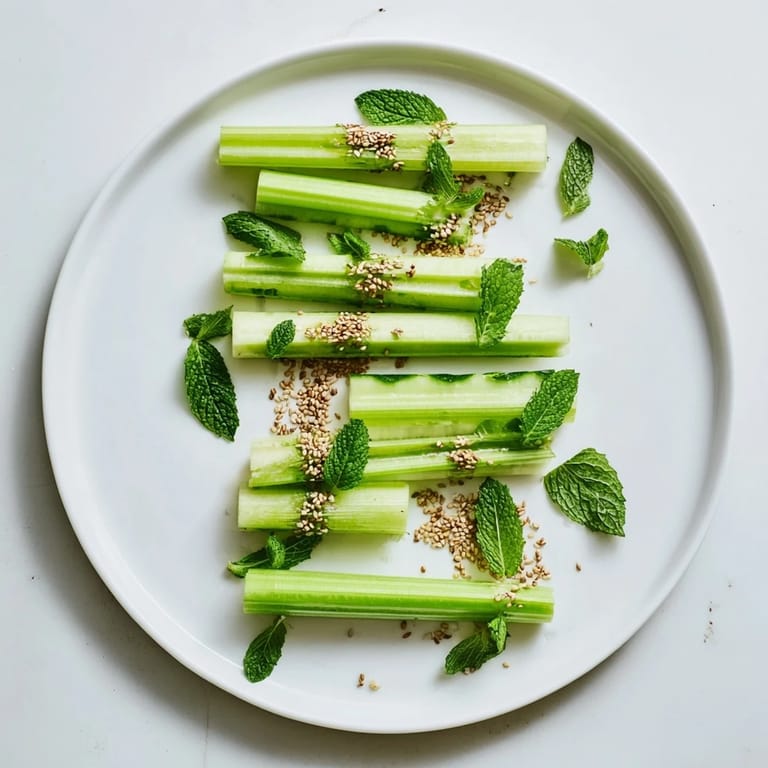
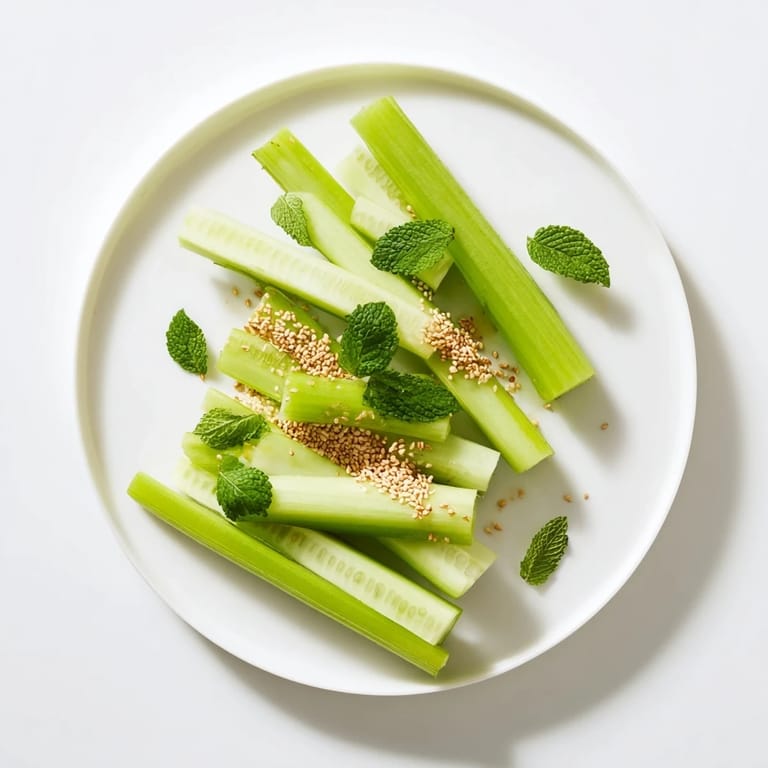
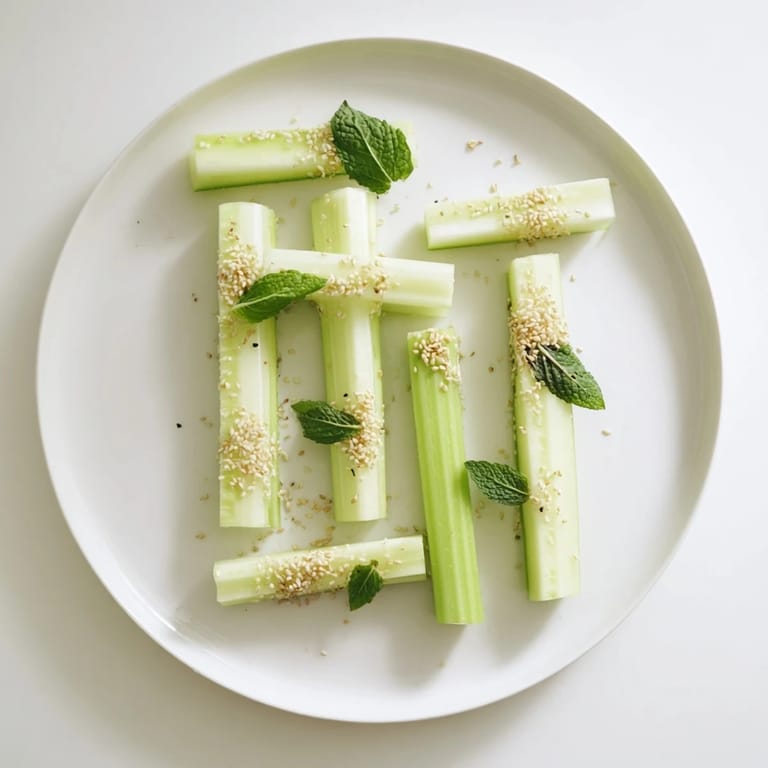
- Place your sticks vertically and horizontally on the platter, creating a grid or abstract pattern. Step back and look; you're not decorating, you're composing.
- Garnish with Restraint:
- Sprinkle sesame seeds over the arrangement and scatter a few herb leaves where they catch light. Less is more—you want your eye to rest on the vegetables themselves.
- Prepare the Dip:
- Stir together the soy sauce and rice vinegar in a small bowl and let it sit for a few minutes so the flavors meld. Taste it; adjust the ratio if it feels too salty or too vinegary.
- Chill Before Serving:
- Refrigerate until you're ready to serve, so everything is genuinely cold when it hits your mouth.
 Save to Pinterest
 This dish taught me that sometimes the most elegant things are the ones that require you to do almost nothing to them. A friend once told me this arrangement reminded her of a Zen garden, and I realized she was right—the beauty comes from restraint, not effort.
Why This Matters More Than You Think
Raw vegetables often feel like an obligation at the table, something healthy but forgettable. This dish changes that by treating them like they deserve attention. The vertical arrangement, the careful cutting, the intentional plating—it all sends a signal to whoever's eating that you cared enough to pause and present something thoughtfully. That matters more than the calories.
The Ice Water Secret
The first time I skipped the ice water soak, I thought I was saving time. I was wrong. Those ten minutes in ice water don't just chill the vegetables; they tighten the cell walls and make everything snap when you bite down. It's the difference between eating something refreshing and eating something that feels crisp and alive.
When to Serve This and What to Pair With It
This works best when you need something that won't compete with other dishes—a dinner party where a heavier appetizer would feel wrong, a spring table where you want something light and clean, or those moments when you're serving sake or a delicate wine that needs complementary simplicity. The minimalism of the presentation also makes it feel special without requiring any cooking skill; it's pure intention.
- Serve it before something rich so it cleanses the palate and sets a thoughtful tone.
- Try pairing variations with carrot or daikon sticks for color contrast and gentle flavor shifts.
- Make the dipping sauce at the last minute so it stays balanced and doesn't oxidize.
 Save to Pinterest
 This is the kind of dish that reminds you that sometimes the best things to eat are the ones that taste like themselves. Serve it with presence, and watch people actually slow down.
Questions & Answers
- → How should I cut the vegetables for Bamboo Zen?
Trim the ends and slice cucumbers and celery into long sticks about 4-5 inches for an elegant bamboo effect.
- → Can I prepare Bamboo Zen in advance?
Yes, soak the sticks in ice water for 10 minutes before serving to keep them extra crisp and fresh.
- → What garnish enhances the flavor best?
Toasted sesame seeds combined with fresh mint or basil add aroma and texture without overpowering the freshness.
- → What dipping sauce is recommended?
A mix of light soy sauce or tamari with rice vinegar complements the crunchy vegetables perfectly.
- → Is this dish suitable for special diets?
It's vegan, gluten-free, and low carb, making it suitable for a range of dietary preferences.