 Save to Pinterest
 I stumbled upon this dish during a quiet afternoon spent scrolling through photographs of Svalbard—those endless white landscapes where nothing seems to move, where silence has weight. There was something about that stark beauty that made me want to translate it onto a plate, to capture that feeling of pristine emptiness and subtle variation all in one bite. What started as an artistic experiment became my favorite way to reset the palate before a heavier meal, a moment of calm in the kitchen.
My friend Elena came over on a gray winter evening when we were both tired of the season, and I set this down in front of her without explanation. She went quiet for a moment, studying it like it was in a museum, then ate it slowly. Afterward she said it tasted like nothing and everything at once, and I knew I'd gotten something right—that sparse, clean feeling she needed on that particular night.
Ingredients
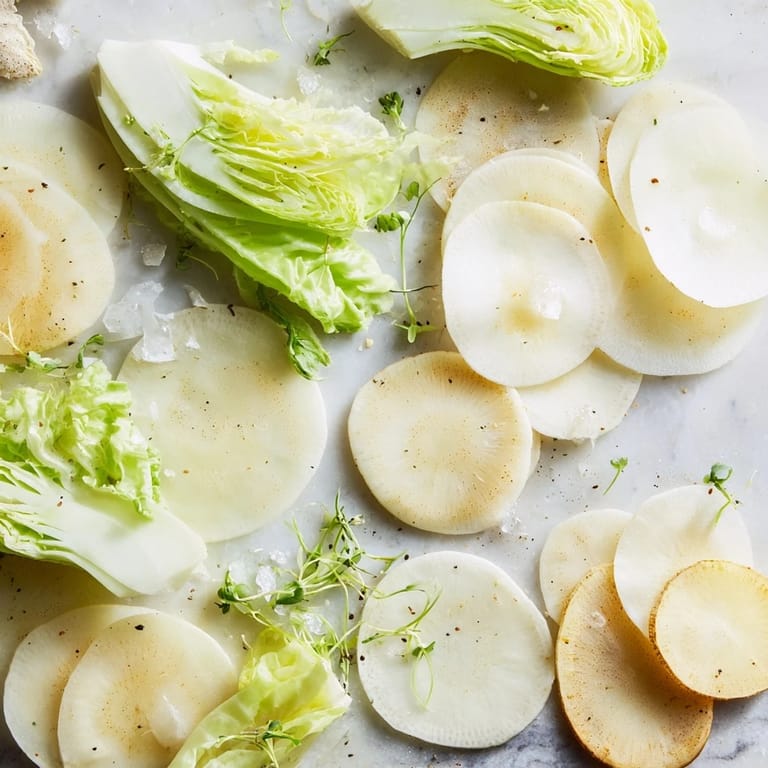
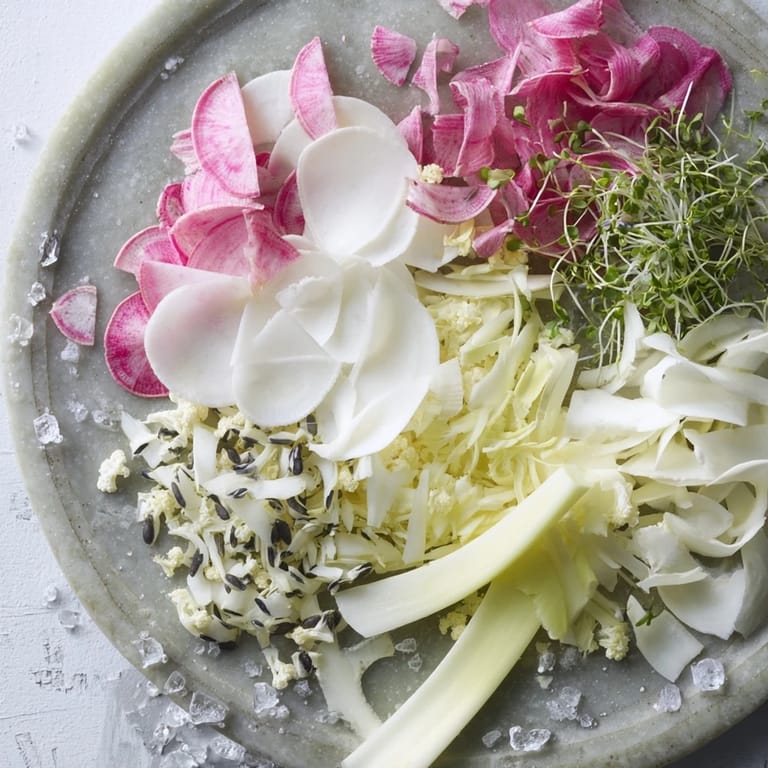
- Daikon radish: The pale, almost translucent slices are your landscape's foundation—they're crisp, mildly peppery, and they catch light beautifully when arranged just so.
- Kohlrabi: Less familiar than daikon but equally important here; it has a delicate sweetness and a subtle cabbage-like crunch that adds complexity without noise.
- Belgian endive: Those pale, slightly bitter leaves mimic the geometric simplicity of frost formations and provide structure for the other elements to rest against.
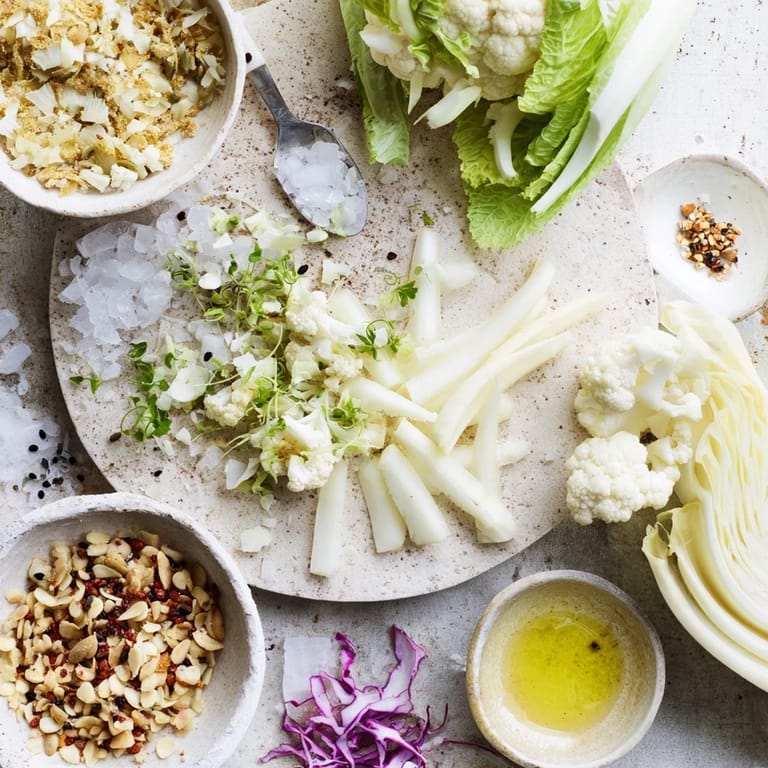
- Cauliflower florets: Keep these tiny and finely chopped; they become little white peaks across your plate, like distant mountains seen from far away.
- Coconut flakes and sesame seeds: These are your texture variation—the toasted sesame adds a whisper of nuttiness that deepens as you eat, while the coconut stays dry and delicate.
- Microgreens: The only green in the composition; they're your last detail, added at the final moment so they stay tender and slightly sweet.
- Extra-virgin olive oil and white wine vinegar: The dressing should be subtle, almost invisible—it's meant to awaken rather than coat.
- Flaky sea salt: Use it sparingly, as a seasoning and as a final textural note that reminds you this is food.
Tired of Takeout? 🥡
Get 10 meals you can make faster than delivery arrives. Seriously.
One email. No spam. Unsubscribe anytime.
Instructions
- Chill Your Canvas:
- Slide that stone or marble plate into the freezer for fifteen minutes—this is non-negotiable. The cold keeps everything crisp and makes the vegetables taste fresher, like you've just pulled them from winter air.
- Whisk Your Dressing:
- In a small bowl, combine olive oil, lemon juice, vinegar, and white pepper with a few patient strokes of your whisk. The mixture should look pale and serene, never cloudy or agitated.
- Build the Landscape:
- Arrange your daikon and kohlrabi slices across the cold plate with intention but not perfection, as if wind had scattered them there. Let some edges curl slightly, let some overlap, but keep the overall composition feeling open and breathable.
- Layer Your Textures:
- Scatter the tiny cauliflower florets, then the coconut and sesame seeds in no particular pattern—step back and look, add more where things feel too empty, remembering that negative space is part of the design.
- Final Touches:
- Drizzle the dressing lightly, so lightly you might think it's not enough; it will settle and distribute as your guests move the plate. Top with microgreens and just a pinch of flaky salt, then serve immediately while everything is at its coldest and crispest.
 Save to Pinterest
 There was something almost spiritual about the first time this dish came together exactly as I'd imagined it—when the light hit the plate just right and the whole thing looked like something you'd see in a gallery, not a kitchen. My partner walked past, stopped, and said it looked too pretty to eat, which felt like the highest compliment I could receive.
The Art of Negative Space
In cooking, we often think abundance equals generosity, but this dish taught me that restraint is its own kind of richness. Every element here has room to breathe, to be itself without crowding. The silence between bites is as important as the flavors in them, and that's a philosophy that's changed how I approach not just salads, but the entire way I think about a plate.
Playing with Color and Light
The whole composition relies on this palette of near-whites and pale greens, which means lighting matters in a way it doesn't for other dishes. If you're serving this at dusk, the plate might disappear into the table; if it's bright afternoon, those translucent vegetable slices glow like they're backlit. It's a dish that responds to its environment, and that makes it feel alive in a quiet way.
Variations Worth Exploring
While the original composition is deliberately minimal, there are subtle shifts you can make that keep the spirit intact. The vegetable selection can change with the season—thin apple slices in fall, cucumber in summer, fennel when you want something more anise-forward. For acidity, try yuzu juice instead of lemon if you want something more floral, or rice vinegar for a gentler touch. For protein, consider a small pile of flaked smoked whitefish, cold shrimp, or even paper-thin slices of cured fish, always keeping the portion restrained so nothing overwhelms the plate.
- Experiment with different seeds (black caraway, nigella) or toasted nuts (slivered almonds, pistachios) to shift the flavor profile while maintaining the visual aesthetic.
- If serving this in winter, a light dusting of edible flowers or freeze-dried berries adds color without changing the temperature or texture balance.
- The stone plate isn't just for looks; it genuinely keeps everything colder longer and makes the whole experience feel more considered and intentional.
 Save to Pinterest
 This dish became my answer to the question of how to feed people with something that feels nourishing without being heavy, beautiful without being fussy. It's become a ritual, a way to say that eating can be about more than just sustenance.
Questions & Answers
- → What vegetables are used in the Tundra Trek?
Thinly sliced daikon radish, kohlrabi, Belgian endive leaves, and finely chopped cauliflower form the crisp base of this dish.
- → How is the dressing prepared?
The dressing combines extra-virgin olive oil, fresh lemon juice, white wine vinegar, and white pepper whisked together for a light, bright flavor.
- → What is the purpose of using a chilled stone plate?
Chilling the serving stone preserves the crispness of the vegetables and enhances the refreshing cold textures reminiscent of the tundra.
- → Can this dish accommodate non-vegetarian additions?
Yes, flakes of smoked whitefish or poached shrimp can be added for extra protein while maintaining its minimalist style.
- → What garnishes are included to add texture?
Toasted white and black sesame seeds, unsweetened coconut flakes, and microgreens provide contrasting textures and subtle nutty notes.
- → Are there any allergen concerns?
This dish contains sesame seeds and coconut flakes, which may affect those with related allergies.