 Save to Pinterest
 There's a particular kind of magic that happens when you crack eggs into a flour well and watch them transform into silky ribbons of pasta. Mine happened on a quiet Tuesday evening when I decided to stop buying dried pasta and actually make something worthy of the fancy truffle oil that had been sitting in my cupboard for months. The aroma that fills your kitchen when you're working truffle-infused dough is impossible to forget—earthy, subtle, a little mysterious.
I made this for my sister's unexpected visit, and I'll never forget how she closed her eyes after that first twirl of the fork, just breathing in the aroma before tasting anything. She said it smelled like someone had whispered a secret into the pasta—that's exactly what truffle oil does when it's handled with respect and restraint. That meal turned into a three-hour conversation at the table, which is probably the best thing any recipe can accomplish.
Ingredients
- All-purpose flour: Two cups gives you the structure you need without being fussy about specialty flours, and it rolls out beautifully thin.
- Large eggs: Use room-temperature eggs if you can—they incorporate into the dough more smoothly and make the whole process feel effortless.
- Extra-virgin olive oil: A tablespoon adds subtle richness and helps the dough feel less sticky while you're working with it.
- Truffle oil: One tablespoon in the dough itself, then another two teaspoons for finishing—this is where the magic lives, so don't skip it or substitute with regular oil.
- Fine sea salt: Half a teaspoon in the dough keeps the flavor balanced; save the rest for seasoning at the end when you can taste as you go.
- Unsalted butter: Three tablespoons is enough to coat the hot pasta without making it heavy or greasy.
- Parmesan cheese: Freshly grated matters here—pre-grated cheese has cellulose that makes it grainy, and you want silky coatings.
- Black pepper: Fresh ground pepper, cracked right before you eat, brings a gentle heat that lets the truffle shine.
Tired of Takeout? 🥡
Get 10 meals you can make faster than delivery arrives. Seriously.
One email. No spam. Unsubscribe anytime.
Instructions
- Create your flour well:
- Mound your flour on a clean counter and use your fingers to create a crater in the center—think volcano, not beach hole. Crack your eggs directly into the well, add the oils and salt, and you've got your mise en place ready for the slow, patient work of bringing everything together.
- Start the integration:
- Use a fork to gently beat the eggs as if you were making scrambled eggs, then slowly start pulling flour from the inner walls of your well into the egg mixture. The moment it gets shaggy and hard to manage with a fork, switch to your hands and start bringing it together into a rough ball.
- Knead with intention:
- Eight to ten minutes of kneading transforms that rough mass into something smooth and elastic—you'll feel it happen under your palms. The dough should be slightly firm but not stiff; if it's sticky, dust with a tiny bit more flour, but resist the urge to overdo it.
- Let it rest:
- Wrap it tightly in plastic and let it sit for twenty minutes at room temperature while you take a breath. This rest is when the gluten relaxes and the dough becomes easier to roll without snapping back at you.
- Roll and cut:
- Divide the dough in half and work with one portion at a time, keeping the other wrapped. Pass it through a pasta machine starting at the widest setting, fold it in half, and repeat until it's silky, then work down to a thin, almost translucent sheet—about one to two millimeters thick.
- Shape your pasta:
- If you're cutting fettuccine or tagliatelle by hand, dust the thin sheet lightly with flour, roll it loosely, and slice with a sharp knife using one clean motion per cut. If you have a machine, let it do the work and lay the ribbons on a clean kitchen towel so they don't stick together.
- Cook with precision:
- Fresh pasta cooks faster than you'd think—two to three minutes in boiling salted water is usually all it takes. The moment you see the pasta float and stay floating for thirty seconds, taste a piece; when it's tender but still has a slight resistance when you bite it, that's al dente, and that's when you fish it out and reserve that pasta water.
- Finish like it matters:
- Melt butter gently over medium heat, add the hot pasta with a splash of reserved pasta water, and toss everything together until the starch from the water creates a silky, emulsified sauce. Remove from heat, drizzle with truffle oil, shower with Parmesan, toss once more, and taste before you season with salt and pepper.
 Save to Pinterest
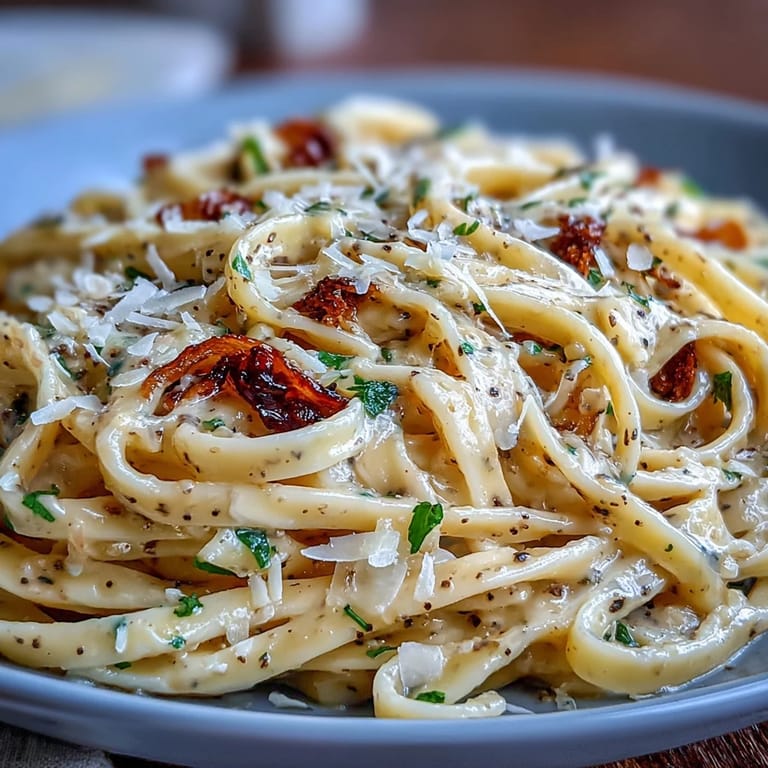
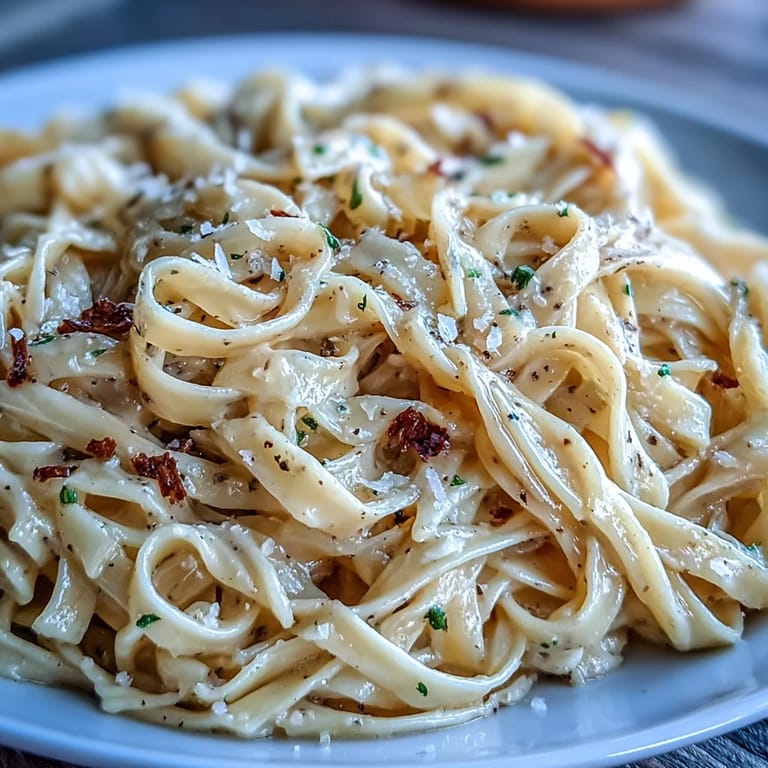
 The first time I plated this pasta properly—with a gentle twist of the fork, a careful scatter of cheese, and a whisper of oil catching the light—I realized that cooking isn't about showing off. It's about taking ingredients you respect and giving them the attention they deserve, which is exactly what this dish asks of you.
The Truffle Oil Choice
Not all truffle oils are created equal, and this is one place where corners cut show up immediately on your plate. Real truffle oil is often expensive and sometimes hard to find, but the flavor is concentrated and clean—earthy without being muddy, aromatic without being overwhelming. Synthetic truffle oils try to approximate that flavor chemically, and they can taste metallic or one-dimensional, especially once they're heated. I learned this the hard way by buying the cheapest option I could find and being disappointed, then investing in a good bottle and tasting the actual difference. Read the label, know what you're buying, and remember that a little good truffle oil goes further than a lot of mediocre oil.
Why Fresh Pasta Matters Here
Dried pasta has its place in the kitchen, but this dish demands fresh pasta's tender, almost delicate texture. Fresh pasta absorbs sauce differently than dried—instead of a hard surface that resists, the strands have a slightly porous quality that lets the butter and truffle oil seep into every fiber. The cooking time is shorter, which means the delicate flavor of truffle doesn't have time to fade or become bitter. When you make the pasta yourself, you also control exactly how thin it is, and that thinness means each bite is more pasta-to-sauce ratio than you'd ever get with dried.
Elevating Your Plate
This pasta is beautifully simple, but there are moments when you might want to expand beyond the basic recipe. A handful of sautéed wild mushrooms—cremini, shiitake, or oyster—adds earthiness that echoes the truffle's underground origins. A whisper of white wine reduced into the butter creates subtle complexity, or a squeeze of lemon juice at the very end can brighten everything and prevent the richness from feeling heavy. Even fresh thyme leaves scattered over the top, toasted in a dry pan for a moment to wake up their flavor, can turn a weeknight dinner into something you talk about for years.
- Wild mushrooms sautéed in butter and finished with a pinch of salt become luxurious companions to this pasta, not distractions from it.
- A single lemon, zested and juiced, is insurance against the dish feeling too rich, and it costs almost nothing.
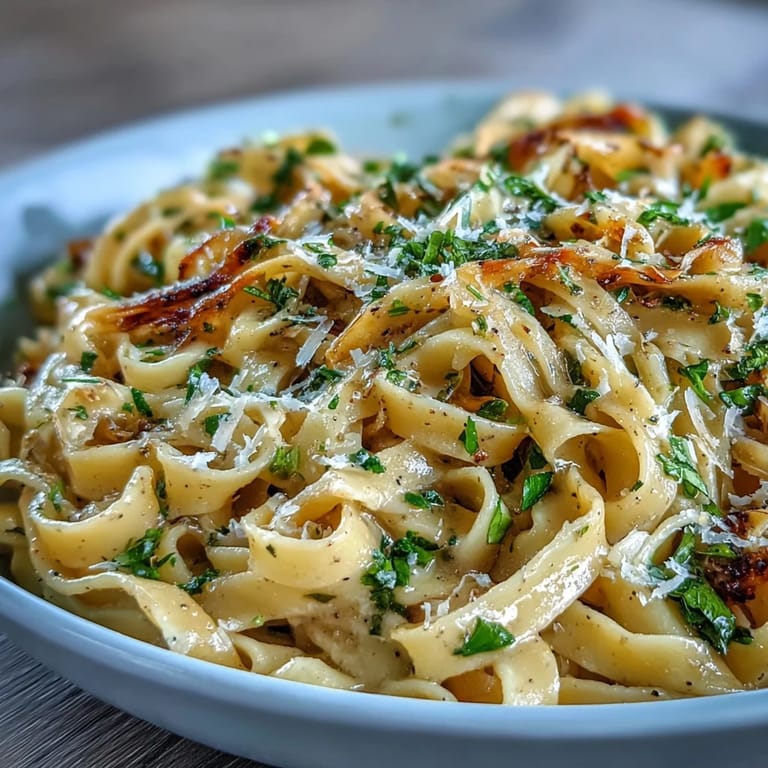
- Save a handful of fresh parsley or chives to scatter on top for color and a hint of freshness that cuts through the decadence.
 Save to Pinterest
 This pasta reminds me that sometimes the most elegant meals are built on a foundation of respect for good ingredients and patience with the process. Make it when you have time to enjoy the ritual, and share it with people who'll notice the care.
Questions & Answers
- → How do I achieve a smooth pasta dough?
Knead the dough for 8–10 minutes until elastic and smooth. Resting it for 20 minutes helps relax the gluten for easy rolling.
- → What type of truffle oil is best to use?
Use high-quality truffle oil to ensure authentic aroma and flavor, avoiding overly synthetic or low-grade oils.
- → Can I substitute Parmesan with another cheese?
Pecorino Romano is a great alternative, offering a sharper and saltier finish to complement the dish.
- → How long should I cook the fresh pasta?
Cook fresh pasta for 2–3 minutes until just al dente; fresh pasta cooks faster than dried varieties.
- → What wine pairs well with this pasta?
A crisp Chardonnay or dry sparkling wine pairs beautifully, balancing the rich butter and earthy truffle notes.