 Save to Pinterest
 The first time I cooked kimchi cabbage fried rice, the sizzle was so enthusiastic that even the neighbor's cat peeked curiously through my open kitchen window. Instead of serene focus, I was dancing between fragrant clouds of sesame oil and the lively snap of cabbage hitting the pan. It wasn&apost until the spicy steam kissed my face that I realized just how invigorating this dish could be on a random Tuesday night. That familiar warmth from kimchi mingling with the earthy sweetness of carrots seems to turn any kitchen into a bustling night market. No fuss, just fast, vibrant flavors with leftovers transformed into something exciting.
One chilly evening last autumn, two of my closest friends showed up unannounced and hungry. I threw this kimchi fried rice together in less than half an hour, and the laughter as we hovered around my counter, forks in hand, still echoes in my mind whenever I slice green onions. Cooking in that moment felt spontaneous and easy—every ingredient landed in the pan with a casual precision that only hunger (and a little pressure) can inspire. Honestly, it was such a hit that now they drop hints whenever they spot kimchi in my fridge. There&aposs something magic about friends, minimal prep, and a skillet full of sizzling, spicy rice.
Ingredients
- Napa cabbage: Thinly sliced, it brings a sweet crunch that softens just enough—choose firm leaves and slice right before frying for extra freshness.
- Kimchi (with some juice): The heart and soul here; pick one with a good balance of tang and spice, and don&apost skimp on the juices for ultimate flavor.
- Green onions: Adds brightness in every forkful—slice some extra for garnish to liven up the final look.
- Carrot: Optional but worth it; its color and gentle sweetness round out the acidity of the kimchi.
- Cooked jasmine or short-grain rice (preferably day-old): Using chilled, leftover rice is essential—fresh rice gets mushy, but day-old grains fry up with the perfect bite.
- Soy sauce: Just enough umami and salt, with a splash toward the end for a richer, layered finish.
- Gochujang (optional): For bolder spice, a spoonful adds that unmistakable deep heat—start sparingly and taste as you go.
- Toasted sesame oil: Go easy—its aroma is powerful and a little drizzle right before serving is all you need.
- Sugar: Just a touch to balance kimchi&aposs tang and the savoriness of the rest.
- Ground black pepper: It helps tie together all the flavors—freshly cracked makes a surprising difference.
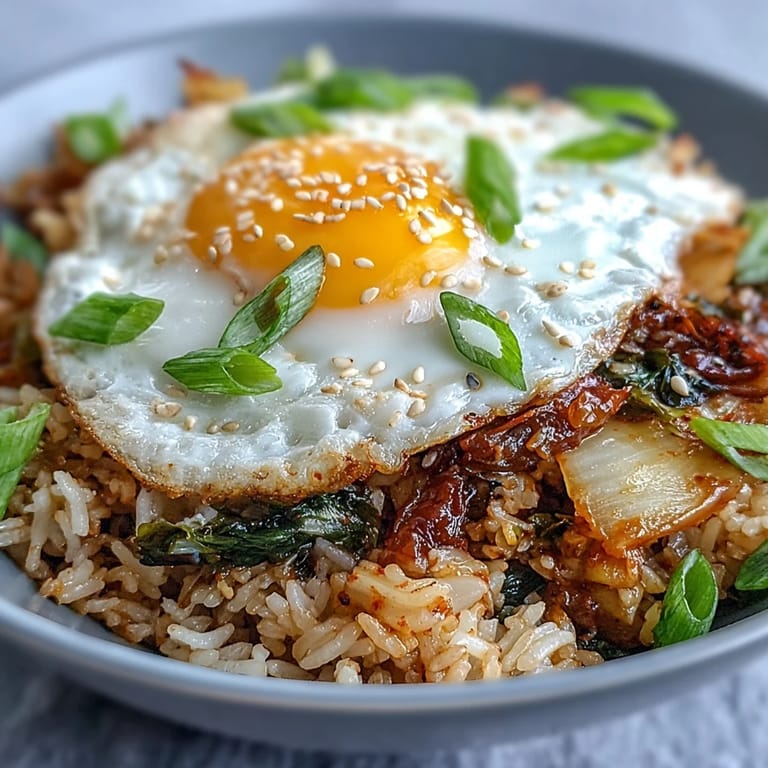
- Eggs: Fried sunny-side up, the runny yolk turns into a luscious sauce when mixed with the rice—cook gently for silky whites and soft centers.
- Neutral oil: Essential for stir-frying; choose something light like canola so the flavors shine.
- Toasted sesame seeds: A sprinkle at the end adds a pop of texture—toast them lightly for maximum nuttiness.
- Extra sliced green onions: Never underestimate the fresh burst of garnish at the very end, both for color and crunch.
Tired of Takeout? 🥡
Get 10 meals you can make faster than delivery arrives. Seriously.
One email. No spam. Unsubscribe anytime.
Instructions
- Get everything ready:
- Chop the veg, slice the kimchi, and fluff up the cold rice—the secret to a smooth stir-fry is prepping it all in advance.
- Start with the veg sizzle:
- Heat half the neutral oil in your biggest skillet or wok, tossing in the napa cabbage and carrot—you want a quick, loud sizzle and a tiny bit of color after 2 minutes.
- Kimchi and onion splash:
- Add the kimchi (plus juice) and green onions, then stir-fry until the whole kitchen smells just a bit tangy and spicy—about 2 minutes more.
- Fold in the rice:
- Break up the cold rice with your spatula, stirring well to mix it thoroughly with the veggies and juices.
- Season things up:
- Drizzle on soy sauce, gochujang (if using), sesame oil, sugar, and a sprinkle of pepper—give it all a vigorous stir for a few minutes so the rice heats up and soaks in every drop of flavor.
- Taste and adjust:
- Check for seasoning—sometimes another dash of soy or more chili paste takes things from good to incredible.
- Perfectly fried eggs:
- In a separate nonstick pan, heat the rest of the oil and gently fry the eggs sunny-side up, aiming for firm whites and soft yolks that beg to be broken over your rice.
- Assemble and garnish:
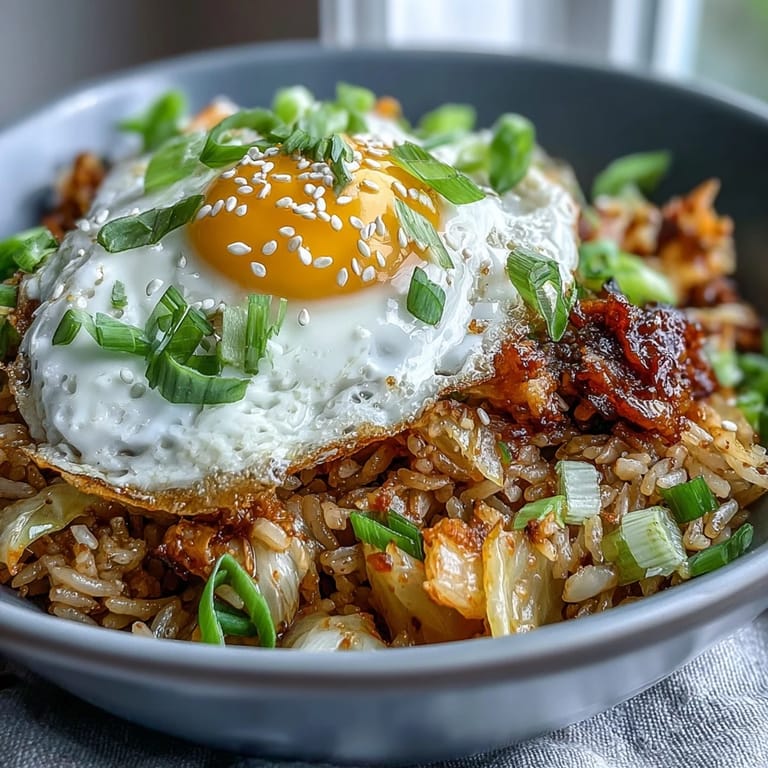
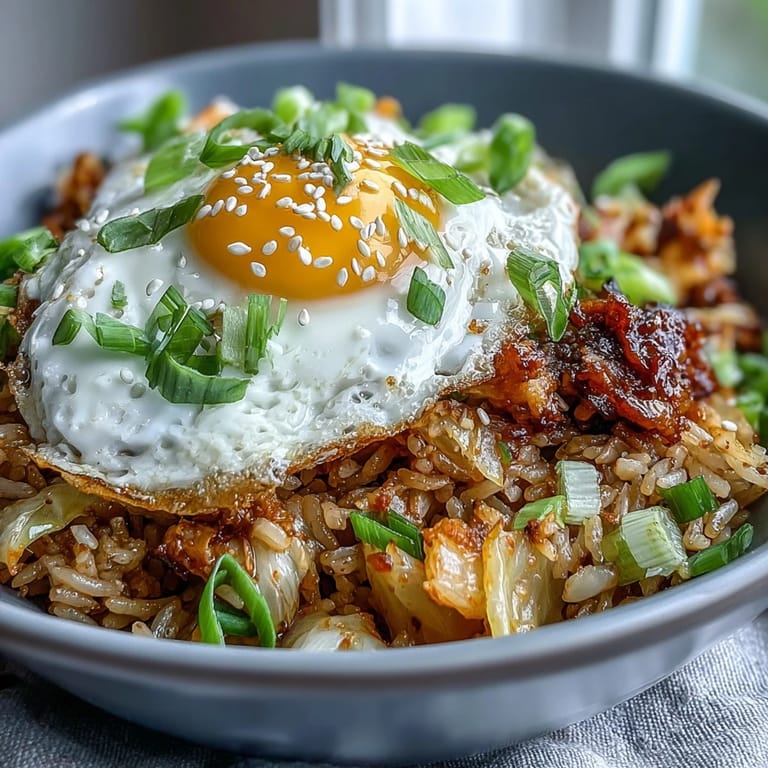
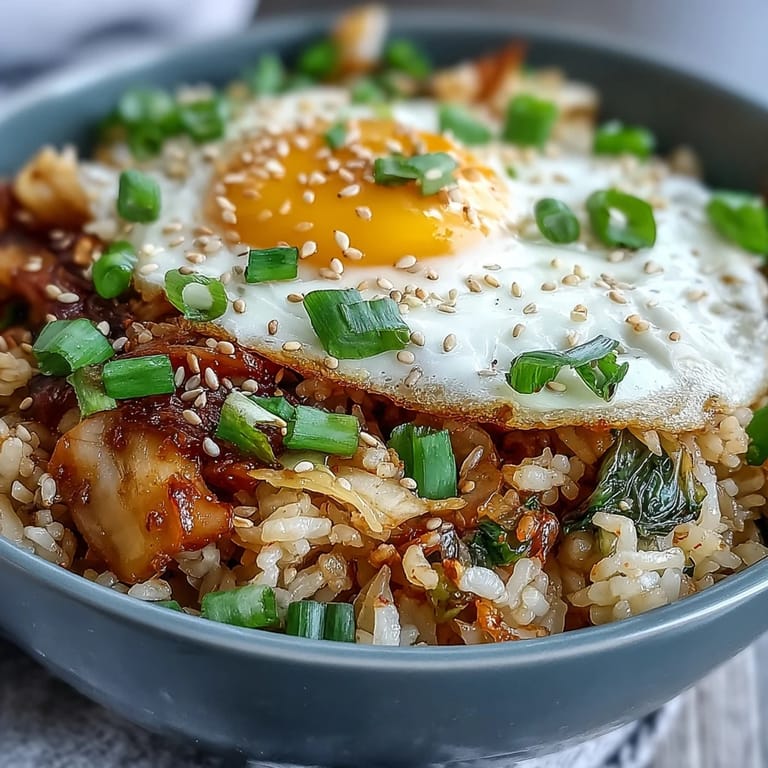
- Divide the rice between bowls, crown each mound with a fried egg, a scatter of sesame seeds, and a handful of extra green onions for a burst of green.
 Save to Pinterest
  Save to Pinterest
 The night my roommate came home exhausted from work, I handed her a bowl of this kimchi rice and watched her break the egg yolk, letting bright yellow sauce run through the red-speckled grains. Suddenly, dinner became a quiet celebration of small victories, where the comfort of a home-cooked meal did all the talking.
Turning Leftovers Into Gold
Day-old rice can look uninspiring, but here it morphs into something with real soul. The trick is to break up any clumps with your fingertips before adding it to the pan, letting each grain get coated in all that good sauce and oil.
Amping Up the Flavor
Don&apost be shy with gochujang if you like heat—a dab transforms the fried rice from mild to unforgettable. Don&apost skip the kimchi juice, which acts as a seasoning and amplifies the overall taste, making sure every bite is vibrant.
Serving, Swaps, and Shortcuts
Kimchi fried rice holds up to improvisation: toss in tofu for extra protein or swap in mushrooms for a deeper earthiness. A handful of leftover roasted veggies or a dash of sriracha is completely welcome here.
- Let the rice brown slightly for crispy edges.
- Try a drizzle of extra sesame oil right before eating.
- Never forget a last sprinkle of sesame seeds—they add irresistible crunch.
 Save to Pinterest
  Save to Pinterest
 This is a fast, flexible meal that&aposs as satisfying for solo lunches as it is for lively, impromptu dinners. May your kitchen always smell a little bit spicy and sound like sizzling happiness.
Questions & Answers
- → Can I use freshly cooked rice?
Freshly cooked rice tends to be moist and can clump. For the best separation and wok hei, use chilled day-old rice or spread freshly cooked rice on a tray to cool and dry slightly before stir-frying.
- → How spicy will this be and how can I adjust it?
Spice comes from kimchi and optional gochujang. Use milder kimchi, reduce or omit gochujang, or add a pinch of sugar to balance heat. For more heat, add extra gochujang or sliced chili.
- → What are good protein additions?
Fold in diced tofu, shredded chicken, or cooked shrimp when you add the rice. Press and pan-fry tofu first for a firmer texture. The sunny-side-up egg also adds richness.
- → How should I store and reheat leftovers?
Cool leftovers quickly and refrigerate in an airtight container for up to 3 days. Reheat in a hot skillet with a splash of oil to revive texture; microwave with a damp paper towel if needed.
- → Any tips for the best texture?
Use a hot pan, avoid overcrowding, and break up clumps of rice as you stir. Toasted sesame oil and a short high-heat finish help create slightly crisp grains and concentrated flavor.
- → Can this be made vegetarian or vegan?
Yes. Choose vegetarian kimchi without fish sauce or shrimp paste, replace the fried egg with sautéed mushrooms or pan-fried tofu, and use a vegan soy alternative if desired.