 Save to Pinterest
 I discovered this salad on a humid afternoon when my Thai takeout craving collided with an overflowing crisper drawer. Instead of ordering, I grabbed a couple of cucumbers and found myself whisking together a peanut dressing that tasted like every street food stall I'd ever loved. Twenty minutes later, I had something so bright and alive that I actually preferred it to what I'd planned to order. Now it's my go-to when I want restaurant-quality flavor without leaving the kitchen.
I made this for a potluck on the first truly warm day of spring, and people kept coming back to it even with three other salads sitting there. One friend asked if I'd bought it from somewhere expensive, which felt like the highest compliment a home cook can get. I've been making it ever since whenever I want to impress without stressing.
Ingredients
- Cucumbers: Buy them firm and use them the same day you slice them—they'll stay crunchier and won't weep excess water into your dressing.
- Carrot: A julienne peeler makes quick work of this and gives you those elegant matchstick pieces that look fancy but take no effort.
- Red onion: Thin slicing is key; it softens slightly as it sits but stays bright and punchy.
- Fresh cilantro: Don't skip this—it's what makes it taste authentically Thai, not just like peanut noodles.
- Roasted peanuts: The toasted flavor matters here; raw peanuts feel flat by comparison.
- Sesame seeds: Optional but worth the sprinkle for texture and nuttiness.
- Creamy peanut butter: Use the smooth kind unless you love chunky, which I respect but don't recommend here.
- Soy sauce: This is your salt and umami anchor; don't shortchange it.
- Rice vinegar: The gentler acidity balances the richness without harsh edges.
- Lime juice: Bottled works in a pinch, but fresh squeezed tastes noticeably brighter and cleaner.
- Honey or maple syrup: A touch of sweetness rounds out the sharp and savory notes beautifully.
- Sesame oil: Toasted sesame oil is earthy and aromatic; use it sparingly because it's potent.
- Garlic and ginger: Fresh and finely minced prevents bitter heat and lets their flavor dissolve seamlessly into the dressing.
- Red pepper flakes or sriracha: Add this if you like heat, but taste first—you can always stir in more.
Tired of Takeout? 🥡
Get 10 meals you can make faster than delivery arrives. Seriously.
One email. No spam. Unsubscribe anytime.
Instructions
- Prep your vegetables:
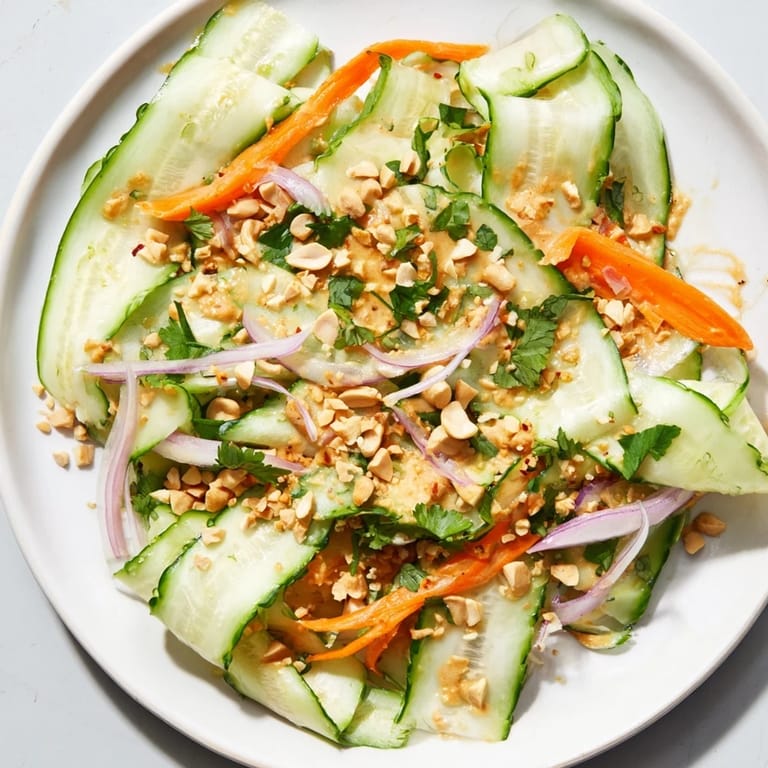
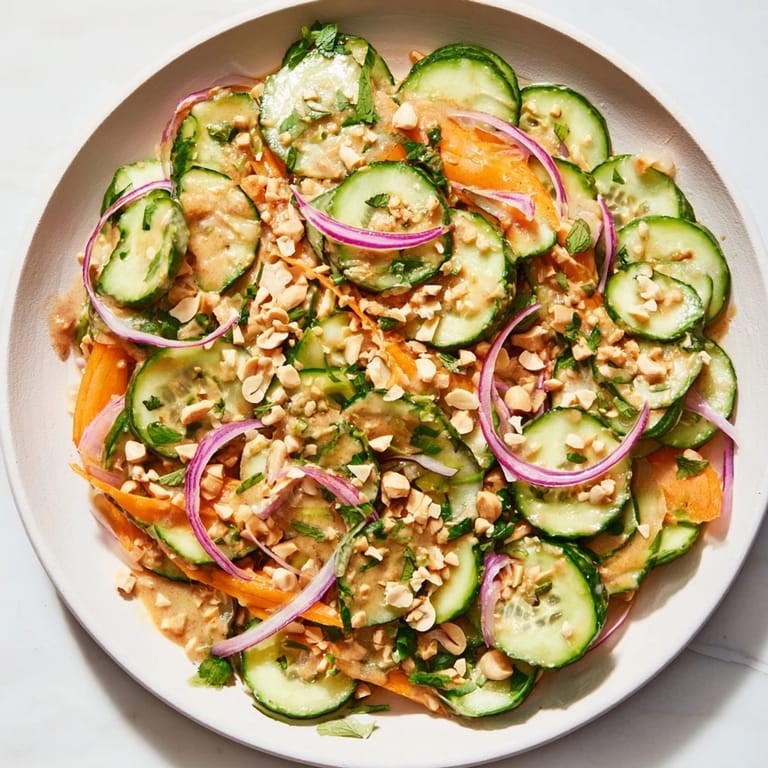
- Slice the cucumbers into thin rounds, julienne the carrot so it catches the dressing, thinly slice the red onion, and roughly chop the cilantro. The thinner you slice, the more the dressing coats every bite. Combine everything in a large bowl and set aside while you make the magic happen.
- Build your dressing:
- In a separate bowl, whisk the peanut butter, soy sauce, rice vinegar, lime juice, honey, sesame oil, garlic, and ginger until they start coming together. Add warm water one tablespoon at a time, whisking between each addition, until you get something that drizzles off a spoon but still clings to the vegetables—not soup, not paste. Taste it and adjust; if you like heat, stir in the red pepper flakes now.
- Marry the components:
- Pour the dressing over the vegetables and toss gently but thoroughly, making sure every piece gets coated. The cucumbers will release a little water, which is fine—it slightly dilutes the dressing and that's actually good.
- Finish and serve:
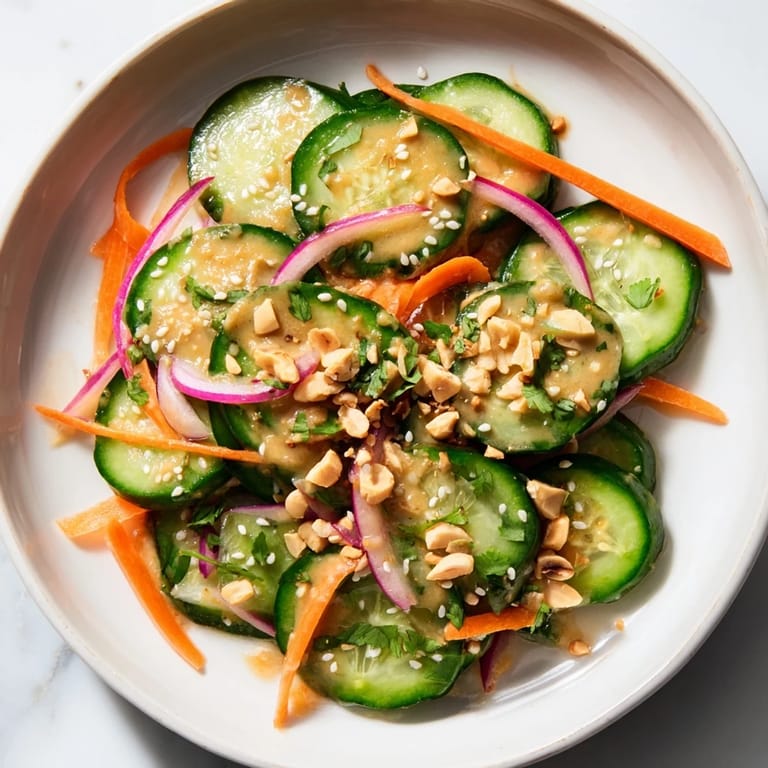
- Scatter the chopped peanuts and sesame seeds over the top right before serving, so they stay crunchy. You can eat it immediately while everything is cold and crisp, or chill it for up to thirty minutes if you prefer an even colder salad.
 Save to Pinterest
 The moment I served this to someone who claimed they didn't like cilantro, and they ate three servings anyway, I knew I'd found something that converts people. It's one of those dishes that tastes more complicated than it actually is, and somehow that gap between simplicity and flavor makes it feel special.
Why This Dressing Works
Thai cuisine balances sweet, salty, sour, and spicy in nearly equal measure, and this peanut dressing hits all four notes without any of them dominating. The sesame oil brings toasted depth that cheap dressings skip, while the ginger and garlic keep it tasting fresh instead of stale. I've learned that when these flavors are in harmony, the salad tastes restaurant-quality without any weird aftertaste.
Making It Your Own
This salad is forgiving and actually improves with improvisation. I've added thin-sliced bell pepper, crispy radish, and even shredded cabbage depending on what's in the fridge, and it always works. Some days I make it spicier with extra sriracha; other times I add a pinch of sugar if the lime was particularly tart. The dressing is robust enough to handle variations without falling apart.
Serving Suggestions and Pairings
Eat this on its own for a light lunch, or serve it alongside grilled chicken, pan-seared tofu, or shrimp to make it a complete meal. It also works beautifully as a side dish at a summer dinner party, and you can make it vegan by swapping maple syrup for honey. I've even spooned leftovers over rice the next day and it was just as good.
- For a vegan version, use maple syrup instead of honey and check your soy sauce for anchovies if that matters to you.
- Make the dressing ahead if you're prepping for a busy week, but dress the vegetables just before serving to keep them crisp.
- If you're feeding someone with a peanut allergy, sunflower seed butter swaps in seamlessly and tastes delicious.
 Save to Pinterest
 This is the salad I make when I want to feel like I cooked something impressive while barely lifting a finger. It reminds me why simple, honest ingredients and good technique are sometimes worth more than a complicated recipe.
Questions & Answers
- → What ingredients give this salad its Thai flavor?
The blend of creamy peanut butter, soy sauce, lime juice, fresh ginger, garlic, and a hint of red pepper flakes brings out the distinctive Thai-inspired taste in this salad.
- → Can the peanut dressing be adjusted for spiciness?
Yes, adding red pepper flakes or sriracha increases heat, while omitting them keeps the dressing mild and creamy.
- → What vegetables are used in this salad?
Thinly sliced cucumbers, julienned carrot, thin red onion slices, and fresh cilantro make up the crunchy vegetable base.
- → How can I make this dish vegan-friendly?
Swap honey for maple syrup in the dressing to keep the flavors intact while accommodating a vegan diet.
- → What additional toppings enhance the salad's texture?
Chopped roasted peanuts and optional sesame seeds add nutty crunch and depth to the salad's texture.
- → Is it necessary to chill the salad before serving?
Chilling for up to 30 minutes intensifies the flavors and adds a crisp, refreshing quality, but serving immediately is also excellent.