 Save to Pinterest
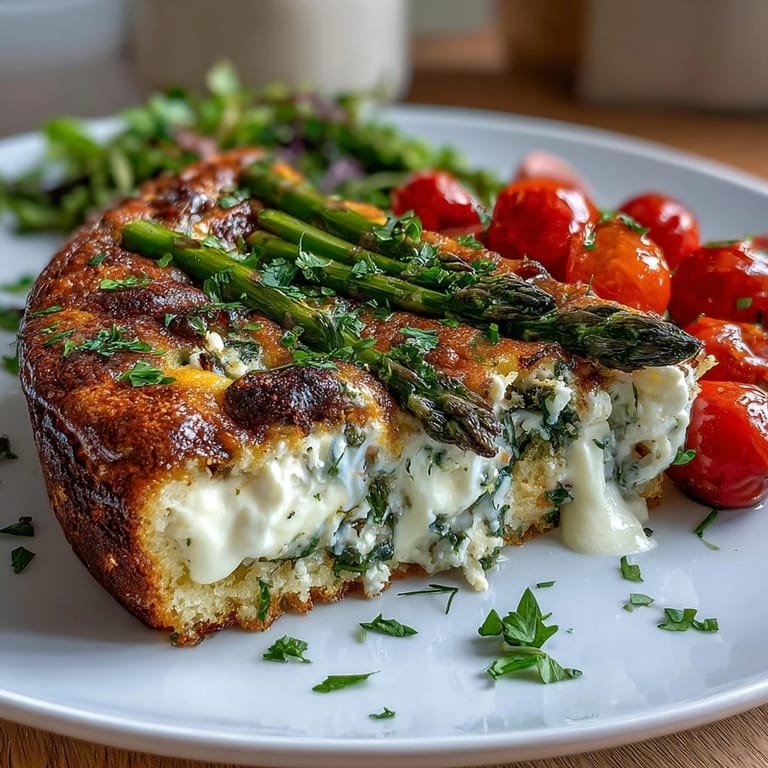
 There's something about spring that makes me want to cook with my hands rather than follow rules, and that's exactly how this frittata came about. My neighbor dropped off a bundle of asparagus from her garden one April morning, still dewy and perfect, and I knew I couldn't waste them on anything ordinary. The beauty of a frittata is that it doesn't judge you for improvising—it welcomes whatever vegetables are at their peak, whatever cheese you have on hand, and transforms them into something elegant without demanding much effort.
I made this for my sister's surprise brunch last spring, and the way her eyes lit up when she cut into that perfectly puffed golden circle was worth every minute. She kept asking what made it taste so rich when there was nothing heavy about it—that's the goat cheese doing its quiet magic, I told her. Watching people relax around a table with good food in front of them, no pretense, just real flavors and real hunger being satisfied—that's when I knew this recipe needed to become a regular thing.
Ingredients
- Asparagus: Trim the woody ends by snapping them where they naturally break—they'll tell you exactly where to cut, and the tender spears are what you're after here.
- Baby spinach: Rough chopping is your friend because those leaves will shrink dramatically once they hit the heat, so don't worry about precision.
- Zucchini: Dice it small enough that it softens in those first few minutes of cooking but stays recognizable in the finished frittata.
- Cherry tomatoes: Halving them keeps their bright flavor distributed throughout rather than concentrated in big chunks.
- Green onions: Slice them thin and add them near the end so they keep that fresh, sharp bite.
- Eggs: Use the best ones you can find—you'll taste the difference, and eight of them deserve respect.
- Whole milk or cream: This is what makes the frittata fluffy rather than dense, so don't skip it or substitute water.
- Goat cheese: Crumble it yourself from a log rather than buying pre-crumbled if you can—the texture and flavor are noticeably better.
- Parmesan cheese: Freshly grated makes a difference, but honestly, whatever you have will work because it's supporting actor here, not the star.
- Fresh chives and parsley: These go in at the very end, raw, so they brighten everything with their fresh herb energy.
- Olive oil: Use something you actually like tasting because it's a core ingredient, not a cooking medium doing the heavy lifting.
Tired of Takeout? 🥡
Get 10 meals you can make faster than delivery arrives. Seriously.
One email. No spam. Unsubscribe anytime.
Instructions
- Heat your oven and pan:
- Get your oven to 375°F and let an oven-safe skillet warm up with olive oil over medium heat. You want it hot enough that the oil shimmers but not smoking—that's the sweet spot for vegetables that cook through without browning too hard.
- Cook the firmer vegetables first:
- Asparagus and zucchini need a head start, so give them 3 to 4 minutes of gentle stirring. Listen for the soft sizzle that tells you they're cooking, not the aggressive crackle that means the heat's too high.
- Add the delicate vegetables:
- Spinach, tomatoes, and green onions go in next and need just 2 minutes because they're already tender—this is when your kitchen smells like pure spring. Stir gently so nothing sticks to the bottom.
- Prepare your egg base:
- In a separate bowl, whisk eggs with milk, salt, and pepper until it's completely combined and looks pale and frothy. This whisking incorporates air that becomes those little pockets of fluffiness in the finished frittata.
- Combine and top:
- Pour the egg mixture slowly and deliberately over the vegetables, letting it distribute evenly, then scatter the goat cheese, Parmesan, chives, and parsley across the top. The goat cheese will sink into some spots and sit on top of others, which is exactly what you want.
- Start on the stovetop:
- Let it cook undisturbed for 3 to 4 minutes until the edges begin to set and pull slightly away from the skillet's sides. You'll see the transformation happen—the liquid egg becoming solid at the borders while the center stays loose.
- Finish in the oven:
- Transfer the whole skillet to the oven and bake for 12 to 15 minutes until the center is just set and the top is slightly puffed and golden. Overbaking by even a couple minutes toughens the eggs, so set a timer and trust it.
- Rest before serving:
- Let it cool for 5 minutes in the skillet—this lets everything set up properly so you can slice it cleanly instead of it falling apart like scrambled eggs. Those 5 minutes feel long, but they're essential.
 Save to Pinterest
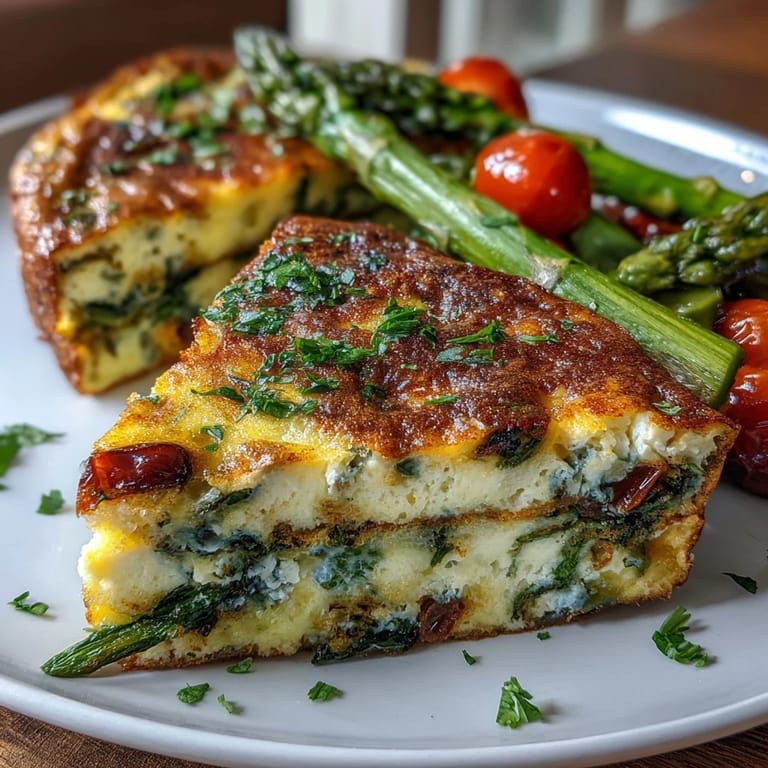
 There was this one morning when I made this for a friend who was going through something difficult, and she didn't talk much over breakfast, just ate slowly and looked out the window. By her second slice, she smiled for the first time that week, and she told me it tasted like someone cared. That's when I understood that good food isn't really about technique or ingredients—it's about showing up for people.
Vegetables You Can Swap In
Spring gives you options, and a frittata knows no judgment about substitutions. Fresh peas, artichoke hearts, sliced mushrooms, bell peppers, or even tender broccoli florets all work beautifully here—the only rule is that they should be cut into similar-sized pieces so everything cooks at the same pace. I've made this with whatever looked good at the farmer's market, and it's never once disappointed. The basic proportions stay the same: about 3 to 4 cups of vegetables total, cooked until just tender before the eggs go in.
Pairing and Serving Ideas
A simple green salad with lemon vinaigrette is the perfect companion because it cuts through the richness of the cheese and eggs without competing for attention. Fresh bread, toasted and maybe rubbed with garlic, turns this into a complete meal that feels both light and satisfying. I also love serving it with fresh fruit—strawberries or berries add brightness—and maybe a cup of good coffee if it's brunch, or a glass of white wine if it's dinner.
Making It Your Own
The magic of a frittata is how it adapts to whatever you have and whoever you're cooking for. If dairy isn't in the picture, skip the cheese and use plant-based milk in the egg mixture—the frittata will still be delicious, just slightly less custardy. Some people add fresh herbs like tarragon or dill instead of chives, or finish it with a sprinkle of everything bagel seasoning for something unexpected. The structure stays solid; only the flavor changes.
- Slice and store leftovers in the refrigerator for up to three days, reheating gently to avoid toughening the eggs.
- You can make this completely dairy-free by omitting cheese entirely and using oat or almond milk instead of cream.
- Cut it into wedges or squares depending on your mood, and it works cold, room temperature, or warm.
 Save to Pinterest
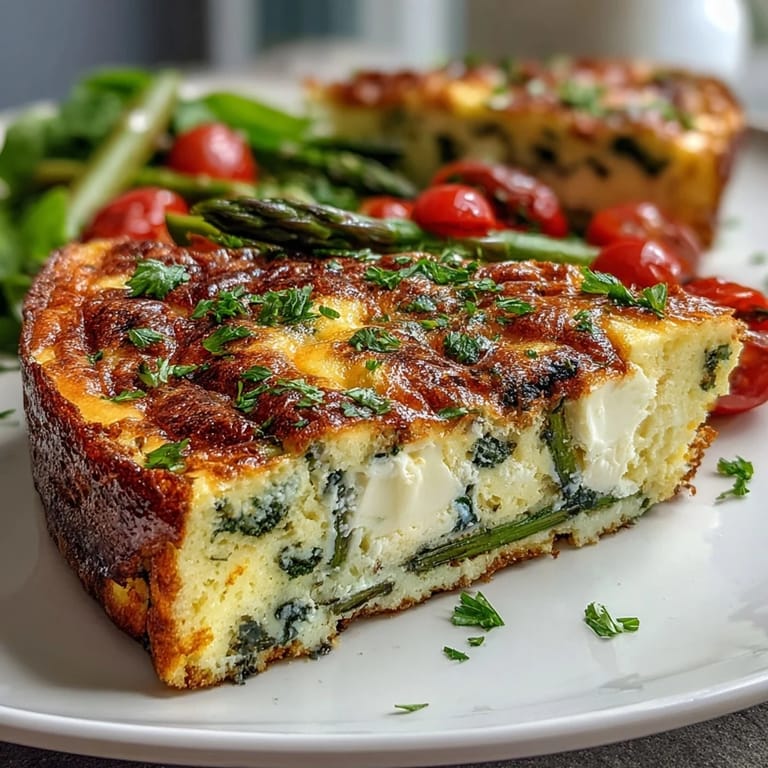
 This frittata has become my answer to almost every spring occasion—brunch, quick dinners, feeding friends who drop by unexpectedly. It's the kind of dish that whispers rather than shouts, letting the vegetables and quality ingredients do the talking.
Questions & Answers
- → Can I use other vegetables in this frittata?
Yes, peas or artichokes work well as seasonal substitutes to keep the dish fresh and flavorful.
- → What type of pan is best for cooking this dish?
An oven-safe skillet, approximately 10–12 inches, ensures even cooking on stovetop and when baked.
- → How do I ensure the eggs cook evenly?
Cook gently on the stovetop until edges set, then transfer to the oven to finish baking for a uniformly puffed center.
- → Can I make this dairy-free?
Omit the cheeses and substitute milk with plant-based alternatives for a dairy-free version.
- → What herbs complement the flavors best?
Fresh chives and parsley add a bright, herbaceous note that balances the creamy goat cheese and vegetables.
- → Is this dish suitable for dietary restrictions?
It’s vegetarian and gluten-free but contains eggs and dairy; check cheese allergens if needed.