 Save to Pinterest
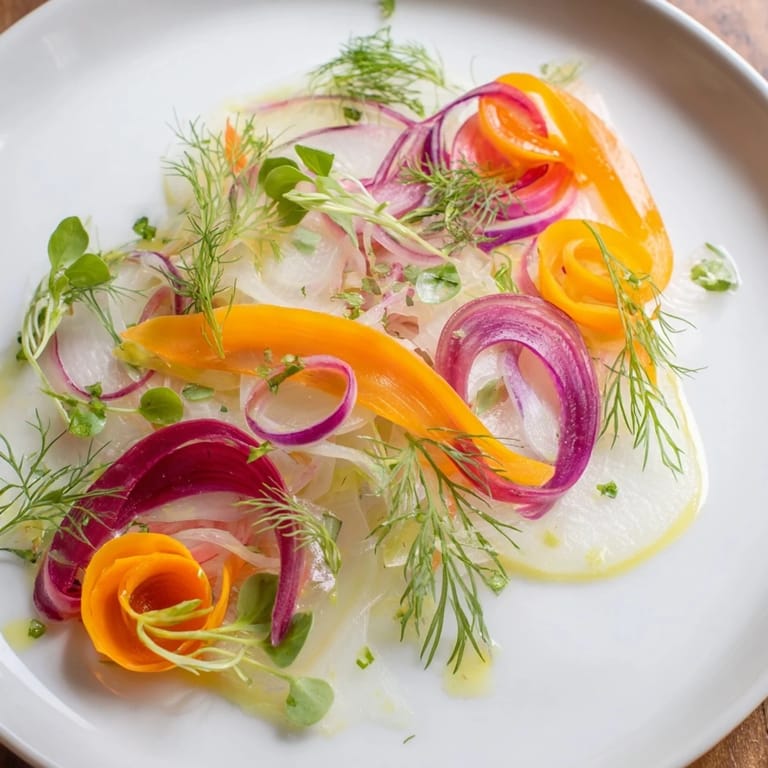
 I discovered this salad by accident one spring afternoon when I was playing with my mandoline and suddenly had this pile of impossibly thin vegetable ribbons catching the light like spun glass. Instead of tossing them in a bowl, I arranged them in a spiral on a plate, and something clicked—the way they overlapped and curled reminded me of watching a spinning top slow down, catching light at different angles. That moment taught me that salads don't have to be tossed and uniform to be beautiful; sometimes the best dishes come from just letting vegetables be themselves.
I made this for a dinner party once, and my friend walked in, saw it on the table, and literally stopped talking mid-sentence. She asked if I'd hired a caterer. That's when I realized this isn't just a salad—it's a conversation starter, the kind of dish that sits in the middle of the table and makes everyone lean in closer.
Ingredients
- Medium fennel bulb: The waxy layers become almost translucent when shaved, adding an elegant anise whisper without overpowering anything.
- Rainbow carrots: Use at least two colors—the visual contrast is half the point, and each color has a slightly different sweetness.
- Golden beet: Less earthy than red beets, so it won't bleed into everything and stain your plate.
- Red onion: Just a sliver gives you sharpness and a pop of color; soak it longest to mellow the bite.
- Fresh dill and chervil: These feathery herbs soften the raw crunch and make the salad feel more alive.
- Microgreens: They're delicate and add a peppery finishing touch that elevates the whole thing.
- Extra-virgin olive oil: Go for something with character—this deserves good oil, not the everyday stuff.
- Lemon juice: Keeps vegetables from oxidizing and brightens the dressing with real acid.
- Honey: Just a teaspoon balances the lemon's sharpness so the dressing doesn't taste like pure citrus.
- Dijon mustard: An emulsifier that holds the dressing together and adds a subtle depth.
Tired of Takeout? 🥡
Get 10 meals you can make faster than delivery arrives. Seriously.
One email. No spam. Unsubscribe anytime.
Instructions
- Shave everything paper-thin:
- Use a mandoline on its thinnest setting or a sharp vegetable peeler, working slowly and letting the blade do the work. You want ribbons so delicate they're almost see-through.
- Give the vegetables an ice bath:
- Cold water plumps the cells and makes the ribbons curl and wave naturally. Five to ten minutes does it—any longer and they lose their personality.
- Build your dressing:
- Whisk the oil, lemon juice, honey, and mustard together until emulsified and glossy. Taste as you go and adjust the salt and pepper until it sings.
- Arrange in a spinning pattern:
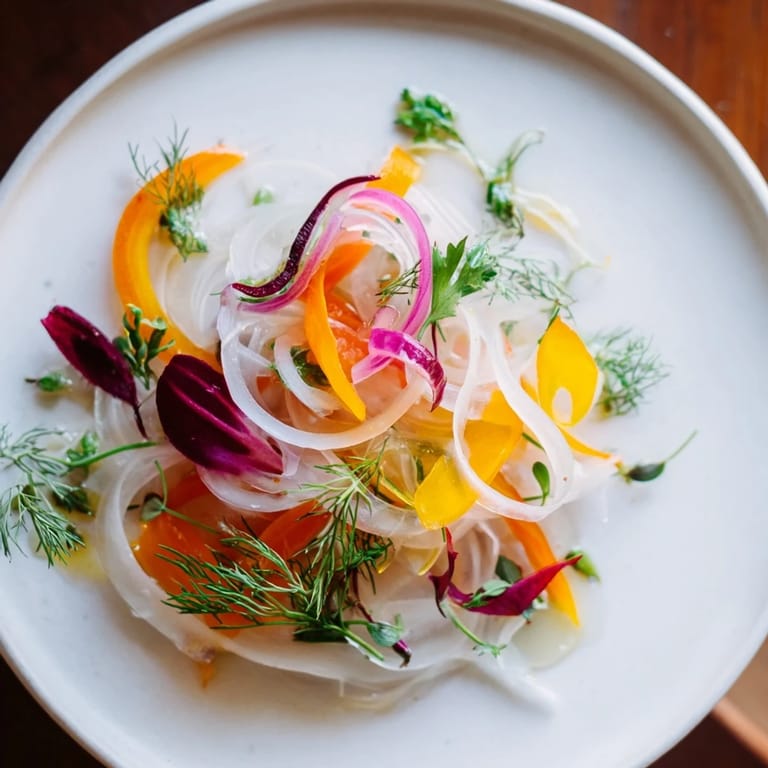
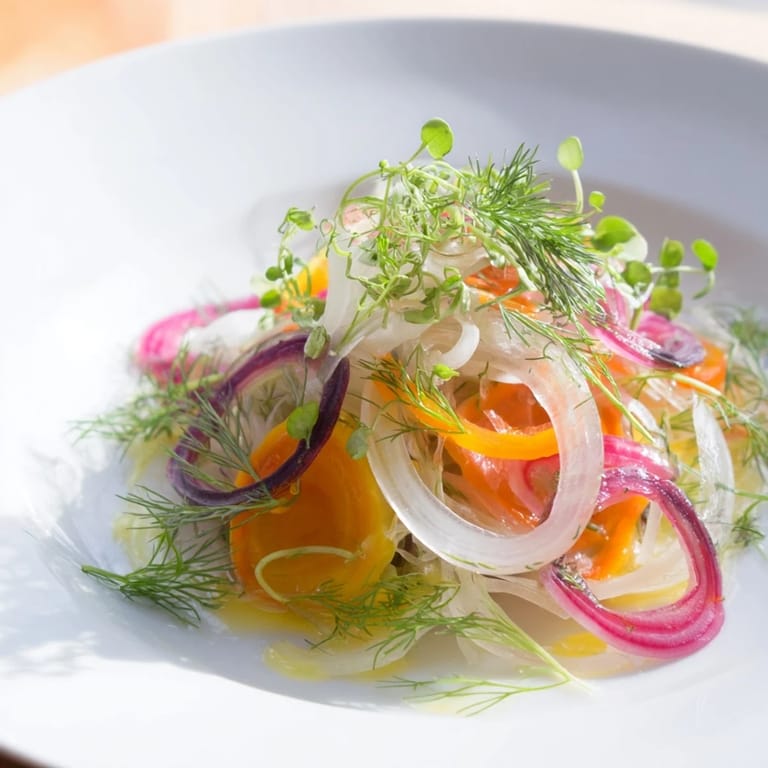
- Start at the center of your plate and work outward in a spiral, layering the vegetable ribbons so they overlap slightly and the edges blur into motion. Think less structured salad, more kinetic art.
- Crown it with herbs:
- Scatter dill, chervil, and microgreens across the top, letting them land where they fall. The outer edges should feel the most abundant.
- Dress at the last second:
- Just before serving, drizzle the dressing lightly over everything. This keeps the vegetables crisp and prevents sogginess.
 Save to Pinterest
 The real magic happens when you set this on the table and watch people see it before they taste it. Someone always asks how long you spent arranging it, and the answer—just 25 minutes—somehow makes it even better. That's when a salad stops being food and becomes a small moment of joy.
The Art of Vegetable Ribbons
Not all vegetables ribbon equally. Fennel, carrots, and beets are forgiving because they're dense and hold their shape. Delicate cucumbers or zucchini will curl too aggressively and become thin wisps that barely register. The key is choosing vegetables with enough structure to stay elegant but enough water content to be tender when raw.
Building the Spin
The spiral pattern works because it moves the eye outward, which creates that sense of motion even though nothing is actually moving. Start tight and controlled in the center, then let the outer ribbons spread and overlap more loosely as you move outward. Some chefs call this controlled chaos, but really it's just giving the vegetables permission to look a little wild.
Color and Contrast
Color is a language all its own in plating. Rainbow carrots paired with a golden beet and white fennel create a palette that feels intentional without looking like you're trying too hard. Red onion adds a jewel-tone accent that catches light. If you can't find rainbow carrots, use one of each color—orange, purple, and yellow. The visual rhythm will still work.
- Always peel the golden beet to keep the pale, buttery color unmarred.
- Pat all vegetables completely dry after the ice bath or they'll slip around on the plate.
- If you're making this ahead, arrange everything but the herbs and dressing, then finish just before guests arrive.
 Save to Pinterest
 This salad proves that sometimes the simplest ingredients, treated with intention and arranged with a little playfulness, become something unforgettable. Serve it chilled, drink something crisp alongside it, and enjoy the moment when food becomes something people actually want to photograph.
Questions & Answers
- → How do I achieve the thin, wispy vegetable ribbons?
Use a mandoline slicer or a sharp vegetable peeler to shave the fennel, carrots, beet, and onion into delicate, translucent ribbons that curl lightly when soaked in ice water.
- → Why soak the shaved vegetables in ice water?
Soaking in ice water crisps the vegetables and helps the ribbons curl, adding a light texture and visual appeal.
- → Can I substitute the herbs used in this salad?
Yes, if chervil is unavailable, parsley is a good alternative. Fresh dill and microgreens add aromatic layers but can be adjusted to personal taste.
- → What dressing best complements the salad's flavors?
A light vinaigrette with olive oil, lemon juice, honey, Dijon mustard, salt, and pepper enhances the fresh, slightly sweet vegetable ribbons without overpowering them.
- → How should this salad be served for best presentation?
Arrange the vegetable ribbons tightly in a circular pattern on a large plate, allowing edges to blur and overlap for a dynamic spinning effect, then scatter the herbs on top just before dressing.