 Save to Pinterest
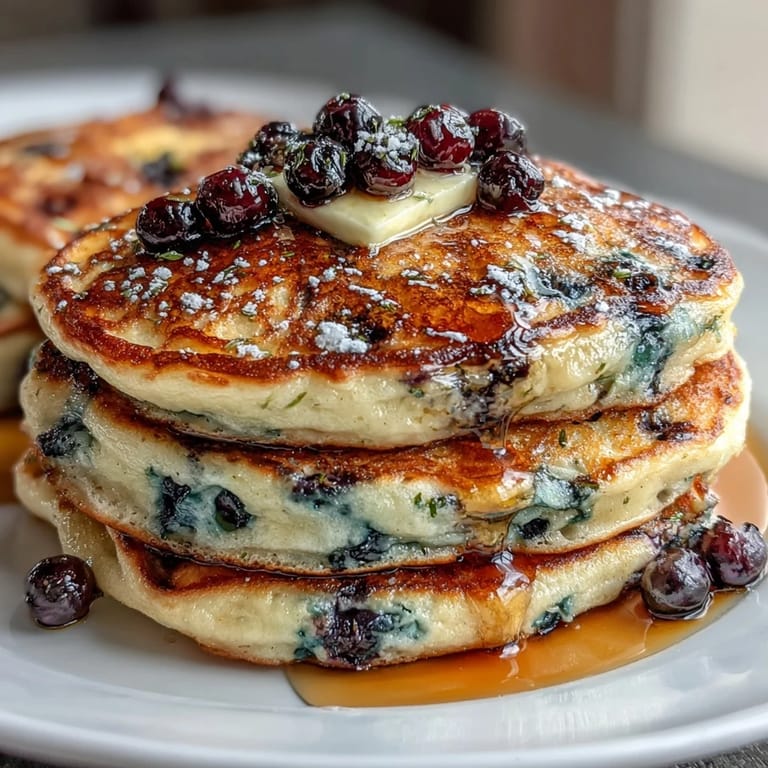
 There's something almost magical about the moment sourdough discard transforms into something golden and fluffy on the griddle. Last Tuesday, I was staring at my starter jar wondering what to do with yet another feeding's worth of discarded culture when the smell of fresh lemons from my farmer's market haul hit me—and suddenly these pancakes felt inevitable. The tartness of the lemon zest paired with the natural tang of sourdough creates this bright, complex flavor that somehow tastes both comforting and exciting at once.
My neighbor stopped by unexpectedly one Sunday morning while I was testing these, and the smell alone pulled her inside. She sat at my counter watching blueberries pop and burst as they hit the hot pan, and by the time the first stack was done, she was already asking if she could make them for her book club brunch. There's something about feeding people pancakes that taste like springtime in the middle of winter that just brings people together.
Ingredients
- Sourdough discard: This is your secret weapon—room temperature discard that hasn't been fed adds authentic tang and helps the pancakes rise beautifully without needing excessive baking powder.
- Milk: Whole milk works best for richness, but 2% works fine if that's what you have on hand.
- Eggs: Large eggs are crucial; they bind everything together and contribute to that luxurious fluffy texture.
- Unsalted butter: Always unsalted so you control the salt level, and melted butter incorporates smoothly into the batter.
- Lemon zest and juice: The zest gives bright bursts of flavor throughout, while juice adds acidity that activates the baking soda for extra lift.
- All-purpose flour: I've learned the hard way that measuring by weight is more reliable, but if you scoop and level, you'll be fine.
- Baking powder and baking soda: This combination works together—the soda reacts with the lemon juice and sourdough's acidity, while the powder provides steady rise.
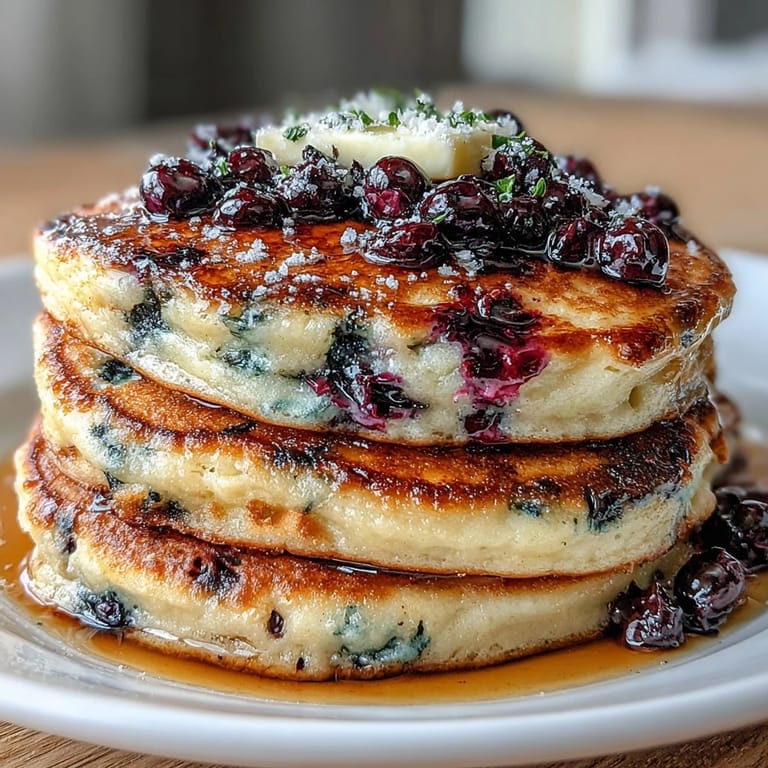
- Blueberries: Fresh is wonderful, but frozen actually gives you a better result because they stay intact rather than breaking apart and turning the batter purple.
Tired of Takeout? 🥡
Get 10 meals you can make faster than delivery arrives. Seriously.
One email. No spam. Unsubscribe anytime.
Instructions
- Combine your wet base:
- Whisk together the sourdough discard, milk, eggs, melted butter, vanilla, lemon zest, and lemon juice in a large bowl until everything is incorporated and smooth. You'll notice the mixture smells distinctly tangy and bright—that's exactly what you want.
- Mix your dry ingredients separately:
- In another bowl, whisk together flour, sugar, baking powder, baking soda, and salt to distribute the leavening agents evenly. This step prevents pockets of raw baking soda that can taste metallic.
- Fold wet into dry gently:
- Pour the wet mixture into the dry ingredients and fold together with a spatula or wooden spoon—use about 10-15 gentle strokes until you see mostly combined ingredients with a few small lumps visible. Overmixing develops gluten and makes pancakes tough and dense instead of tender.
- Add the blueberries:
- Fold in the blueberries carefully as your final step, distributing them evenly throughout the batter. If using frozen berries, don't thaw them; the cold helps them stay whole during cooking.
- Prepare your cooking surface:
- Heat a non-stick skillet or griddle over medium heat and brush lightly with butter, letting it foam slightly before you start cooking. Medium heat is key—too hot and the outside burns before the inside cooks through, too cool and they stay pale and dense.
- Cook first side until bubbles appear:
- Pour 1/4 cup of batter per pancake and let it sit undisturbed until you see bubbles breaking through the surface and the edges look set and slightly dry, about 2-3 minutes. This tells you the bottom is golden and the interior has set enough to flip.
- Flip and finish cooking:
- Use a spatula to flip gently and cook the second side for 1-2 minutes until golden brown and cooked through. The second side cooks faster because the pan is already hot.
- Keep warm and repeat:
- Transfer cooked pancakes to a plate and cover loosely with foil to keep warm while you cook remaining batter, adding a touch more butter to the pan between batches if needed. Serve warm with your favorite toppings.
 Save to Pinterest
 There was a particular morning when my daughter asked for these pancakes instead of her usual plain ones, and she actually sat down and ate three without complaints. Watching her squeeze fresh lemon over the top and ask for more blueberries felt like a small victory in the daily battle of picky eating.
The Sourdough Discard Advantage
Using sourdough discard in pancakes is one of those kitchen discoveries that feels almost too simple once you understand it. The starter already contains wild yeast and bacteria that add flavor and help with leavening, which means you need less chemical leavening than traditional pancakes. The result tastes more sophisticated and complex, almost like they've been fermented naturally even though they come together in minutes. I started doing this months ago when my discard jar felt like a burden, and now I actually look forward to feeding my starter just so I have an excuse to make these.
Timing and Temperature Matter
The thing about pancake cooking that nobody tells you is how much your stove matters. Every griddle or skillet has hot spots and personality; mine is hotter on the left side, so I rotate pancakes and adjust heat as needed. Getting the temperature right takes maybe two test pancakes, and it's worth the small sacrifice to dial it in. Medium heat is genuinely the sweet spot—it gives you time to see those bubbles before the bottom burns, and it cooks through evenly without creating a rubber exterior.
Storage and Serving Ideas
These pancakes freeze beautifully, which means you can make a double batch on a lazy weekend and eat them for days afterward. Just cool them completely on a rack, stack them with parchment between each pancake, and freeze in an airtight container for up to two weeks. Reheat in a toaster set to medium, or warm gently in a 300°F oven so they don't dry out completely.
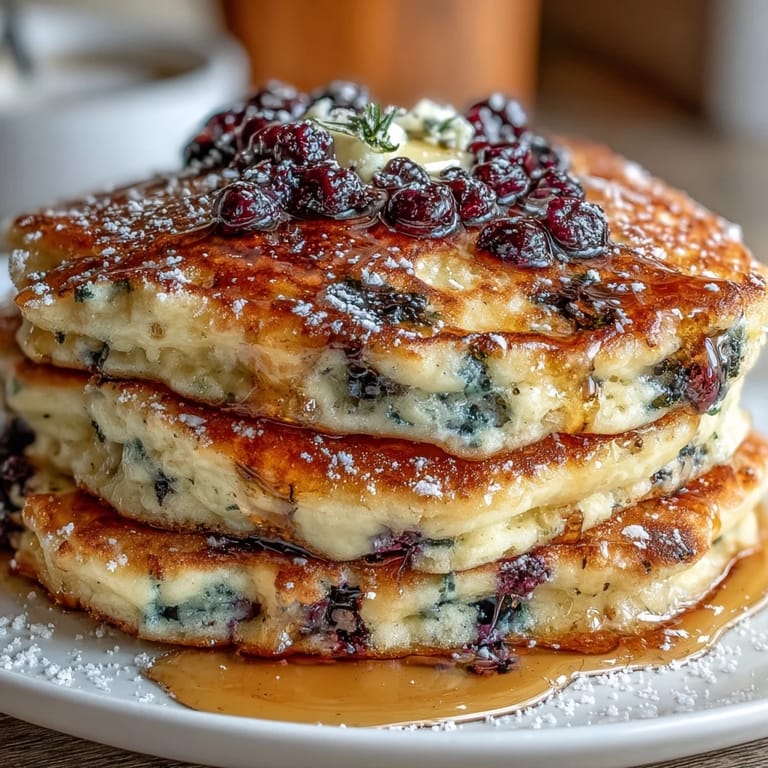
- Serve with a drizzle of maple syrup and a dollop of Greek yogurt for a protein boost that balances the sweetness.
- Fresh whipped cream and extra lemon zest makes these feel fancy enough for company brunch, but they're still casual enough for weeknight breakfast.
- If you want extra lemon punch, add 1/2 tsp lemon extract to the wet ingredients, though start with less if you're not a bold lemon person.
 Save to Pinterest
 These pancakes have become the breakfast I make when I want to feel proud of my cooking but don't want to fuss for hours. They're the kind of recipe that reminds you why feeding people matters so much more than feeding yourself.
Questions & Answers
- → How does sourdough discard affect the pancakes?
Sourdough discard adds a subtle tang and moist texture to the batter, enhancing flavor complexity without overwhelming brightness.
- → Can frozen blueberries be used directly in the batter?
Yes, just toss frozen blueberries with a teaspoon of flour before folding in to prevent color streaking throughout the batter.
- → What is the best way to cook these pancakes evenly?
Use a preheated non-stick skillet over medium heat, lightly buttered, cooking until bubbles form on the surface before flipping gently.
- → How can the lemon flavor be intensified?
Adding a half teaspoon of lemon extract alongside the zest and juice will boost citrus notes without altering texture.
- → Are there alternatives to all-purpose flour?
Yes, spelt or whole wheat flour can be substituted to introduce a nuttier flavor and slightly denser crumb.