 Save to Pinterest
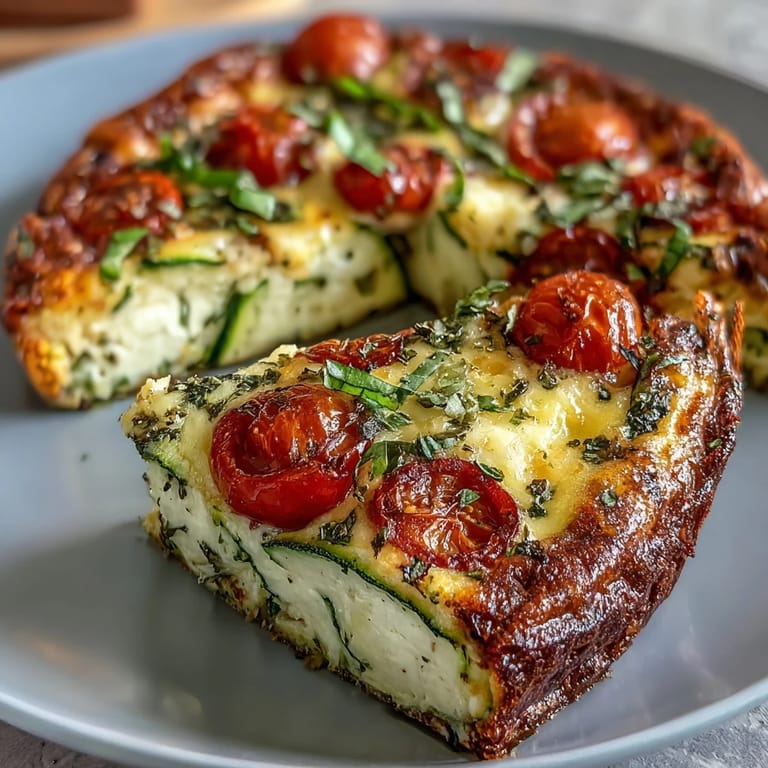
 My kitchen felt oddly quiet that Tuesday morning when I decided to stop overthinking breakfast. I'd been standing in front of the fridge staring at half a zucchini and a punnet of cherry tomatoes, wondering if they could become something worth eating instead of something I'd toss out by Wednesday. It turns out they could—and with just eggs, a little heat, and an oven, this frittata became my answer to those mornings when I wanted something nourishing but didn't want to fuss.
I made this for my sister on a Sunday brunch when she mentioned she was trying to eat simpler. She took one bite and asked why I'd never made it before, even though we both knew the answer—I'd finally stopped waiting for a special occasion to use what was already sitting in my vegetable drawer. That moment felt like permission to trust my own instincts more often.
Ingredients
- Zucchini, thinly sliced: One medium zucchini gives you structure without heaviness; the thin slices cook tender in minutes and somehow disappear into the eggs while keeping everything moist.
- Cherry tomatoes, halved: Their natural sweetness balances the earthiness of the zucchini, and halving them lets them nestle into the frittata instead of rolling around the pan.
- Yellow onion, finely chopped: A small onion softened first creates a subtle sweetness that's easy to miss but impossible to achieve without it.
- Baby spinach (optional): If you add it, it wilts into almost nothing but adds iron and a quiet green note that feels intentional.
- Large eggs: Six eggs are your foundation—they should be room temperature if you think of it, but honestly, cold ones work fine too.
- Skim milk or unsweetened plant milk: Just two tablespoons loosens the eggs and makes the frittata fluffy rather than dense; don't skip this small step.
- Parmesan cheese, grated (optional): A quarter cup adds a salty richness that makes every bite taste intentional, but nutritional yeast works beautifully if you're avoiding dairy.
- Fresh basil, chopped: This is where the magic happens—basil transforms a simple egg dish into something that tastes like you actually know what you're doing in the kitchen.
- Dried oregano: Half a teaspoon ties everything together with an herb-forward note that feels Mediterranean and grown-up.
- Garlic, minced: One clove is enough to add depth without overshadowing the vegetables or making your breath questionable for the rest of the day.
- Olive oil: One tablespoon is all you need; nonstick cooking spray works perfectly too if you're watching every gram of fat.
Tired of Takeout? 🥡
Get 10 meals you can make faster than delivery arrives. Seriously.
One email. No spam. Unsubscribe anytime.
Instructions
- Heat your oven first:
- Set it to 375°F and let it come to temperature while you prepare everything else—this small step prevents the bottom from cooking too fast before the oven finishes the job.
- Sauté the onion:
- Heat olive oil in a large oven-safe skillet over medium heat, then add your chopped onion and let it soften for about two minutes, stirring once or twice; you'll notice it smells sweet and looks translucent when it's ready.
- Add the zucchini:
- Slide in your thinly sliced zucchini and cook for four to five minutes, stirring occasionally, until the pieces are tender but still hold their shape. Listen for the gentle sizzle and watch the pieces change from pale to golden at the edges.
- Bloom the garlic:
- Add your minced garlic and cook for just one minute—this prevents it from turning bitter and fills your kitchen with a smell that makes you feel like you know what you're doing.
- Finish the vegetables:
- Toss in your halved cherry tomatoes and the spinach if you're using it, then cook for about two more minutes until the spinach wilts and the tomatoes begin to soften slightly.
- Whisk the eggs:
- While the vegetables are cooking, crack your eggs into a bowl and whisk them together with the skim milk, Parmesan, basil, oregano, salt, and pepper until everything is combined and looks creamy. This is where the flavor profile comes together.
- Combine and cook on the stovetop:
- Pour the egg mixture over the vegetables in the skillet and stir very gently just to distribute the eggs among the vegetables, then let it cook undisturbed for two to three minutes until you see the edges starting to set. You'll notice the mixture firming up around the edges while the center stays loose.
- Transfer to the oven:
- Slide your skillet into the preheated oven and bake for ten to twelve minutes until the frittata is puffed and the center is just set—it should jiggle barely at all when you shake the pan. Don't overbake it or you'll lose that tender texture.
- Rest and serve:
- Let it cool for two minutes in the skillet, then slice it into wedges right in the pan and serve warm or at room temperature with whatever you have nearby.
 Save to Pinterest
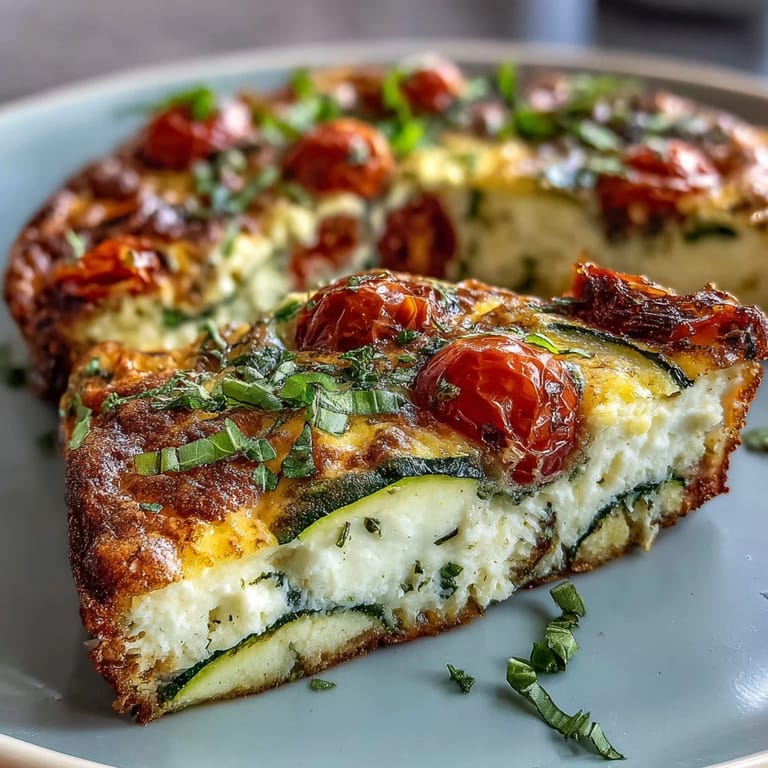
 There's something about cutting into a frittata you made yourself and watching the eggs stay tender and the vegetables stay visible that makes you feel capable in a quiet way. It's not complicated, but it matters.
Why This Works as a Healthy Breakfast
Frittatas are protein-forward without requiring meat, and the vegetables bulk up the dish without adding calories that make you feel heavy. The eggs cook gently with milk, creating a texture that's satisfying to eat, and the herbs do so much lifting that you don't miss salt or fat. I've learned that breakfast doesn't have to be complicated to be nourishing—it just has to taste good enough that you actually want to eat it, and this one does.
Making It Your Own
The beauty of a frittata is that it's forgiving and adaptable. I've made this exact recipe maybe ten times, and I've changed something almost every time depending on what I had or what I felt like eating. Red pepper flakes turn it spicy if you like heat, and nutritional yeast replaces the Parmesan perfectly if dairy isn't in your plan. Some mornings I add wilted spinach, other mornings I skip it completely. The structure stays the same, but the personality changes.
Storage and Leftovers
Frittatas are remarkable because they're genuinely good cold, which means breakfast can happen without reheating if you're in a hurry. I store mine covered in the refrigerator for up to three days, and I'll eat a wedge straight from the fridge at my desk with an espresso and call it a legitimate meal. You can also gently reheat a slice in a low oven or even a toaster oven, and it softens back to almost-fresh texture.
- Cold frittata tastes better than you'd expect, making it perfect for meal prep or unexpected busy mornings.
- If you're reheating, use a low oven to keep it tender instead of turning it into scrambled eggs.
- Pack a wedge in your bag if you know you'll need breakfast on the road—it travels better than most breakfast foods.
 Save to Pinterest
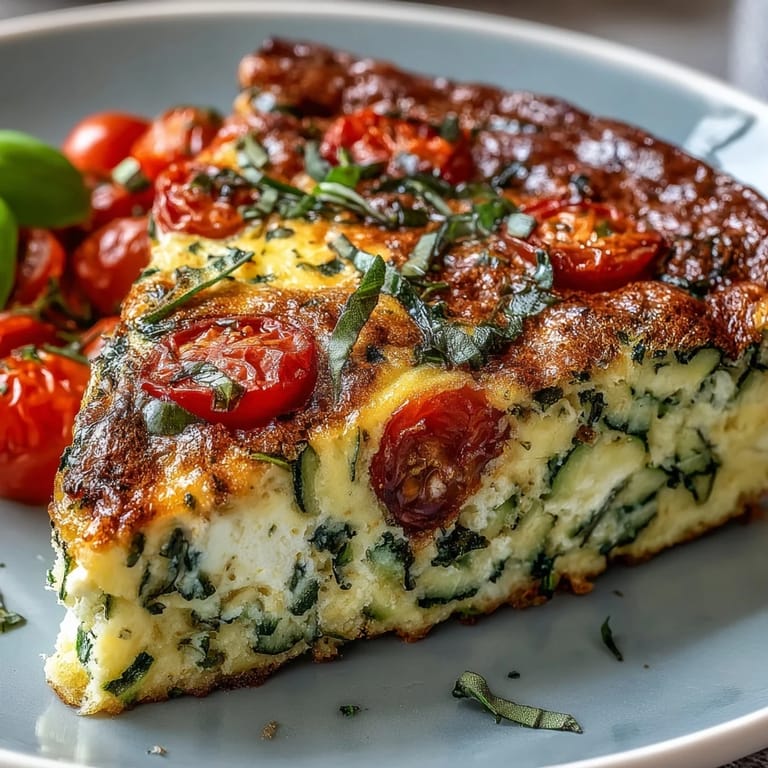
 This frittata taught me that healthy eating doesn't mean deprivation or complicated recipes; it means respecting ingredients and taking the time to cook them well. Make one this week and see what I mean.
Questions & Answers
- → Can I make this frittata ahead of time?
Yes, this dish refrigerates well for up to 3 days. Slice and store in an airtight container, then enjoy cold or gently reheated in the microwave or oven.
- → What vegetables can I substitute for zucchini?
Bell peppers, mushrooms, asparagus, or broccoli work wonderfully. Maintain similar quantities to ensure proper cooking time and texture.
- → Is this suitable for meal prep?
Absolutely. Prepare the entire dish ahead, slice into portions, and refrigerate. Individual portions reheat quickly for busy weekday breakfasts or lunches.
- → Can I freeze leftovers?
While possible, freezing may slightly alter the texture. For best results, refrigerate and consume within 3 days rather than freezing.
- → How do I know when the frittata is done?
The center should be just set with no liquid egg remaining, and the edges will be lightly golden. A knife inserted into the center should come out clean.