 Save to Pinterest
 One Tuesday evening when my fridge was nearly empty, I found two cans of tuna and a lonely lemon, and decided to throw together something quick. Twenty minutes later, I had a dish that tasted like a Roman trattoria—bright, garlicky, and so simple I couldn't believe I'd never made it before. My partner came home to the smell of golden garlic and lemon zest filling the kitchen, and that's when I knew this would become a regular in our rotation.
I made this for friends who showed up unannounced on a Friday night, and they kept asking if I'd been cooking all day. The secret was just letting the garlic whisper in hot oil while the pasta cooked, then tossing everything together with enough pasta water to make it silky. They left asking for the recipe, which felt like the highest compliment.
Ingredients
- Spaghetti, 400g: Use good quality pasta that holds its shape and texture when coated; this isn't the place to cut corners.
- Olive oil, 2 tbsp: The foundation of the sauce, so choose something you'd actually taste on its own.
- Garlic cloves, 3, finely sliced: Slicing rather than mincing gives you control over texture and prevents burning, which would turn the whole dish bitter.
- Lemon, 1, zested and juiced: Fresh lemon is non-negotiable here; it's what transforms canned tuna into something bright and alive.
- Canned tuna in olive oil, 2 × 160g cans, drained and flaked: That olive oil is your friend—don't drain it all away, and choose a brand you trust.
- Red pepper flakes, 1/2 tsp: Optional but recommended; it wakes everything up without overwhelming.
- Fresh flat-leaf parsley, 1/4 cup, chopped: Parsley isn't just garnish here; it's a flavor player that keeps the dish from feeling one-dimensional.
- Pasta cooking water, 1/4 cup reserved: This starchy liquid is magic—it turns oil and juice into a proper sauce that clings to every strand.
- Salt and black pepper, to taste: Taste as you go; the tuna and parmesan bring saltiness, so go easy at first.
Tired of Takeout? 🥡
Get 10 meals you can make faster than delivery arrives. Seriously.
One email. No spam. Unsubscribe anytime.
Instructions
- Set the pasta in motion:
- Bring a large pot of salted water to a rolling boil and add your spaghetti, stirring once so nothing sticks together. Before you drain it, ladle out a full cup of that starchy cooking water and set it aside—you'll thank yourself in a moment.
- Coax the garlic into gold:
- While the pasta does its thing, pour olive oil into a large skillet and set it over medium heat. When the oil shimmers, add your sliced garlic and listen for the gentle sizzle; this should take only 1–2 minutes, and you're watching for fragrant, not browned.
- Wake up the tuna:
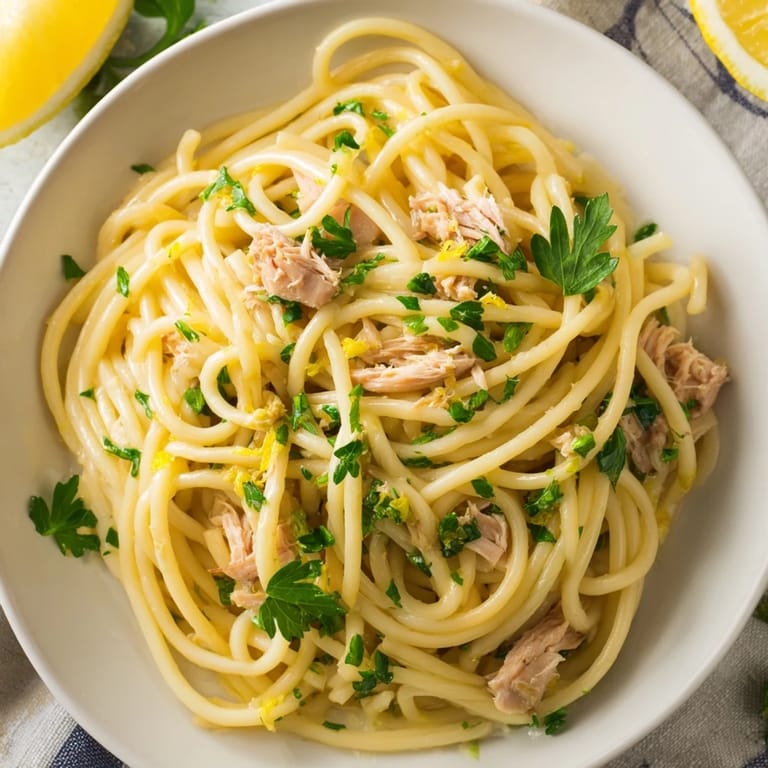
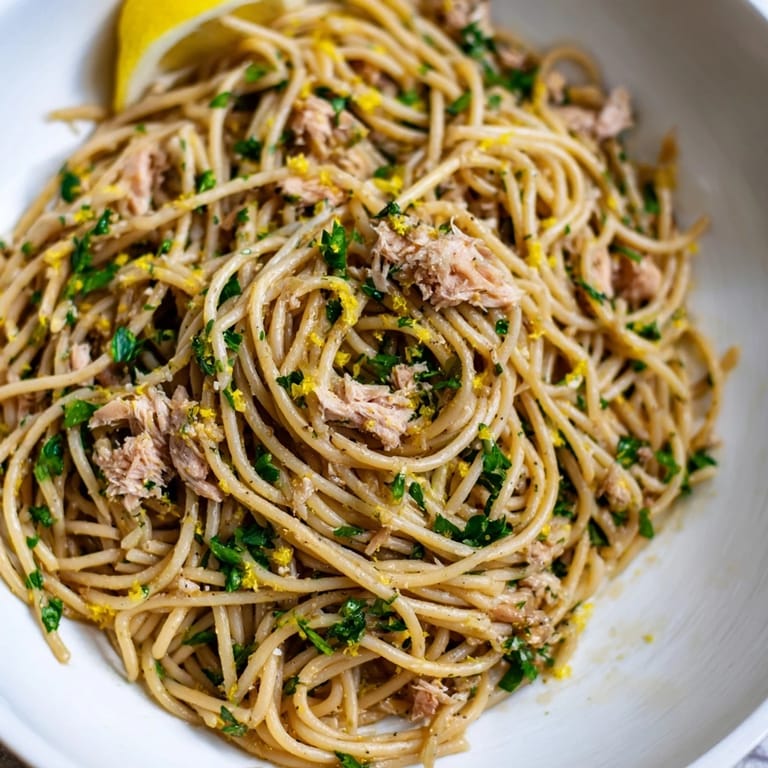
- Add your drained tuna to the garlic, breaking it into flakes with the back of a wooden spoon. It should look loose and tender, not like a single clump. Pour in your lemon zest and juice, scatter the red pepper flakes if you're using them, and let it warm through for 2–3 minutes while you stir gently.
- Bring it all together:
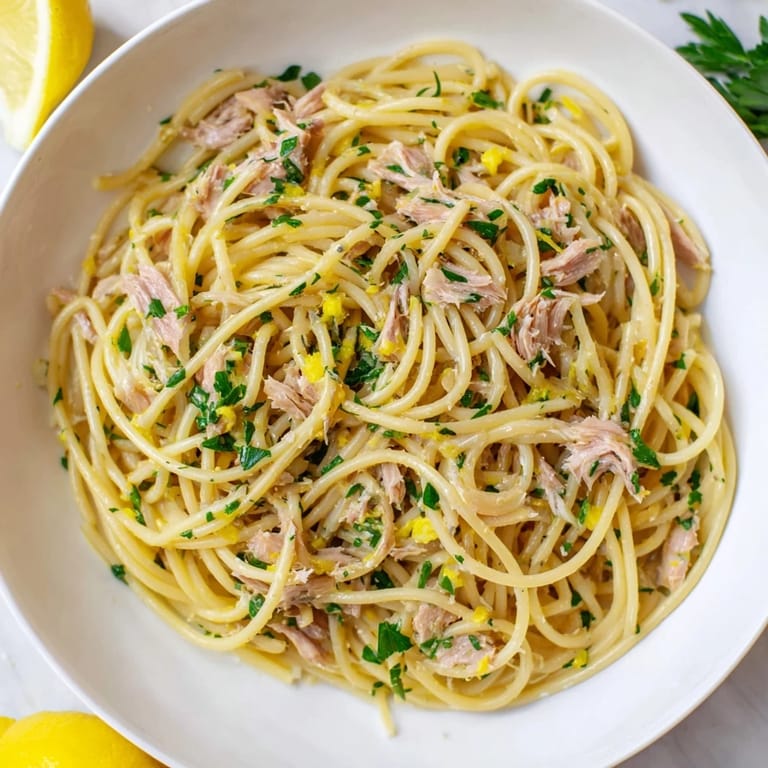
- Add your hot drained spaghetti directly to the skillet with the tuna mixture and start tossing. Splash in a little pasta water—maybe 2 tablespoons—and keep tossing until the sauce clings to the pasta like a silky coat. You might need all your reserved water, or just half; trust your instinct.
- Finish with life:
- Stir in your chopped parsley, then taste and season with salt and pepper. Some people add a grating of parmesan here; I love it, but it's not traditional, so that's your call.
- Serve while it's singing:
- Divide among plates, scatter extra parsley on top, and pass around lemon wedges so everyone can squeeze just as much brightness as they want.
 Save to Pinterest
 I remember serving this to my grandmother, who always said canned fish was beneath her, and watching her ask for seconds without comment. Sometimes the simplest food speaks louder than anything fussy ever could.
Why Quality Tuna Makes All the Difference
This dish lives or dies by your tuna choice, so spend a moment reading labels. Tuna packed in olive oil has more flavor and better texture than water-packed varieties, and small brands often care more about how the fish tastes. One afternoon I bought the cheapest option in the store and made a pale, watery version that I almost didn't serve to myself—the next time I chose better tuna, and it was a completely different dish. You're using so few ingredients that each one matters.
The Lemon Is Your Seasoning
People often think they need to add salt by the handful to make food taste good, but lemon is the real magician here. Both the juice and the zest matter—the zest brings brightness, the juice brings acid that makes every flavor sharper and cleaner. I once made this with bottled lemon juice out of laziness, and it tasted flat and one-dimensional; fresh lemon turned it into something alive.
Variations and Add-Ons
This recipe is a blank canvas, and I've experimented with it more times than I can count. Sometimes I add capers for a salty-briny edge, or halved cherry tomatoes for sweetness and color, or a pinch of fennel seed for something unexpected. On nights when I'm feeling fancier, I'll tear in fresh basil or add a handful of toasted pine nuts for texture. The beauty is that the base is so strong that these additions just play around the edges.
- Cherry tomatoes (halved and added at the same time as the tuna) bring acidity and natural sweetness.
- Capers add a salty-briny punch that echoes the umami of the fish.
- Fresh basil or mint can replace parsley if that's what you have on hand, or use both for more herbaceous flavor.
 Save to Pinterest
 This is the kind of recipe that makes me feel like a capable home cook, even when I'm tired or have almost nothing in the pantry. It's honest food that tastes like more than the sum of its parts.
Questions & Answers
- → How do I keep the spaghetti from drying out?
Reserve some pasta cooking water before draining and add it gradually while tossing to create a light sauce that coats the pasta evenly.
- → Can I use fresh tuna instead of canned?
Yes, but fresh tuna should be cooked gently to preserve its texture and combined with the lemon and garlic sauce promptly to maintain flavor balance.
- → What does the lemon add to this dish?
Lemon provides brightness and acidity, balancing the richness of the tuna and olive oil while enhancing the garlic’s aroma.
- → Is crushed red pepper mandatory?
No, it’s optional. It adds a subtle heat that complements the citrus and savory elements but can be omitted for a milder flavor.
- → What garnishes work best here?
Extra chopped parsley and fresh lemon wedges highlight freshness and provide a pleasant contrast in flavor and color.
- → How can I vary the sauce?
Adding capers or halved cherry tomatoes enriches texture and introduces a briny or sweet note for more complexity.