 Save to Pinterest
 There's something magical about a sourdough that's been quietly bubbling away overnight, and one Saturday morning, I decided to channel that into something unexpected—a pull-apart bread studded with blueberries and bright lemon. My kitchen smelled like fermented wheat and citrus, and I kept sneaking glances at the dough as it rose, wondering if the tanginess would play nicely with the sweet-tart filling. When that first golden loaf came out of the oven, I knew I'd stumbled onto something special.
I'll never forget bringing this to a brunch potluck where I arrived embarrassingly early, and the host took one bite while it was still warm and immediately asked for the recipe before anyone else had even sat down. That moment of someone genuinely delighted by something you made, asking questions about your methods instead of just polishing off their plate—that's when you know you've nailed it.
Ingredients
- All-purpose flour (2 1/2 cups): The backbone of your dough; measure by weight if possible for consistency.
- Active sourdough starter (1/2 cup): Must be fed and bubbly—a sluggish starter will slow everything down, so feed it at least 4–6 hours before mixing.
- Granulated sugar (1/4 cup for dough, 1/2 cup for filling): The dough sugar feeds the yeast gently; the filling sugar coats everything in brightness.
- Whole milk (1/2 cup, lukewarm): Warmth matters here—too hot kills the starter, too cold slows fermentation.
- Large eggs (2, room temperature): Room-temperature eggs emulsify better and create a more tender crumb.
- Unsalted butter (1/4 cup softened plus 2 tablespoons melted): The softened butter goes into the dough; the melted butter is your brush for building flavor layers.
- Fine sea salt (1/2 teaspoon): Don't skip this—it balances the tang and sweetness perfectly.
- Lemon zest (2 tablespoons): Fresh is non-negotiable; bottled zest tastes like nothing compared to what you'll get from two fresh lemons.
- Fresh blueberries (1 cup): Use frozen unsweetened if fresh aren't available, but don't thaw them or they'll bleed into your dough.
- Powdered sugar (1 cup) and fresh lemon juice (2–3 tablespoons): The glaze is your final flourish—keep it loose enough to drizzle but thick enough to cling.
Tired of Takeout? 🥡
Get 10 meals you can make faster than delivery arrives. Seriously.
One email. No spam. Unsubscribe anytime.
Instructions
- Combine Your Base:
- In a large bowl, whisk together flour, sugar, and salt—this aerates as you mix and distributes the salt evenly. In a separate bowl, stir the sourdough starter, lukewarm milk, and room-temperature eggs together until the starter breaks down slightly into the liquid.
- Bring It Together:
- Pour the wet mixture into the dry ingredients and stir until shaggy, then add the softened butter in chunks and knead for 7–10 minutes until the dough becomes smooth and slightly elastic. It should feel soft and a little sticky but not falling apart in your hands.
- Let Time Do the Work:
- Cover loosely with plastic wrap or a damp towel and leave at room temperature for 6–8 hours, preferably overnight. You're aiming for the dough to roughly double; this slow fermentation is where all the sourdough flavor develops.
- Make Your Magic Filling:
- While the dough rises, combine the sugar and lemon zest in a small bowl and rub them together with your fingertips until the mixture smells intensely lemony. This is your secret to evenly distributed flavor.
- Roll and Layer:
- On a lightly floured surface, roll your dough into a rough 12 by 18-inch rectangle—it doesn't need to be perfect. Brush the entire surface with melted butter, then sprinkle the lemon sugar evenly over the top, finishing with the blueberries scattered across.
- Cut and Stack:
- Using a sharp knife or bench scraper, cut the dough lengthwise into six 3-inch-wide strips. Stack all the strips on top of each other, then cut perpendicular to create six neat squares. You now have six stacks of dough.
- Arrange in the Pan:
- Place each stack vertically in a greased 9 by 5-inch loaf pan, cut side up so you see all those gorgeous layers. The pieces should fit snugly but not be crushed together.
- Second Rise:
- Cover the pan and let it rise at room temperature for 1–2 hours until the dough is noticeably puffy and springs back slowly when poked. If your kitchen is cool, this might take closer to 2 hours.
- Bake Until Golden:
- Preheat your oven to 350°F, then bake for 35–40 minutes until the top is deep golden brown and a skewer inserted into the center comes out clean. If the top is browning too quickly by the 25-minute mark, loosely tent with foil.
- Finish with Glaze:
- Let the bread cool in the pan for about 15 minutes, then turn it out onto a wire rack. Whisk powdered sugar and fresh lemon juice together until smooth, then drizzle generously over the warm bread so it soaks in slightly.
 Save to Pinterest
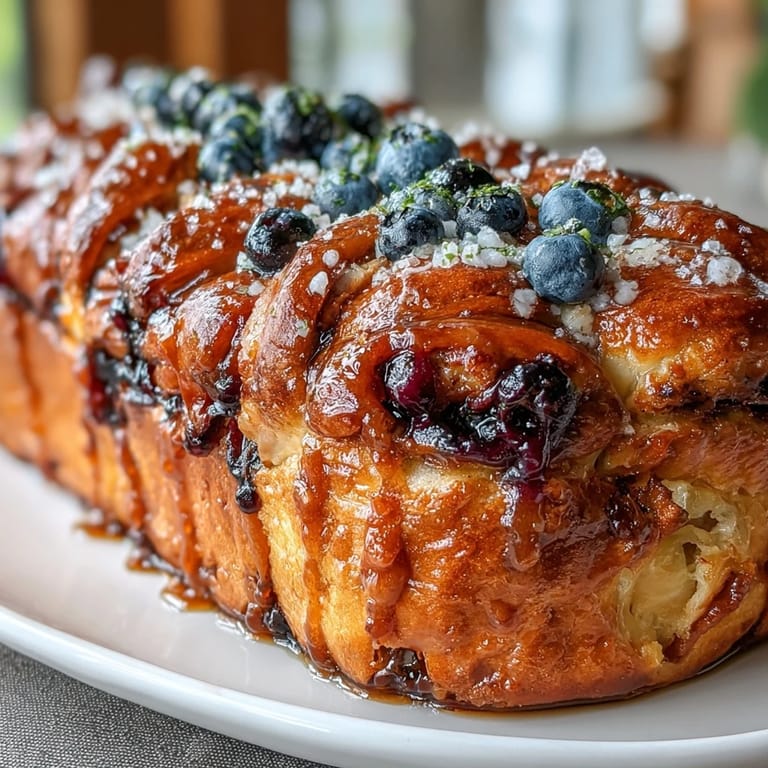
 The moment someone tore off their first piece at the table and found those pockets of blueberry and that tender, almost custardy crumb, the whole room went quiet in that way that only happens when food exceeds expectations. It wasn't just breakfast anymore—it was a moment worth remembering.
Why Sourdough Starter Makes a Difference
Using sourdough starter instead of commercial yeast gives you a slower, more complex fermentation that develops flavor over time—you literally can't rush this in a few hours and expect the same result. The natural wild yeast and bacteria create organic acids that make the crumb tender and give you that subtle tang that keeps people guessing what makes this bread taste so good. It's also more forgiving than instant yeast in some ways; the slow rise means you have flexibility if life gets in the way.
The Art of Zesting
I learned this the hard way after grating zest directly into a bowl and discovering I'd created a clumpy, uneven mess—now I always mix zest with sugar first, rubbing them together until fragrant. The sugar acts like tiny sanding machines, breaking down the zest and releasing essential oils while distributing the flavor evenly throughout the filling. Those little flecks of oil catch the light and the taste in every single layer.
Customizing Your Bread
This is where you get to make it your own, and I've experimented with so many additions over the past year that I almost don't recognize the original anymore. A handful of sliced almonds scattered before baking adds a delightful crunch that contrasts with the tender crumb, or you could try candied lemon peel if you want to lean even harder into the citrus direction. Just remember that wet additions (like jam swirls) will make the structure softer, so less is more if you want to maintain that gorgeous pull-apart integrity.
- Sliced almonds or chopped pistachios add textural interest without weighing down the dough.
- Frozen raspberries work beautifully mixed with or instead of blueberries for a different flavor profile.
- A touch of vanilla extract in the dough (about 1/2 teaspoon) rounds out the flavor without announcing itself.
 Save to Pinterest
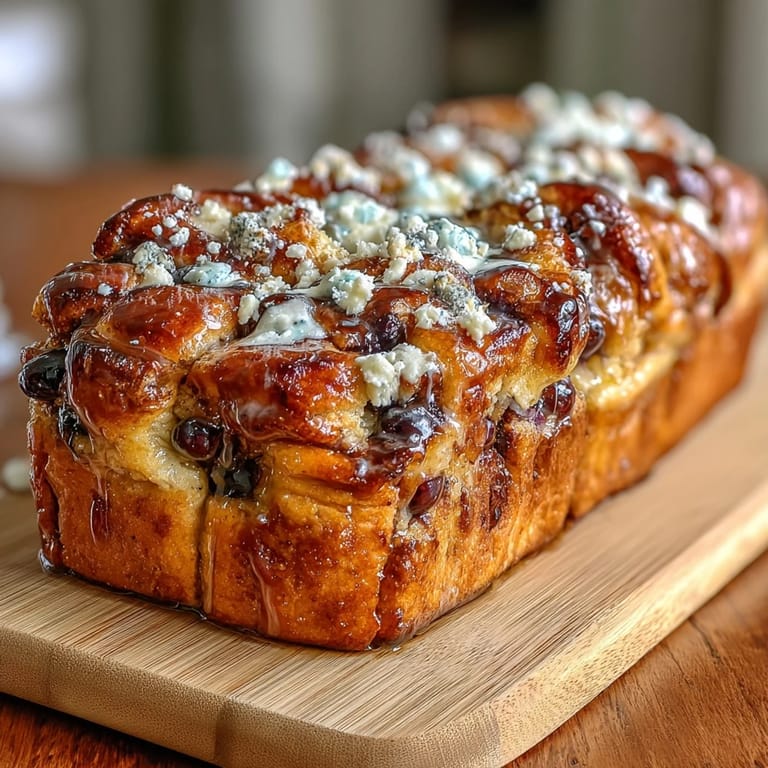
 There's real joy in pulling apart a bread you made yourself, watching someone's face light up as they discover the layers hidden inside. This one always delivers that moment.
Questions & Answers
- → Can I use frozen blueberries instead of fresh?
Yes, frozen blueberries can be used directly without thawing to prevent excess moisture in the dough.
- → What is the purpose of the overnight rise?
The extended rise enhances the dough’s flavor and develops its soft, airy texture through natural fermentation.
- → Is it necessary to use a sourdough starter?
The sourdough starter provides a distinct tang and texture, but a different leavening agent would alter the final flavor.
- → How should I store leftovers?
Keep the loaf wrapped at room temperature and reheat slices gently before serving to maintain softness.
- → Can I add nuts for extra texture?
Yes, sliced almonds or similar nuts can be sprinkled between layers before baking for added crunch.