 Save to Pinterest
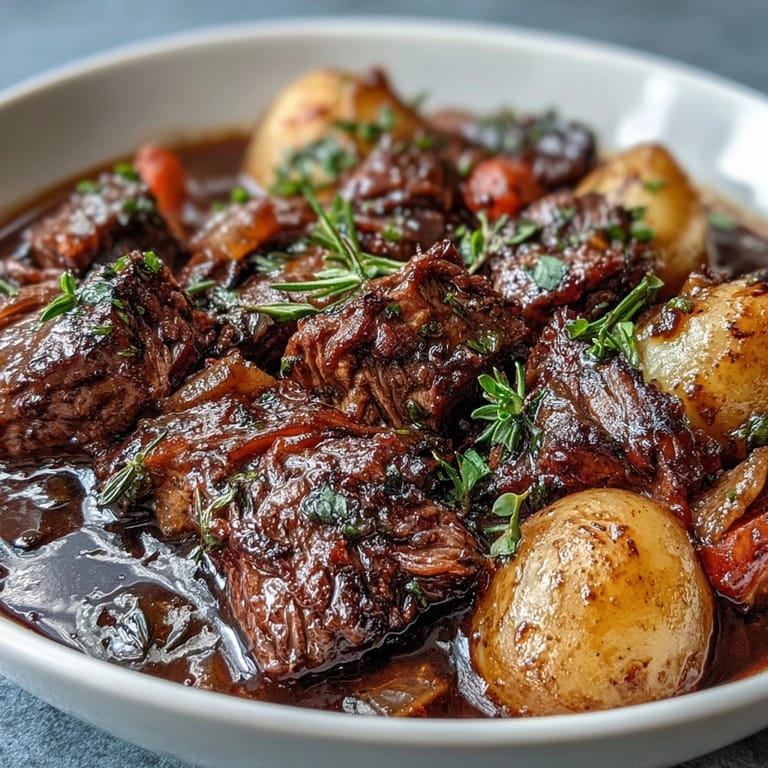
 There's something about the smell of beef browning in a hot skillet that makes a kitchen feel like home, even on the coldest afternoons. I stumbled onto this stew recipe during one of those seasons when my freezer was full of beef chuck and my mood matched the gray sky outside. The slow cooker did most of the heavy lifting, which meant I could forget about it for hours and just let the house fill with that deep, savory aroma. When I lifted the lid that evening, the beef had turned so tender it fell apart at the gentlest nudge, and the vegetables had softened into golden, caramelized pieces swimming in this rich, wine-darkened broth.
I made this for my neighbor one snowy evening after her surgery, just knowing she'd need something warm that required no thinking. She told me weeks later that she'd eaten it straight from the container while sitting on her porch, watching the snow fall, and it was exactly the kind of gentle, nourishing thing she needed in that moment. That's when I realized this stew isn't just dinner—it's the culinary equivalent of wrapping someone in a blanket.
Ingredients
- Beef chuck, cut into 1.5-inch cubes (2 lbs): This cut has enough marbling and connective tissue to become impossibly tender during the long, slow braise, and honestly, it's one of the most forgiving cuts you can buy.
- Kosher salt and black pepper (1/2 tsp each): Season the beef generously before searing—this step develops flavor that no amount of broth can replicate later.
- Carrots, peeled and cut into 1-inch pieces (3 large): Cut them uniform so they cook evenly, and they'll add natural sweetness that rounds out the savory wine and herbs.
- Parsnips, peeled and sliced (2): These bring an almost earthy sweetness that potatoes alone can't achieve, and they soften into silky strands in the slow cooker.
- Yukon Gold potatoes, peeled and chopped into chunks (2 large): Their waxy texture holds up beautifully without turning to mush, unlike starchy russets that can get mealy.
- Yellow onion, diced (1 large): Onion is the quiet foundation here—it breaks down completely and deepens the broth's flavor in ways you won't notice but absolutely will miss if it's not there.
- Celery stalks, sliced (3): This is the holy trinity's third voice, adding a subtle vegetal backbone that balances richness without announcing itself.
- Garlic, minced (3 cloves): Add it raw to the slow cooker so it mellows into a whisper of flavor rather than burning into bitterness.
- Tomato paste (2 tbsp): Just a small amount adds depth and umami, but don't skip the searing step—it needs those caramelized beef drippings to sing.
- Worcestershire sauce (1 tbsp): This is the secret ingredient that made me stop wondering what was missing in my older stew recipes.
- Bay leaf (1): Always remove this before serving, but keep it in during cooking to add a subtle herbal note you can't quite name.
- Dried thyme and rosemary (1 tsp each): These Mediterranean herbs brighten the earthiness of root vegetables and beef without overpowering the broth.
- Beef broth, gluten-free if needed (4 cups): Use quality broth—this is not the time to skimp, since the stew's soul depends on it being flavorful from the start.
- Dry red wine (1 cup): Don't use expensive wine, but use something you'd actually drink, because cheap wine tastes cheap in the finished stew.
- Cornstarch and cold water (2 tbsp each): Mix these into a slurry at the end to thicken the broth without making it taste like cornstarch—this step is what separates a soupy stew from the creamy, cling-to-the-spoon version.
Tired of Takeout? 🥡
Get 10 meals you can make faster than delivery arrives. Seriously.
One email. No spam. Unsubscribe anytime.
Instructions
- Sear the beef until deep golden brown:
- Get your skillet screaming hot over medium-high heat, then work in batches so the beef actually browns instead of steaming—you want that dark, crusty surface that adds color and flavor to the finished stew. Listen for the aggressive sizzle; that's the sound of something delicious happening.
- Build the slow cooker base:
- Dump the seared beef into the slow cooker, then layer in all your prepped vegetables—carrots, parsnips, potatoes, onion, and celery. Don't stress about arrangement; they'll all find their way to tender, savory perfection.
- Blend in the aromatics and seasonings:
- Stir in the garlic, tomato paste, Worcestershire, bay leaf, thyme, and rosemary until everything is coated and fragrant. This is your moment to taste the raw mixture and feel confident that something wonderful is about to happen.
- Add the liquid and begin the long slow braise:
- Pour in the beef broth and red wine, give everything a gentle stir, cover, and let it cook on low for eight hours. The house will smell increasingly incredible as time passes, and you can pretty much forget about it.
- Thicken the stew in the final stretch:
- In the last fifteen minutes, mix cornstarch and cold water into a slurry and stir it in, then cook uncovered on high to let the broth reduce and thicken into that glossy, coat-the-back-of-a-spoon consistency. This is when it stops being soup and becomes proper stew.
- Finish and taste before serving:
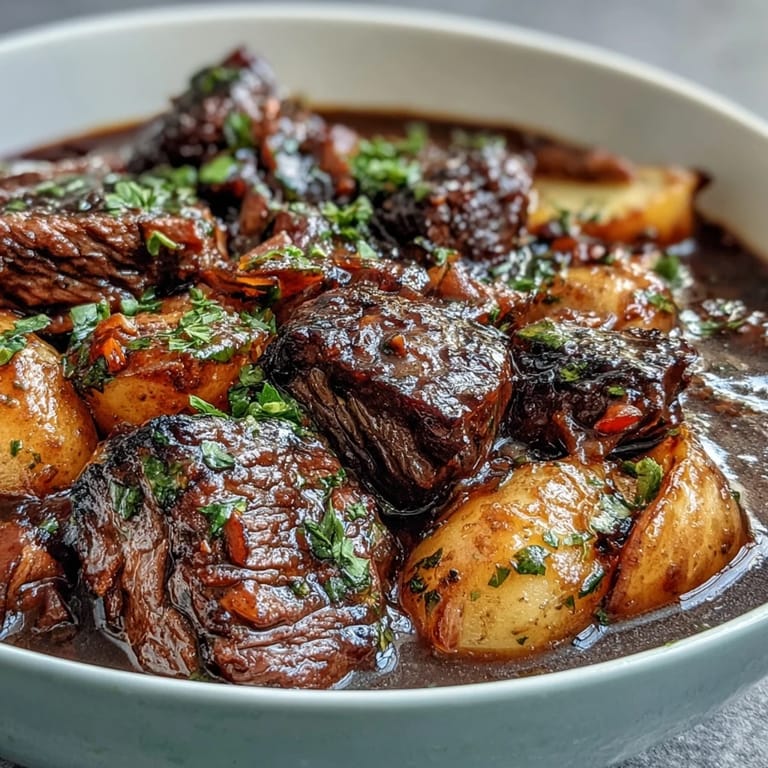
- Fish out the bay leaf, take a spoonful, and adjust salt and pepper if needed—sometimes the broth concentrates into something that needs just a tiny tweak. Serve it in wide bowls so the vegetables shine.
 Save to Pinterest
 This stew became my go-to recipe for life's heavy moments—new babies, breakups, illness, the ordinary weight of winter. There's something about handing someone a container of this that says more than words ever could.
Flavor Evolution Through the Cooking Process
The first two hours of cooking, the broth is still thin and the beef still holds its shape—it smells meaty and a little raw. By hour four, the aromatics have really moved in, and you get that wine-forward, herb-touched aroma wafting through every room. By the final hours, the beef has surrendered completely and the whole thing has become this mellow, deeply savory thing where you can't quite separate which ingredient brought which flavor. It's like watching a conversation between people who've grown comfortable with each other over time.
Customization Without Losing the Soul
I've made this stew a hundred different ways depending on what's in my crisper drawer or what someone's dietary needs are. Mushrooms added in the final hour become almost meaty and tender. Frozen peas stirred in at the very end stay bright green and add a subtle sweetness. Sweet potatoes instead of Yukon Golds turn it into something almost autumn-leaning, with a different kind of comfort. The beautiful part is that this recipe is forgiving enough to accommodate your mood and your pantry without ever losing its essential warmth.
Making It Your Own
Some people serve this over mashed potatoes instead of in a bowl, which turns it into something closer to a sloppy affair but somehow more decadent. Others ladle it over crusty bread so every bite is soaked in broth and bread. A few of my friends have added a splash of soy sauce, which deepens the umami in ways that feel almost luxurious.
- If you're cooking for someone gluten-free, triple-check that your Worcestershire sauce and beef broth don't contain hidden wheat.
- This stew freezes beautifully for up to three months, so double the recipe and tuck half away for a future night when you need comfort fast.
- Let the stew sit overnight in the fridge before reheating—the flavors marry and deepen, making yesterday's batch taste even better than today's.
 Save to Pinterest
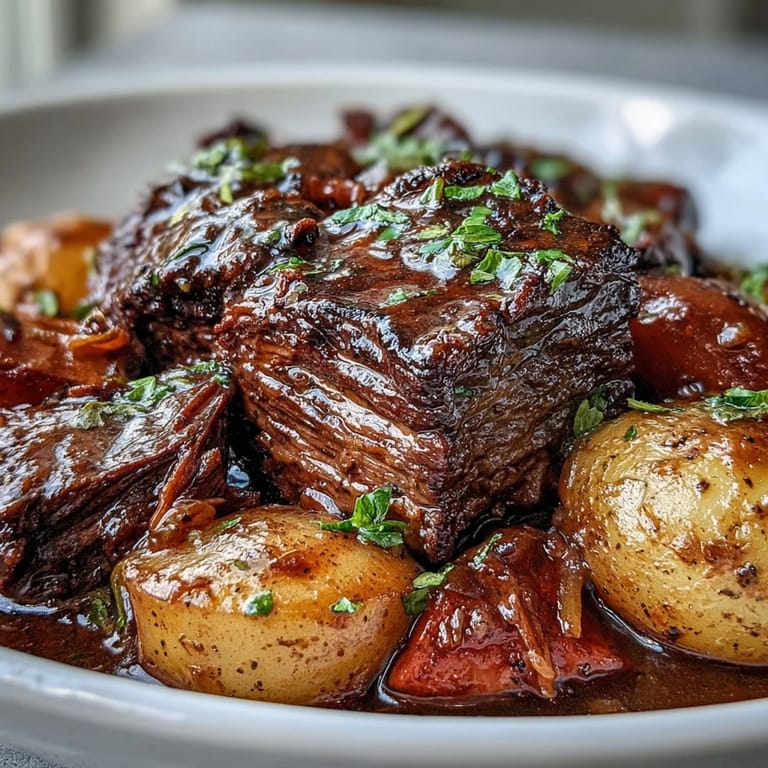
 This stew has become my answer to almost every question about what to cook when someone needs feeding, when the weather turns cold, or when life just feels heavy. It asks so little of you and gives back so much in return.
Questions & Answers
- → What cuts of beef work best for this dish?
Beef chuck is ideal for slow cooking as it becomes tender and flavorful over hours of simmering.
- → Can I prepare this without red wine?
Yes, substitute the wine with additional beef broth to maintain a rich, savory taste without alcohol.
- → How do I thicken the stew?
Mix cornstarch with cold water to create a slurry, then stir it in and cook uncovered until thickened.
- → What vegetables complement the beef best?
Root vegetables like carrots, parsnips, and Yukon Gold potatoes add sweetness and texture that balance the savory beef.
- → Can I add other ingredients for extra flavor?
Yes, adding sliced mushrooms or frozen peas in the last hour of cooking enhances flavor and variety.
- → Is this dish suitable for gluten-free diets?
Ensure the beef broth and Worcestershire sauce are gluten-free or selected accordingly to keep it safe.