 Save to Pinterest
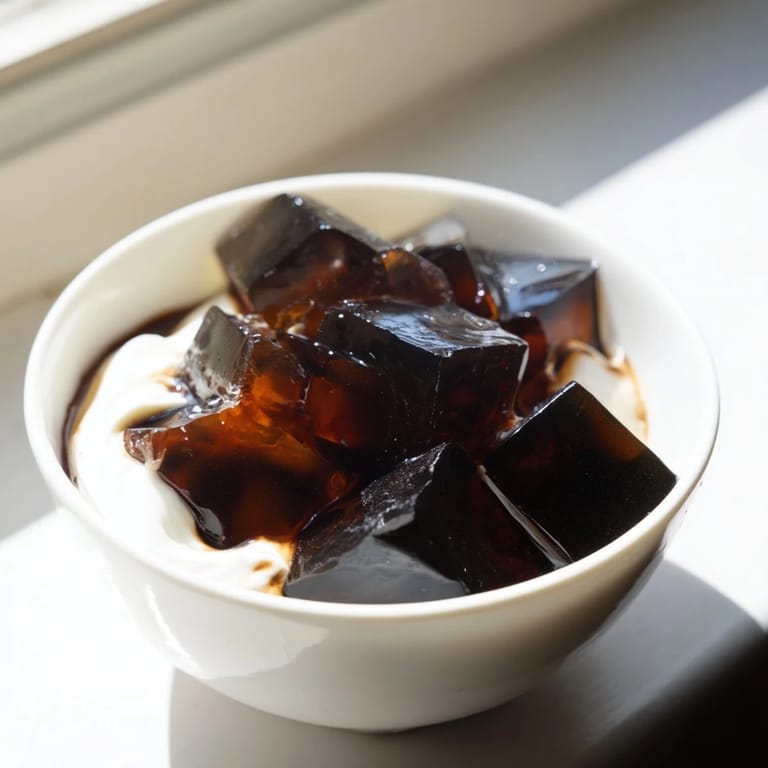
 My first encounter with coffee jelly happened on a sweltering afternoon in a small Tokyo café, where the server placed this elegant glass of coffee-infused cubes topped with cream in front of me. The jelly wobbled slightly as she set it down, and I was instantly mesmerized by how something so simple could look like edible sophistication. One spoonful changed everything—the delicate coffee flavor, the silky cream, the way it melted on my tongue without any heaviness. I spent the next week trying to recreate it in my kitchen, failing twice before understanding the magic was in respecting the gelatin and not rushing the chill. Now it's become my answer to anyone asking for a dessert that feels both indulgent and impossibly light.
I made this for my book club a few months back, thinking it might be too delicate or unusual for the group. One friend took a bite and immediately asked if I'd somehow learned to cook in Japan overnight, which made me laugh so hard I nearly dropped my spoon. By the end of the evening, three people had asked for the recipe, and one admitted she'd been intimidated by anything involving gelatin until that moment. It became the dessert that proved fancy doesn't require complexity.
Ingredients
- Freshly brewed strong coffee (2 cups): The soul of this dessert—use whatever you love drinking because the flavor will shine unmasked; I learned the hard way that weak coffee makes weak jelly.
- Granulated sugar (2 tbsp): Just enough to balance the bitterness without making it dessert-sweet, though you can adjust to your preference once you've made it once.
- Powdered gelatin (2 tsp): The invisible hero that creates that perfect wobble; unflavored is essential so the coffee stays the star.
- Cold water (2 tbsp): This is where gelatin blooms, and skipping this step or using warm water will ruin the texture completely.
- Heavy cream (3/4 cup): The cooling counterpoint to coffee's boldness—don't skip this or substitute carelessly, as it's what makes each spoonful feel complete.
- Granulated sugar (2 tbsp): A smaller amount than the coffee, letting the cream stay subtle and support rather than compete.
- Vanilla extract (1/2 tsp, optional): I usually skip it because the coffee-cream pairing speaks for itself, but vanilla adds a whisper of warmth if that's your style.
Tired of Takeout? 🥡
Get 10 meals you can make faster than delivery arrives. Seriously.
One email. No spam. Unsubscribe anytime.
Instructions
- Bloom the gelatin gently:
- Sprinkle the gelatin over cold water in a small bowl and let it sit for five minutes without stirring—you're giving it time to absorb the water evenly. This step feels almost meditative, like you're waking something up slowly.
- Sweeten the hot coffee:
- Pour your hot brewed coffee into a medium bowl and stir in the sugar until it completely dissolves. The warmth helps the sugar vanish, leaving you with sweetness that feels integrated rather than gritty.
- Marry the gelatin and coffee:
- Heat your bloomed gelatin briefly—either fifteen seconds in the microwave or over a gentle double boiler—until it's completely liquid and smooth. Stir it into the sweetened coffee slowly, making sure everything incorporates evenly without lumps.
- Set it into stillness:
- Pour the mixture into a shallow dish and let it cool to room temperature first, then slide it into the refrigerator for at least two hours until it's completely set and wobbles together as one solid block. You'll know it's ready when a knife cuts through cleanly without cracking.
- Cut into perfect cubes:
- Once fully set, use a sharp knife dipped in hot water (and wiped clean between cuts) to slice the jelly into cubes—the hot knife prevents sticking and makes clean edges. The cubes don't need to be perfect; imperfect ones actually catch more cream.
- Whip the cream to softness:
- In a separate bowl, whisk the heavy cream with sugar until it's slightly thickened and sugar dissolves—you're not making whipped cream, just sweetened cream with body. A splash of vanilla can go in here if you want, but taste as you go.
- Assemble with care:
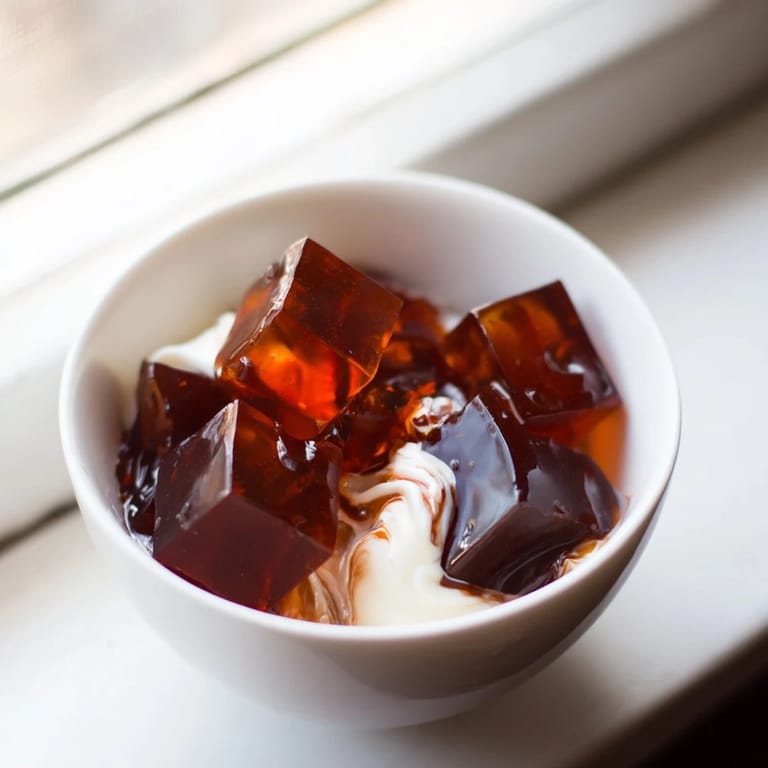
- Divide the jelly cubes among serving glasses, pour the sweet cream over the top, and serve immediately while everything is still cold. The contrast between the chilled jelly and silky cream is where the magic lives.
 Save to Pinterest
 There's a moment right before serving when you pull the set jelly from the refrigerator and see how it catches the light, wobbling slightly as you move it, that you realize you've made something genuinely beautiful. It stopped being just a dessert and became the thing that made people pause mid-conversation to say how much they appreciated it.
Why Coffee Jelly Feels Like a Secret
Most people have never heard of coffee jelly, which is part of its charm—it feels like you've discovered something exclusive rather than followed a trending recipe. The first time someone tastes it, you get to watch the surprise on their face when they realize coffee can be a texture, not just a beverage. It's the kind of dessert that makes you seem more adventurous in the kitchen than you actually are, which honestly, is my favorite kind of cooking.
The Science of Wobble
Gelatin is magical because it's transparent—it holds the liquid without announcing itself, so all the flavor and sophistication come through uninterrupted. The wobble itself is more than texture; it's evidence that you've successfully transformed liquid into solid while keeping it delicate. I used to think perfect jelly meant it never moved, but I learned that a gentle jiggle is actually the sign you've done it right.
Making It Your Own
Once you've made this once, you'll start thinking about variations and personal touches that feel natural rather than forced. A dusting of cocoa powder or chocolate shavings adds visual drama without changing the fundamental elegance. For a dairy-free version, coconut cream works beautifully and actually adds a subtle tropical undertone that plays well with coffee.
- Espresso concentrate instead of brewed coffee creates an intensely flavored version that's perfect for serious coffee devotees.
- Experiment with the sugar levels in both the jelly and cream until you find your balance—some people prefer it less sweet.
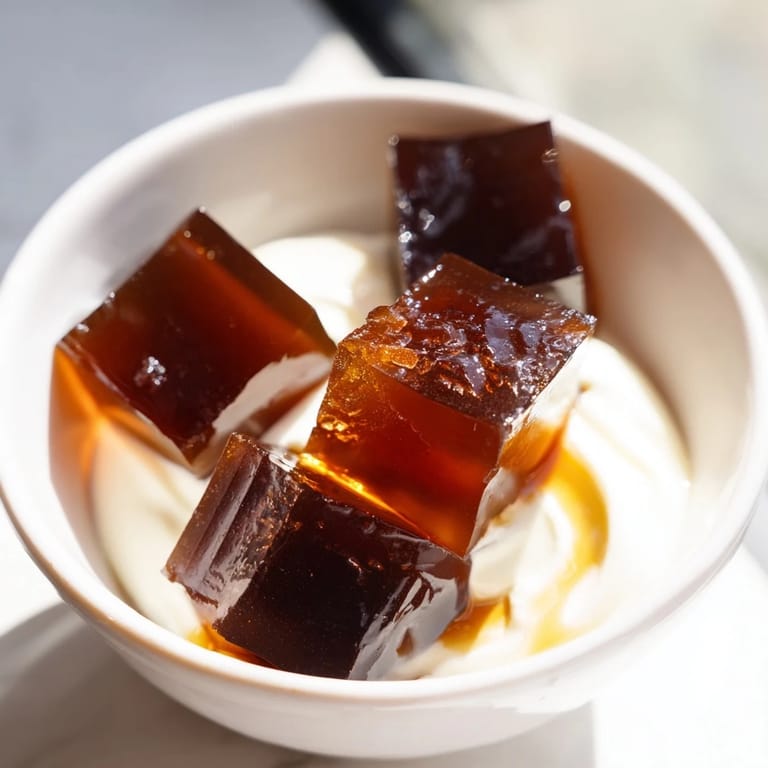
- Serve it in small glasses so guests can see the layers and appreciate both the jelly and cream in each spoonful.
 Save to Pinterest
 Coffee jelly is the kind of dessert that stays with people long after they've finished eating it, becoming the thing they mention when they're trying to impress someone with your cooking. It asks very little of you but gives back a sense of accomplishment that feels entirely disproportionate to the effort.
Questions & Answers
- → How long does coffee jelly take to set?
The coffee jelly requires at least 2 hours of refrigeration to fully set. For best results, allow 3-4 hours or overnight if preparing ahead. You can test if it's ready by inserting a knife—it should be firm and hold its shape when cut into cubes.
- → Can I use instant coffee instead of brewed?
Yes, instant coffee works well. Dissolve 2-3 tablespoons of instant coffee powder in 2 cups of hot water, then proceed with the gelatin mixture. Adjust the amount based on your preferred coffee intensity and strength.
- → What's the best way to cut the jelly into cubes?
Use a sharp knife dipped in hot water between cuts for clean, even cubes. A wet knife prevents sticking and produces smoother edges. Alternatively, use an oiled knife or kitchen scissors for easier cutting without dragging the jelly.
- → How can I make this dessert dairy-free?
Replace the heavy cream with coconut cream or soy cream in equal amounts. Whip the alternative cream with sugar until it reaches the desired consistency. Both options provide a rich, creamy complement to the coffee jelly while accommodating dietary preferences.
- → How long can I store coffee jelly?
Store the prepared jelly cubes in an airtight container in the refrigerator for up to 4 days. The sweetened cream should be prepared fresh before serving. Keep components separate until just before plating to maintain optimal texture and freshness.
- → What gelatin type should I use?
Unflavored powdered gelatin works best for this dessert. Ensure your gelatin source is vegetarian if needed—agar-agar or plant-based gelling agents are excellent alternatives that will produce slightly different textures while maintaining the elegant presentation.