 Save to Pinterest
 There's something about the sound of noodles hitting cold water that signals the start of summer for me. A few years ago, I was stuck in a tiny kitchen during a heatwave, and this chilled chicken noodle salad became my lifeline—something that felt filling but didn't heat up the apartment, and could be assembled in under an hour. The sesame dressing was the revelation; it's nutty and bright enough to make you forget you're eating something simple. Now I make it whenever I need something I can prep ahead and reach for throughout the week.
I served this to a friend who'd just moved to the city and was convinced she couldn't cook. Watching her toss the noodles with the dressing and taste it—that moment of realization that she'd actually made something delicious—made me understand why this dish matters to me. It's not fancy, but it's proof that simple ingredients and a good dressing can turn an ordinary lunch into something people actually look forward to.
Ingredients
- Thin egg noodles or rice noodles (250 g): The thinner the noodle, the better they absorb the dressing; I've learned rice noodles work beautifully for a lighter texture and are naturally gluten-free.
- Cooked shredded chicken (about 300 g): Rotisserie chicken saves you a step, but if you're cooking fresh breasts, a splash of water in the pan and 12 minutes of medium heat gives you tender meat every time.
- Carrot, julienned: The sweetness cuts through the richness of the sesame oil, and slicing it thin means it softens just enough while staying crisp.
- Red bell pepper, thinly sliced: Red peppers have more natural sugar than yellow or green, which balances the savory dressing beautifully.
- Cucumber, deseeded and julienned: Removing the seeds keeps the salad from getting watery as it sits; I learned this the hard way after a soggy lunch.
- Spring onions, sliced: They add a sharp freshness that comes through even after the salad has been chilled.
- Fresh cilantro, chopped (2 tbsp): If cilantro isn't your thing, use basil or parsley instead; the herb is there to brighten things up.
- Toasted sesame oil (3 tbsp): Don't skip toasting your own sesame seeds for the garnish—the flavor difference is noticeable and worth the 5 minutes.
- Soy sauce (2 tbsp): Use tamari if you need gluten-free, and the sodium balance in the dressing stays exactly the same.
- Rice vinegar (2 tbsp): It's milder than distilled vinegar and won't overpower the sesame notes.
- Honey or maple syrup (1 tbsp): A touch of sweetness balances the salty-savory elements; maple syrup gives a slightly deeper flavor.
- Smooth peanut butter or tahini (1 tbsp): Tahini is earthier and works if you want to avoid peanuts or dairy; peanut butter adds richness and body.
- Fresh ginger, grated (1 tsp): Ginger root stored in the freezer actually grates better than room temperature, and you'll get more juice out of it.
- Garlic clove, minced (1): One clove is enough to add depth without overwhelming; raw garlic sharpens as the salad sits, so taste as you go if you're prepping ahead.
- Chili flakes (1 tsp optional): I usually include them because the warmth plays nicely against the cool vegetables, but start with half a teaspoon if you're not sure.
- Toasted sesame seeds (2 tbsp garnish): Toast them yourself in a dry pan for 2-3 minutes; the difference between raw and toasted seeds is everything.
- Lime wedges (optional): A squeeze of fresh lime right before eating brightens the whole dish and cuts through the richness.
Tired of Takeout? 🥡
Get 10 meals you can make faster than delivery arrives. Seriously.
One email. No spam. Unsubscribe anytime.
Instructions
- Cook the noodles until tender:
- Bring a large pot of salted water to a boil and add the noodles, stirring once to prevent sticking. Follow the package timing—usually 8-10 minutes for thin egg noodles, slightly less for rice noodles. When they're done, drain them into a colander and rinse under cold running water until they're completely cool; this stops the cooking and prevents clumping.
- Build the salad base:
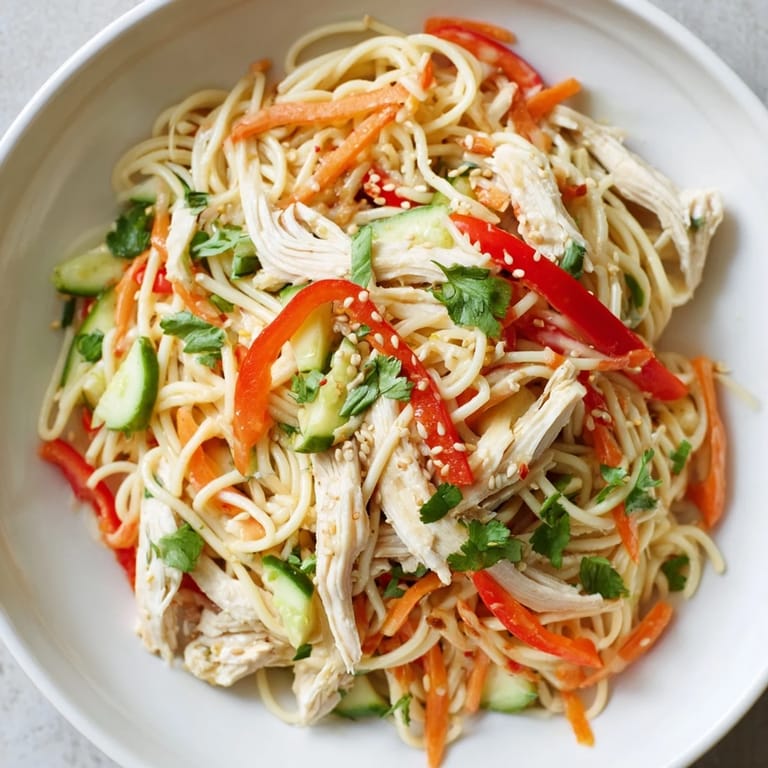
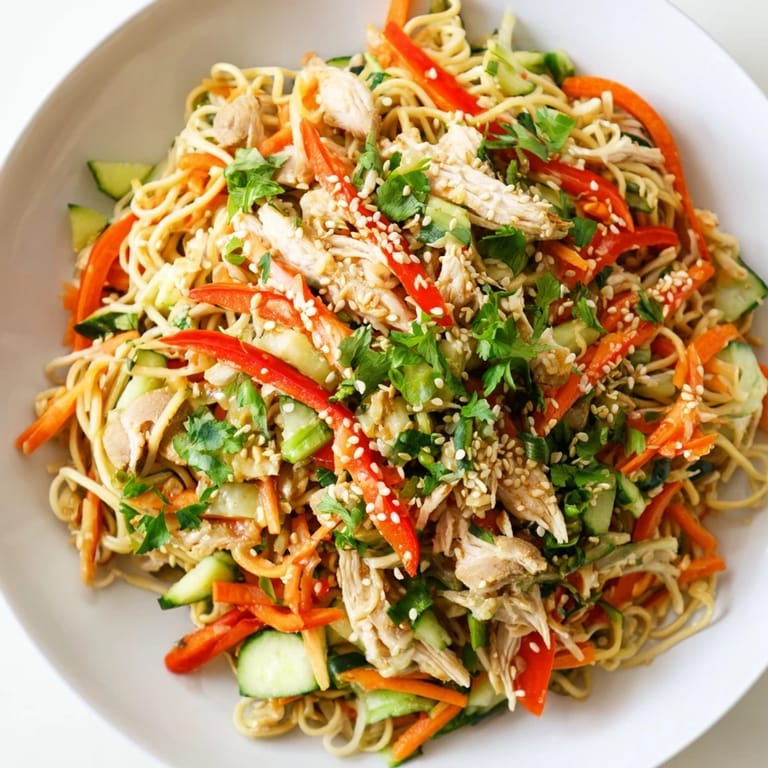
- In a large bowl, combine your cooled noodles with the shredded chicken, julienned carrot, sliced bell pepper, cucumber, spring onions, and fresh cilantro. Toss everything gently so the vegetables are evenly distributed and the chicken doesn't clump.
- Whisk the dressing until silky:
- In a small bowl, combine the sesame oil, soy sauce, rice vinegar, honey, peanut butter, grated ginger, minced garlic, and chili flakes if you're using it. Whisk steadily for about a minute—you want the peanut butter to fully incorporate and the dressing to be smooth and emulsified, not grainy.
- Bring it together:
- Pour the dressing over the salad and toss thoroughly until every strand of noodle and piece of vegetable is coated in that glossy sesame mixture. This is the moment everything transforms from a collection of ingredients into an actual dish.
- Finish and serve:
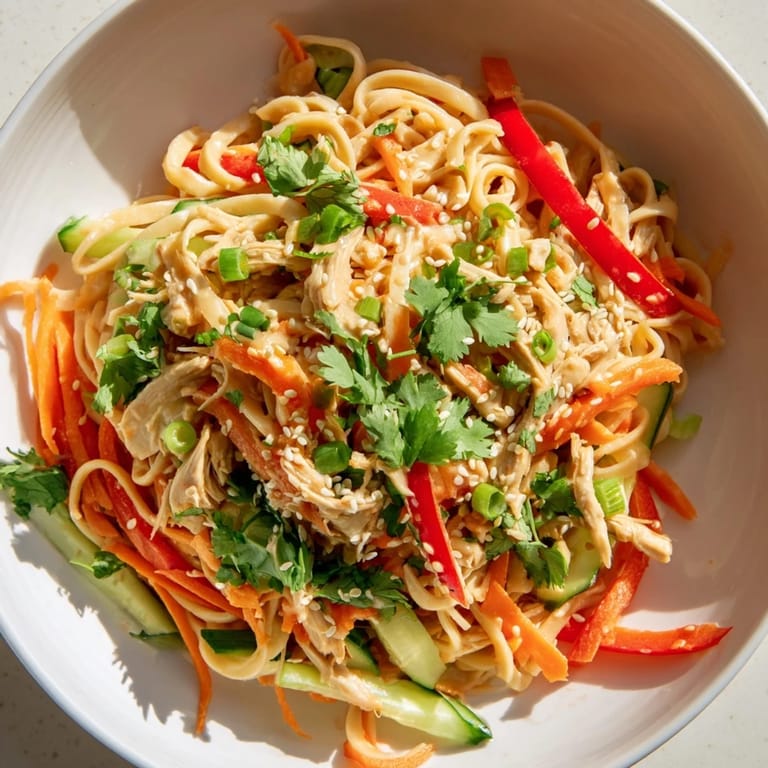
- Transfer the salad to a serving platter or individual bowls, scatter the toasted sesame seeds across the top, and set out lime wedges on the side. You can serve it immediately while it still has temperature contrast, or refrigerate it for up to 2 hours if you prefer it colder.
 Save to Pinterest
 This salad taught me that not every meal needs to be complicated to feel special. My neighbor used to make something similar and always looked like she had her life together on hot afternoons. I finally asked her for tips, and she laughed and said it's because she's not trying—she's just feeding herself what she actually wants to eat, and it shows.
Why This Works as a Complete Meal
The protein from the chicken and the healthy fats in the sesame oil and peanut butter keep you satisfied without feeling heavy, which is exactly what you want when it's warm outside. The vegetables add fiber and vitamins, so you're not just eating noodles with sauce. The ratio of noodles to vegetables to protein is balanced in a way that lets each element shine instead of drowning under dressing—it's enough sauce to coat everything without leaving a pool at the bottom of the bowl.
How to Make It Your Own
Once you nail the base, this salad becomes a blank canvas for whatever you have on hand. I've added shredded cabbage for extra crunch, swapped the chicken for shrimp or marinated tofu, and thrown in leftover roasted broccoli when I had it. The dressing is forgiving enough to handle additions—it doesn't fall apart if you add an extra vegetable or protein.
Timing and Storage
The beauty of this salad is that you can prep all the components separately and toss it together whenever you're ready. The chicken and vegetables can be cut and stored in separate containers for up to 2 days, and the noodles keep for about the same time. The dressing actually benefits from sitting for a few hours—the flavors meld and the ginger becomes more pronounced.
- If you're packing it for lunch, keep the dressing separate and toss it in right before eating to maintain the noodles' texture.
- Leftovers taste just as good cold straight from the fridge, though you might want to loosen the salad with a splash of rice vinegar if it's been sitting for more than a few hours.
- This salad travels well in a wide container—pack the sesame seeds separately and scatter them on top just before serving so they stay crunchy.
 Save to Pinterest
 This is the kind of recipe that asks nothing of you but rewards you anyway—a quiet dish that proves you don't need much time or fancy technique to eat something genuinely delicious. Make it once, and it becomes part of your summer rotation.
Questions & Answers
- → What type of noodles work best for this dish?
Thin egg noodles or rice noodles both work well, depending on your preference or dietary needs.
- → Can the chicken be substituted?
Shredded tofu can replace chicken for a vegetarian variation, and pre-cooked rotisserie chicken adds convenience.
- → How is the dressing made?
The sesame dressing combines toasted sesame oil, soy sauce, rice vinegar, honey, peanut butter, ginger, garlic, and chili flakes whisked until smooth.
- → Is it necessary to chill the salad before serving?
It can be served immediately or chilled up to two hours to enhance the refreshing flavors and textures.
- → Are there any common allergens to be aware of?
This dish contains soy, sesame, peanut (if using peanut butter), and wheat (if egg noodles are used).