 Save to Pinterest
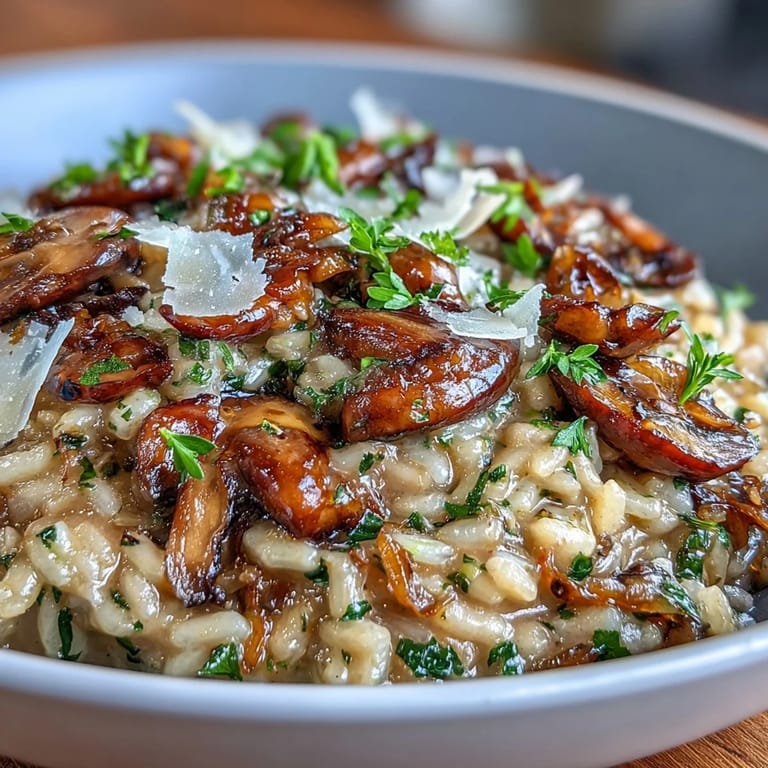
 There's something almost meditative about watching onions transform on the stovetop, their sharp bite melting into honeyed sweetness over low heat. I discovered this risotto on a quiet Sunday afternoon when I had time to linger in the kitchen, and somehow the patience required felt less like a chore and more like permission to slow down. The earthiness of mushrooms paired with those caramelized onions creates layers of flavor that taste far more complicated than they actually are. It's become my go-to dish when I want to impress someone without breaking a sweat.
I made this for my partner on a rainy evening, and the smell alone drew him to the kitchen three separate times before we sat down to eat. He stood there just watching, completely mesmerized by how creamy the rice became with each stir and broth addition. That's when I realized risotto isn't just about technique; it's about the attention and presence you pour into it. The dish tasted richer because of that quiet togetherness.
Ingredients
- Yellow onions: Use large ones and slice them thin so they cook evenly; thinner slices caramelize more uniformly and develop that deep mahogany color faster.
- Cremini or button mushrooms: They hold up beautifully to cooking and release their moisture gradually, concentrating their earthy flavor rather than turning watery.
- Arborio rice: This short-grain rice has the right starch content to create that signature creamy texture without turning mushy if you stir it properly.
- Vegetable broth: Keep it warm in a separate pot; cold broth will shock the rice and slow the cooking process, throwing off your timing.
- Dry white wine: This adds acidity and brightness that keeps the dish from feeling heavy; don't skip it or substitute with something too fruity.
- Parmesan cheese: Freshly grated makes all the difference in creaminess and flavor depth compared to pre-grated versions.
- Butter: Use unsalted so you control the salt level, and add it at the end for that luxurious finish that makes risotto actually risotto.
- Fresh parsley: The final garnish of bright green parsley cuts through the richness and adds a fresh note that feels intentional rather than afterthought.
Tired of Takeout? 🥡
Get 10 meals you can make faster than delivery arrives. Seriously.
One email. No spam. Unsubscribe anytime.
Instructions
- Build your caramelized onion base:
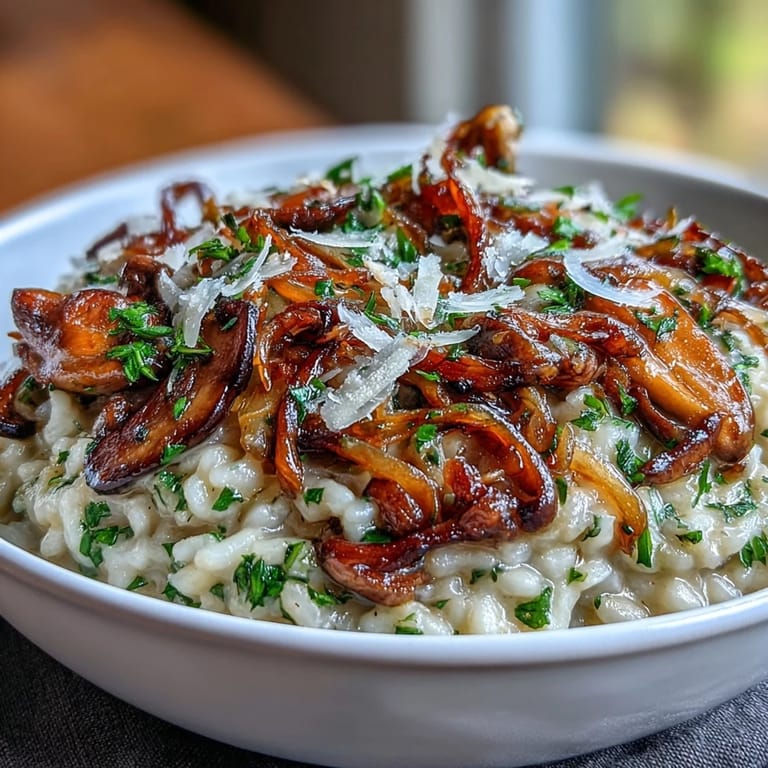
- Heat the oil and butter together over medium-low heat, then add your sliced onions with a pinch of salt. This is where patience becomes your main ingredient—let them cook undisturbed for longer stretches between stirs, only checking on them every few minutes. They'll gradually turn golden, then amber, then that deep brown-sugar color that means they're truly caramelized, which takes 20-25 minutes total.
- Cook the mushrooms until they release their soul:
- In the same pan, add fresh olive oil and let the mushroom slices hit the hot surface with a satisfying sizzle. Resist the urge to stir constantly; let them sit for a minute or two so they develop brown, caramelized edges instead of steaming. Once they've released their moisture and started to brown, add your minced garlic and cook until the aroma fills your entire kitchen.
- Toast the rice to wake it up:
- Add your Arborio rice to the mushroom mixture and stir constantly for about 2 minutes. You'll see the rice go from translucent-looking to slightly opaque and glossy, and this toasting step ensures each grain stays distinct rather than becoming a gluey mass later.
- Add the wine for brightness:
- Pour in your white wine and stir gently until it's mostly absorbed into the rice. You'll smell the alcohol cooking off, replaced by a more mellow, slightly fruity aroma that signals the wine is doing its job.
- Build creaminess one ladle at a time:
- Add your warm broth in roughly cup-sized portions, stirring gently but frequently as each addition absorbs into the rice. This takes about 18-20 minutes total, and you're essentially coaxing the rice to release its starch slowly, which is what creates that velvety texture. Start tasting around the 15-minute mark; you want the rice tender but with just a tiny bit of firmness in the center of each grain.
- Finish with richness and brightness:
- Fold in your caramelized onions, the remaining butter, grated Parmesan, and cream if you're using it. The risotto should flow on the plate like lava, not stand in stiff peaks—if it looks too thick, add a splash of warm broth or hot water to loosen it up. Taste and adjust seasoning, then let it rest off the heat for 2 minutes while you mince your fresh parsley.
- Plate and garnish with intention:
- Spoon the risotto into shallow bowls and top with a small pile of fresh parsley and a light dusting of additional Parmesan. Serve immediately while it's steaming, because the magic of risotto is eating it at that exact moment when it's at peak creaminess.
 Save to Pinterest
 My mother tasted this risotto one evening and immediately asked for the recipe, which felt like a small victory since she's the cook I learned from. What struck me most wasn't the compliment itself, but how she made it just once and added her own thing—a handful of crispy sage leaves for texture. That's when I understood risotto isn't precious or untouchable; it's a foundation that welcomes you to make it your own.
Timing and Rhythm Matter More Than You Think
The first time I made risotto, I treated it like a quick side dish and rushed through the broth additions like I was pouring coffee. The result was half-cooked rice swimming in liquid, a lesson that taught me risotto requires a different mindset altogether. You're not just cooking rice; you're having a conversation with it, checking in constantly, adjusting as needed. Once I stopped thinking of it as a chore and started seeing it as a 25-minute meditation, everything changed.
Why Caramelized Onions Are the Secret Weapon
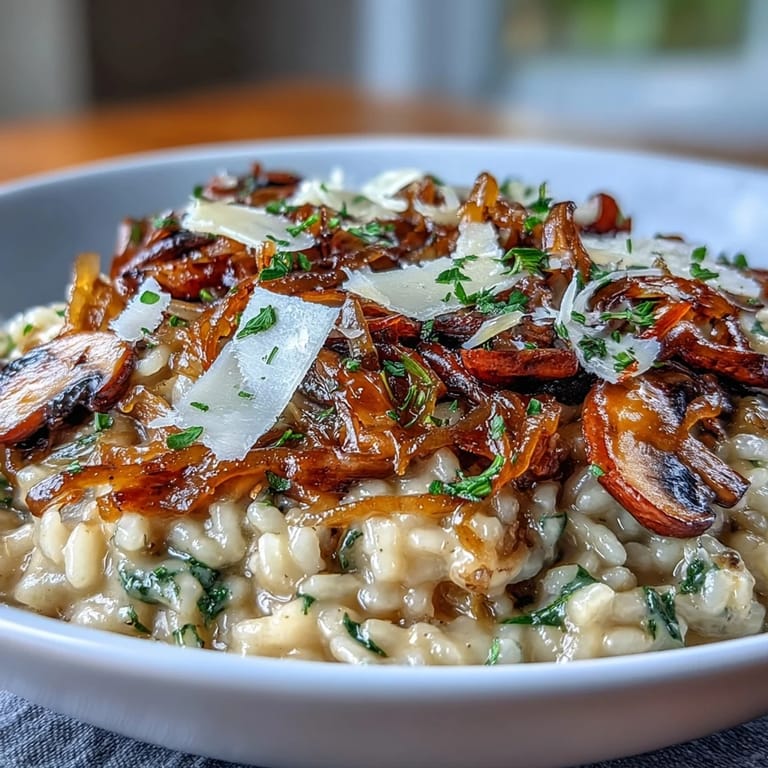
Those 20-25 minutes of caramelizing onions might feel like forever when you're hungry, but they're the entire backbone of this dish. The slow cooking breaks down the onions' natural sugars and creates deep, complex flavors that you absolutely cannot rush or fake with higher heat. I learned this the hard way by trying to caramelize onions at medium heat once, and the result was slightly browned and somewhat bitter rather than deeply sweet and rich. Now I treat that pot with reverence, knowing those golden onions are doing the heavy lifting for everything that comes after.
Variations and Flexibility
This risotto welcomes additions without losing its identity, which is one reason I keep coming back to it. I've stirred in everything from roasted garlic to truffle oil, added spinach for color, or topped it with crispy pancetta for someone who wanted more protein. The foundation is strong enough that your personal touches make it feel custom rather than departing from the original, and that flexibility is what makes it come alive in different seasons and moods.
- Stir in a handful of baby spinach during the final minute of cooking for an emerald color and slight mineral note.
- Use a mix of mushroom varieties—cremini, shiitake, oyster—if you want more complex earthiness without changing the technique.
- Finish with crispy sage leaves or a drizzle of truffle oil if you're cooking for someone special and want an extra flourish.
 Save to Pinterest
 This risotto has taught me that the most memorable meals often come from simple ingredients treated with care and attention. Make it when you have time to linger, and share it with people worth slowing down for.
Questions & Answers
- → How do I caramelize onions properly?
Cook thinly sliced onions slowly over medium-low heat with a pinch of salt and some butter or oil, stirring frequently, for 20-25 minutes until deeply golden and soft.
- → Can I use different mushrooms?
Yes, cremini or button mushrooms work well, but you can substitute other varieties like shiitake or portobello for varied flavor and texture.
- → What is the best rice for this dish?
Arborio rice is ideal since its high starch content creates the creamy texture characteristic of risotto.
- → How is the liquid added during cooking?
Add warm vegetable broth in small ladles, stirring gently and allowing each addition to absorb before adding the next, which ensures a creamy consistency.
- → Can I make this dairy-free?
Use plant-based butter and substitute Parmesan with vegan cheese or omit it for a dairy-free version without sacrificing flavor.
- → What wine pairs well with this dish?
Crisp white wines like Pinot Grigio or Chardonnay complement the creamy and savory notes of the risotto perfectly.