 Save to Pinterest
 Last spring, my neighbor brought over an armful of asparagus from her garden and challenged me to use it in something unexpected. I'd been defaulting to roasting or grilling for years, but something about that bright green mess of spears made me want to keep them fresh and raw-ish. That afternoon experiment with a vegetable peeler changed how I think about salad entirely.
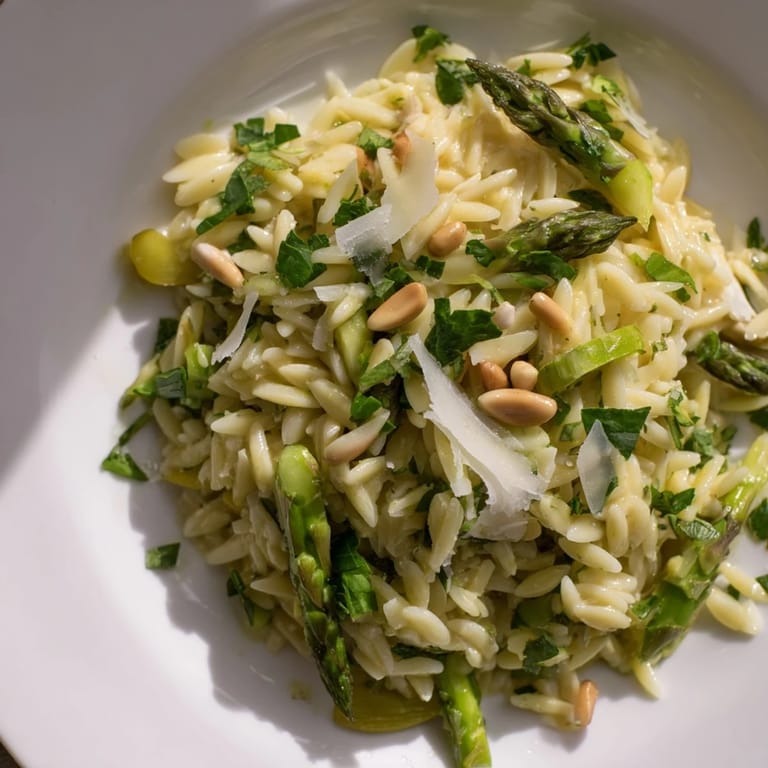
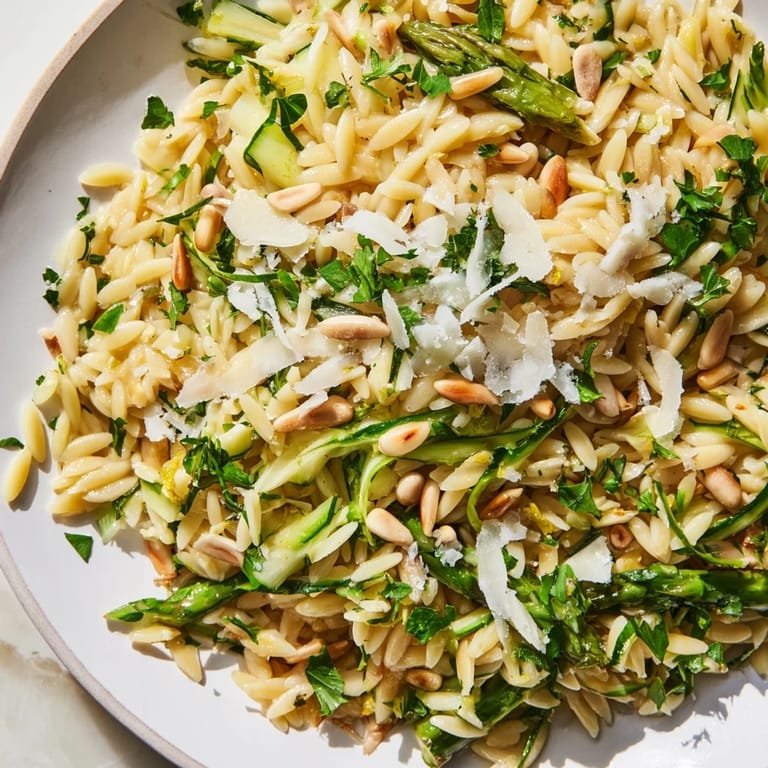
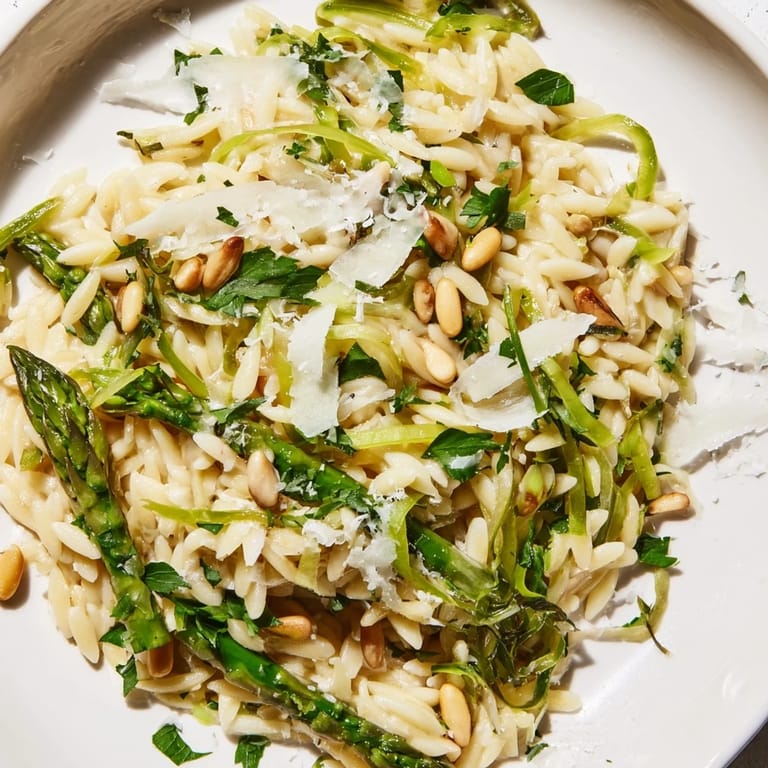
I made this for a potluck last June and watched three different people ask for the recipe, which is basically the highest honor a dish can receive. My friend Sarah, who claims to hate asparagus, went back for seconds and then texted me at 11pm that night asking what I'd put in the dressing. There's something about the combination of tender orzo, those whisper-thin asparagus ribbons, and the sharp lemon punch that makes people forget they're eating something healthy.
Ingredients
- 1 cup orzo: This rice-shaped pasta is perfect for salads because each piece grabs onto dressing and little bits of cheese
- Salt: Generously salt your pasta water—this is your only chance to season the orzo itself
- 1 bunch fresh asparagus: Look for tight, compact tips and avoid woody stems; the thinner the spears, the easier they are to shave
- 2 cups baby arugula: Adds a peppery kick that cuts through the richness, but you can skip it if you're not into bitter greens
- 1/2 cup freshly grated Parmesan: Buy a wedge and grate it yourself—pre-grated cheese has anti-caking agents that make it taste powdery
- 1/4 cup toasted pine nuts: Toast them in a dry pan until fragrant and golden, watching constantly because they go from perfect to burned in seconds
- 1 large lemon: Both the zest and juice go into the dressing for maximum citrus impact
- 1/4 cup extra-virgin olive oil: Use the good stuff here since the dressing is simple
- 1 small garlic clove: Minced finely so no one bites into a raw garlic chunk
- 1/2 tsp Dijon mustard: This is the secret that makes the dressing emulsify and cling to every ingredient
- 1/2 tsp honey or maple syrup: Just enough to balance the acid and bring all the flavors together
- Freshly ground black pepper and salt: Taste as you go—lemon intensifies as the salad sits
- 2 tbsp chopped fresh parsley: Adds freshness and makes everything look finished
- 1 tbsp chopped fresh basil or mint: Basil makes it taste Italian, mint pushes it in a brighter direction
Tired of Takeout? 🥡
Get 10 meals you can make faster than delivery arrives. Seriously.
One email. No spam. Unsubscribe anytime.
Instructions
- Cook the orzo:
- Bring a large pot of salted water to boil and cook orzo until al dente, then drain and rinse under cold water to stop the cooking and cool it down.
- Shave the asparagus:
- Use a vegetable peeler to create long, thin ribbons from the spears, starting at the base and working toward the tip.
- Whisk together the dressing:
- Combine lemon zest, juice, olive oil, garlic, Dijon, honey, salt, and pepper in a small jar and shake until emulsified.
- Combine everything:
- Add cooled orzo, asparagus ribbons, arugula, Parmesan, pine nuts, and herbs to a large bowl, then pour over the dressing and toss gently.
- Season and serve:
- Taste and adjust with more salt, pepper, or lemon juice as needed, then top with extra Parmesan and serve.
 Save to Pinterest
 My sister-in-law asked me to make this for her birthday lunch instead of a cake, which I thought was odd until I saw how quickly everyone demolished it. There's something about the texture contrasts—creamy orzo, crisp asparagus, toasted nuts—that makes each bite interesting. Now it's the dish I bring to everything from baby showers to funeral potlucks.
Making It Your Own
I've tried this salad with half a dozen variations and almost all of them work. Sometimes I'll swap in feta for Parmesan and add dill instead of basil. Once I threw in some diced cucumber for extra crunch and it was fantastic. The template is solid enough that you can play with it without ruining the chemistry.
Timing And Temperature
This is one of those rare salads that works at room temperature, which makes it perfect for picnics and outdoor gatherings. I wouldn't serve it straight from the refrigerator though—the olive oil congeals when cold and the flavors go muted. Give it at least 20 minutes on the counter before serving. If you're making it ahead, hold back the herbs and pine nuts until right before you eat so they stay fresh and crunchy.
Getting The Best Texture
The key here is not overcooking the orzo—it should still have a tiny bit of bite to the center. If it turns to mush, the whole salad becomes a paste. Also, don't skip rinsing the cooked pasta under cold water. It washes away the excess starch that would otherwise make everything gummy. I've learned both these lessons the hard way.
- Use the widest holes on your box grater if you don't have a vegetable peeler
- If your asparagus spears are thick, slice them lengthwise before shaving
- The salad will keep in the fridge for 2-3 days but the asparagus will start to weep water
 Save to Pinterest
 This salad has become my go-to for those nights when I want something that feels special but don't want to actually cook. Hope it finds its way into your regular rotation too.
Questions & Answers
- → Can I prepare this salad in advance?
Yes, this salad actually improves when made a few hours ahead. Store it covered in the refrigerator, then bring to room temperature before serving. The flavors meld beautifully as it sits.
- → How do I shave the asparagus properly?
Use a vegetable peeler to create thin, delicate ribbons. If your asparagus spears are particularly thick, slice them lengthwise first to make them easier to peel. Work gently to avoid breaking the ribbons.
- → What can I substitute for pine nuts?
Toasted almonds, walnuts, or sunflower seeds work beautifully as alternatives. Choose toasted varieties for maximum flavor and texture contrast.
- → How can I make this a heartier main course?
Add grilled or pan-seared chicken breast, white beans, or roasted chickpeas. These proteins complement the bright, Mediterranean flavors perfectly while keeping the dish light.
- → Can I use a different type of pasta?
Absolutely. Small pasta shapes like farfalle (bow ties), fusilli, or ditalini work well. Cook until al dente to maintain texture when tossed with the fresh vegetables.
- → What's the best way to emulsify the dressing?
Whisk the ingredients together vigorously in a small bowl, or combine them in a jar and shake well. The Dijon mustard helps stabilize the emulsion, creating a creamy consistency without cream.