 Save to Pinterest
 My neighbor knocked on the door one gray afternoon with a container of homemade dumplings and a sheepish grin, apologizing for the abundance from her weekend cooking marathon. I had half a head of bok choy wilting in the crisper and a block of ginger on the counter, so naturally I invited her in to help me turn her gift into something warm and alive. That soup became the kind of meal that tastes like someone understood exactly what you needed, even if it only took thirty-five minutes to make. Now whenever I feel that first real chill of the season, or when I just want something honest and unfussy, I find myself making this version.
I made this for my sister the morning after she'd had surgery, and the way she closed her eyes with the first spoonful is something I won't forget. She said it tasted like care, which struck me as the highest compliment a bowl of soup could ever receive. Since then, I've learned that this dish has that quiet power—it's nourishing without being heavy, flavorful without demanding your attention, present without overwhelming you.
Ingredients
- Low-sodium chicken or vegetable broth (6 cups): This is your canvas, so choose one you'd actually drink on its own—the quality matters more than you'd think.
- Fresh ginger (1 tablespoon, thinly sliced): Don't mince it; slicing keeps the fibers intact so you can lift the pieces out later if you prefer, and it infuses the broth more gently.
- Garlic (2 cloves, minced): Fresh garlic is non-negotiable here, as it browns slightly and adds depth that powder can never touch.
- Soy sauce (1 tablespoon): Taste yours first—some brands run saltier than others, so you might adjust.
- Sesame oil (1 teaspoon): A little goes a long way; too much turns the broth oily instead of glossy.
- Rice vinegar (1 teaspoon): This adds brightness without harshness, balancing the richness of the dumplings.
- Green onions (2, sliced): Reserve some uncooked slices for garnish to keep that sharp, fresh bite.
- Baby bok choy (2 cups, halved or quartered): The baby variety has more tender leaves and a sweeter flavor than mature heads.
- Carrot (1 medium, julienned): Thin slicing lets it cook through without losing its natural sweetness.
- Shiitake mushrooms (1/2 cup, sliced): Remove those tough stems and discard them—they're where the funk lives.
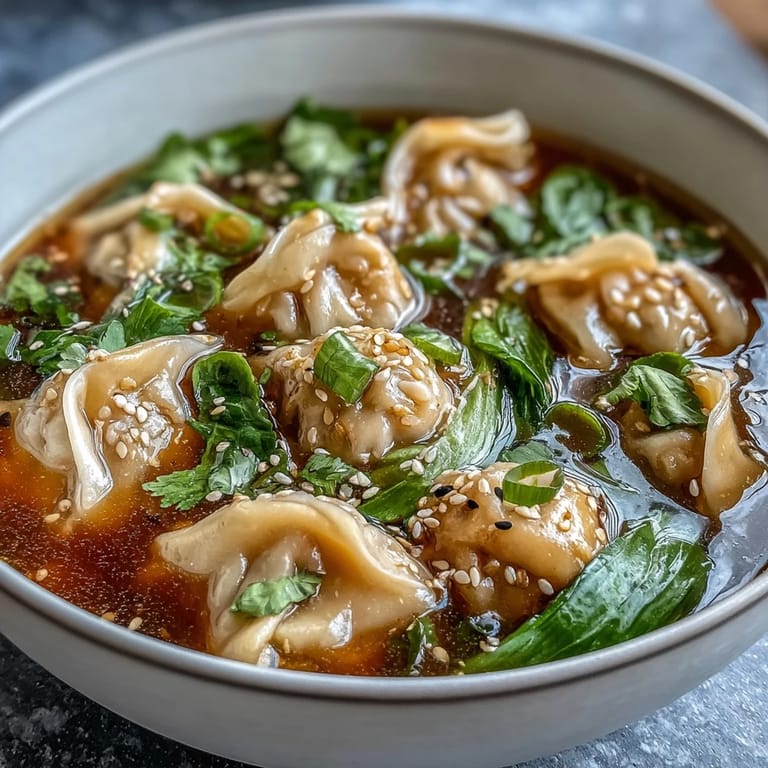
- Asian dumplings (16–20, frozen or fresh): Whether you make your own or buy them, quality matters because they're the centerpiece here.
- Fresh cilantro, chili oil, and sesame seeds for garnish: These aren't just decoration—they're your finishing conversation with the broth.
Tired of Takeout? 🥡
Get 10 meals you can make faster than delivery arrives. Seriously.
One email. No spam. Unsubscribe anytime.
Instructions
- Build your flavor foundation:
- Pour the broth into a large pot and add the ginger slices, minced garlic, soy sauce, sesame oil, rice vinegar, and sliced green onions all at once. Bring everything to a gentle boil over medium-high heat, letting the aromatics wake up and begin their work.
- Let the broth breathe:
- Lower the heat to medium and simmer for five minutes—this isn't rushing time, it's teaching time. The ginger and garlic will soften and release their essence into the broth, transforming it from simple to something with real personality.
- Add your supporting vegetables:
- Toss in the carrot slices and mushrooms, stirring gently to make sure they're submerged. Simmer for three more minutes until the carrot starts to soften but still has a whisper of resistance.
- Welcome the dumplings:
- Add your dumplings carefully to the simmering broth—they'll sink at first, then float to the surface when they're cooked through. This usually takes five to seven minutes for frozen dumplings or three to five for fresh ones, so check your package and let them cook accordingly.
- Add the bok choy at the last moment:
- Nestle the bok choy pieces into the broth and cook for just two to three minutes—you want them tender enough to eat easily but still bright green and slightly crisp. Overcooked bok choy turns sad and loses its whole identity.
- Taste and adjust:
- Dip a spoon in and taste honestly, then add a splash more soy sauce or a few drops of vinegar if it needs it. This is your permission to trust your palate.
- Serve with intention:
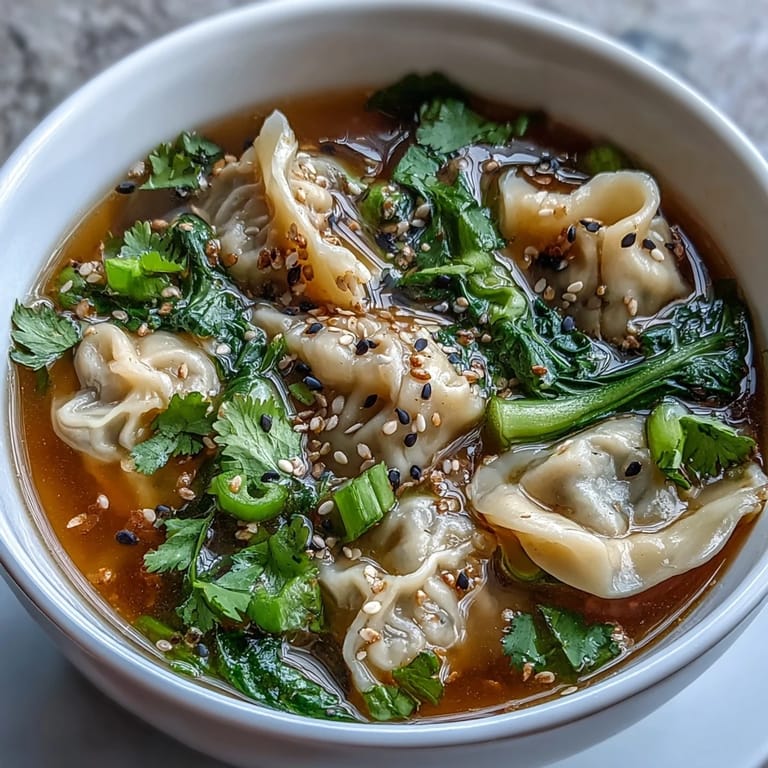
- Ladle the soup into bowls, making sure each one gets dumplings, vegetables, and plenty of that silky broth. Scatter green onions, cilantro, a drizzle of chili oil, and sesame seeds over the top—these garnishes aren't optional, they're the final notes that make it sing.
 Save to Pinterest
 There's something about gathering around a bowl of soup on a cold evening that feels like the simplest form of kindness. This dish does that—it doesn't show off, it just shows up, warm and generous and exactly what you needed.
When Your Broth Needs Extra Soul
If you're not vegetarian and you want to push this soup toward something even more deeply flavored, add a teaspoon of fish sauce right when you would add the bok choy. It's umami in its most honest form, and it transforms the broth into something that tastes like it's been simmering for hours. Don't be scared of the smell straight from the bottle—once it hits the hot broth, it mellows into something savory and profound that your guests won't be able to name but will absolutely taste.
Building Your Own Dumpling Soup Variation
Once you've made this version a few times, you'll start seeing possibilities everywhere. Swap spinach for bok choy if that's what you have, or add a handful of shiitake mushrooms for earthiness, or throw in some thinly sliced daikon radish if you like that crisp, peppery bite. The structure stays the same—infused broth, vegetables with different textures, dumplings, fresh garnish—but the specifics are entirely yours to play with.
Pairing and Serving Suggestions
This soup is honest enough to stand alone, but it appreciates company. A crisp white wine like Riesling cuts through the richness of the dumplings and brightens your palate between sips, while jasmine tea offers a gentler, more meditative pairing if you're looking for something warm to accompany warm.
- Serve this in bowls you actually love—it matters more than you'd expect for comfort food.
- Make sure everyone has a soup spoon and chopsticks, because part of the pleasure is the ritual of fishing for dumplings.
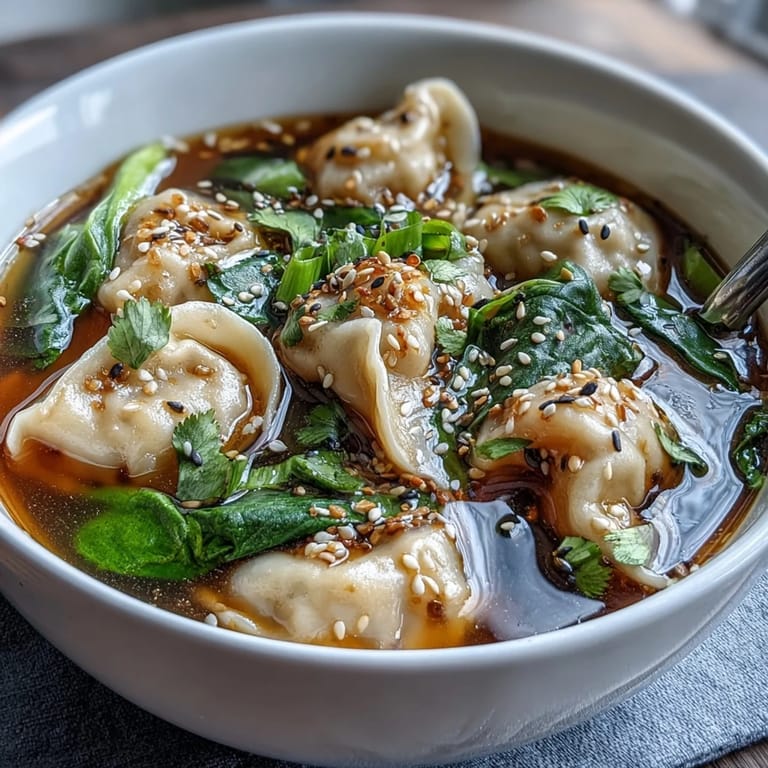
- Have chili oil and extra sesame seeds at the table so people can adjust the heat and flavor to their own preference.
 Save to Pinterest
 This is the kind of recipe that asks you to slow down, not because it takes forever, but because it's worth tasting with your full attention. Make it, share it, let it become yours.
Questions & Answers
- → What type of broth works best?
Low-sodium chicken or vegetable broth works well, providing a light base that lets the flavors of ginger and garlic shine through.
- → How can I tell when dumplings are cooked?
Frozen dumplings usually float and become slightly translucent after 5–7 minutes of simmering; fresh dumplings cook faster, about 3–5 minutes.
- → Can I substitute bok choy with another vegetable?
Yes, spinach is a good substitute and provides a similar tender texture and color when cooked briefly.
- → What garnishes enhance the flavors?
Sliced green onions, fresh cilantro, a drizzle of chili oil, and toasted sesame seeds add freshness, heat, and aroma.
- → How do I adapt this for vegetarian diets?
Use vegetable broth and vegetarian dumplings, and omit any fish sauce to keep the dish fully plant-based.