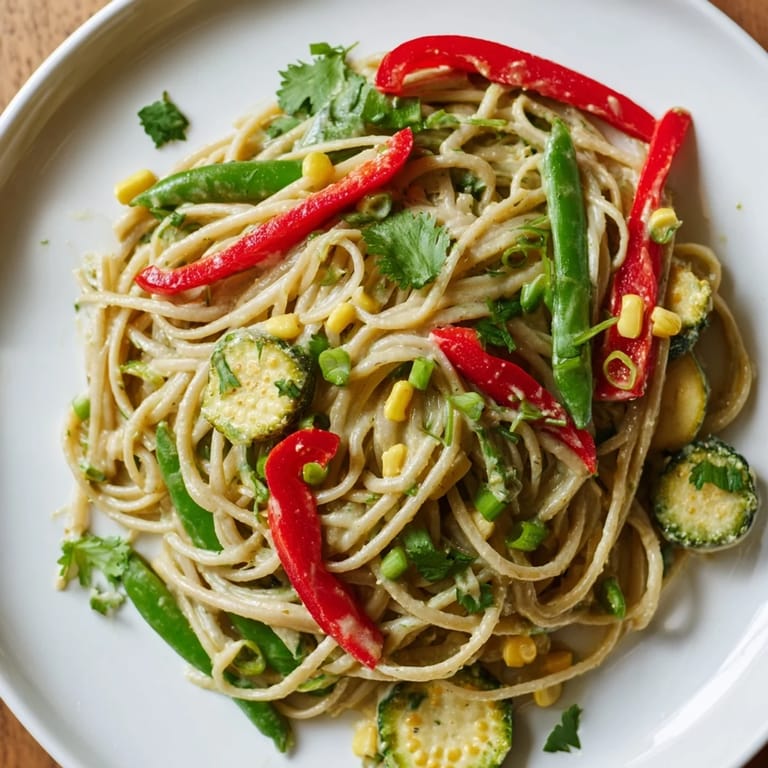
 Save to Pinterest
 I discovered this dish on a Tuesday night when my pantry held nothing but pasta, a can of coconut milk, and a jar of Thai curry paste I'd been meaning to use. What started as improvisation became something I now make on purpose—a bowl of aromatic, creamy comfort that somehow bridges two kitchens I love. The first time I served it, my sister asked if I'd ordered Thai takeout and mixed it with pasta as a joke. It wasn't, but that's exactly what makes it work.
I made this for my partner on a night when the weather turned cold and we both craved something warm but bright. The kitchen smelled incredible—that green curry paste hitting hot oil, then mellowed by coconut milk—and suddenly we were transported somewhere far away while staying completely at home. He went back for seconds without saying a word, which for him is the highest compliment.
Ingredients
- Linguine or spaghetti: 350 g holds the sauce beautifully, and the long strands let you wind up those vegetables with every bite.
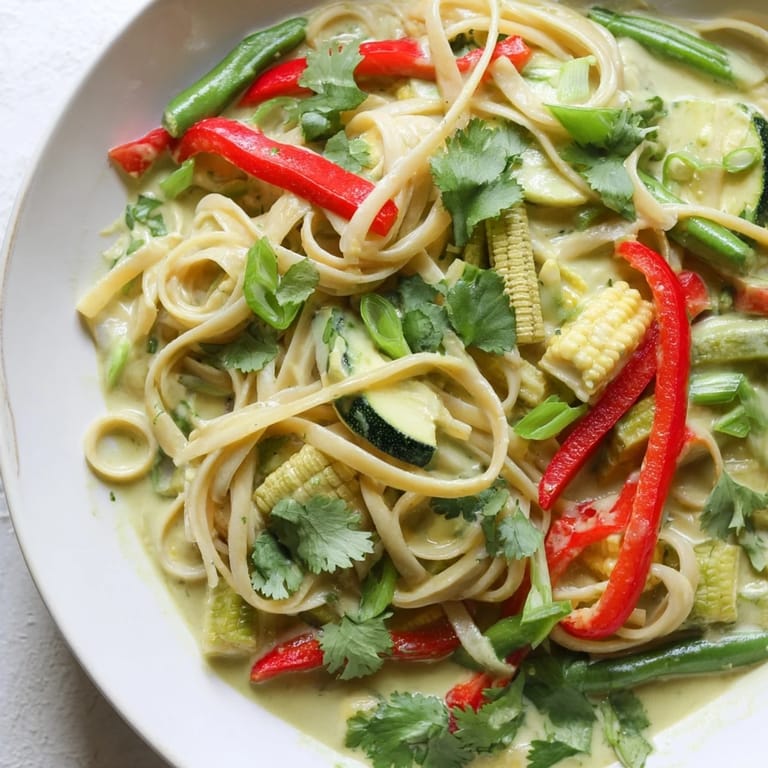
- Red bell pepper: Sliced thin so it softens quickly while keeping a whisper of crunch.
- Zucchini: Halved lengthwise then sliced gives you little half-moons that cook evenly and look elegant on the plate.
- Snap peas and baby corn: These two keep their crispness even with brief cooking, adding texture and sweetness.
- Spring onions: Scattered in at the end so they keep that fresh, sharp edge.
- Fresh cilantro: Not optional if you want that final herbaceous brightness that makes the whole dish sing.
- Thai green curry paste: This is your flavor foundation—choose one with no shrimp paste if you're cooking vegan, or use homemade if you're feeling ambitious.
- Coconut milk: Full fat is essential; the thin stuff won't give you that luxurious mouthfeel.
- Vegetable oil: High heat tolerance matters here, so use something neutral like canola or peanut oil.
- Soy sauce, brown sugar, ginger, and lime: These four notes balance spice with sweetness and acid, creating depth.
Tired of Takeout? 🥡
Get 10 meals you can make faster than delivery arrives. Seriously.
One email. No spam. Unsubscribe anytime.
Instructions
- Start the pasta:
- Bring a large pot of salted water to a rolling boil—it should taste like the sea. Add your pasta and cook until just al dente, which is earlier than you think; the pasta will soften more when it hits the curry sauce. Reserve half a cup of starchy cooking water before you drain it.
- Build the curry base:
- While pasta cooks, heat oil in your large skillet or wok over medium heat until it shimmers. Add the curry paste and ginger, stirring constantly for a minute or two until the raw paste smell transforms into something rich and aromatic. You'll know it's ready when your whole kitchen smells like Thailand.
- Bloom the sauce:
- Pour in the coconut milk along with soy sauce and brown sugar, stirring until everything melts together. Let it simmer gently for a few minutes so the flavors marry and the sharp curry paste edges soften.
- Cook the vegetables:
- Add your bell pepper, zucchini, snap peas, and baby corn in one motion. They'll cook down slightly while staying perky—about five to six minutes, stirring occasionally. You want them tender enough to eat easily but firm enough to taste fresh, not mushy.
- Marry pasta and sauce:
- Toss your cooked pasta into the skillet along with that reserved pasta water. The starch in the water helps the sauce cling to every strand, creating something more cohesive than just sauce over pasta. Simmer for a couple of minutes so the flavors truly meld.
- Finish with brightness:
- Stir in the spring onions, lime juice, and cilantro at the very end so they keep their personality. Taste the whole thing and adjust soy sauce, sugar, or lime to your preference—it should taste bold but balanced, spicy but rounded.
- Plate and garnish:
- Divide into bowls and top with lime wedges, extra cilantro, sliced chili if you want more heat, or roasted cashews for crunch. Serve immediately while everything is hot and the herbs are still bright.
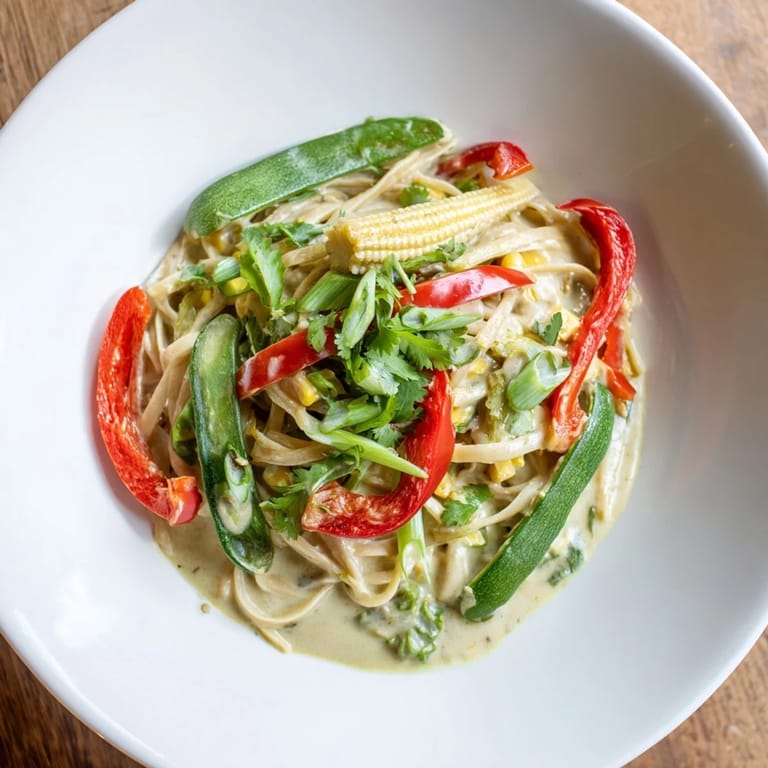 Save to Pinterest
 There was a moment when my friend tasted this and said it reminded her of a meal we'd shared years ago in Bangkok, even though neither of us had been there. We laughed at how food travels through memory that way—a dish that doesn't technically belong to any single place somehow feels like it belongs everywhere. That's when I realized I'd made something that mattered.
Making It Your Own
The beauty of this recipe is that it's forgiving enough to bend without breaking. Swap zucchini for broccoli if that's what you have, or add mushrooms for an earthy note. If you cook for someone with a spice tolerance different from yours, add the curry paste gradually and taste as you go—there's no shame in dialing it down, and adding more is always easier than starting over.
Protein Additions
The recipe works beautifully as written for vegetarians, but it's also a perfect canvas for protein. Shredded cooked chicken stirred in at the end adds substance without changing the flavor balance. Shrimp is traditional and cooks in minutes if you add it to the curry before the pasta goes in. Cubed tofu, gently pressed and pan-fried until it's golden at the edges, gives you that textural contrast and soaks up sauce like a dream.
Wine and Serving Thoughts
This dish sings alongside a crisp, aromatic white wine like Riesling or Sauvignon Blanc—the acidity cuts through the coconut richness and echoes the lime already in the bowl. I also love it with sparkling water and fresh lime, or if you're feeling indulgent, a cold Thai lager. Serve it in wide, shallow bowls so everyone can appreciate those vegetables, and bring extra lime wedges to the table because someone always wants more brightness than you predicted.
- Make sure your curry paste doesn't contain fish or shrimp sauce if you're cooking vegan, or buy one labeled vegan-friendly.
- Leftover curry sauce keeps for three days refrigerated and becomes a fantastic dressing for grain bowls or rice the next day.
- Cook this on a night when you can give it your attention for twenty minutes—it's fast enough for a weeknight but deserves to be made with intention.
 Save to Pinterest
 Every time I make this, I remember why I love cooking: not because I'm following rules, but because I get to create something warm and alive on a plate, then watch someone's face light up when they taste it. This recipe is my proof that the best meals often come from happy accidents and the willingness to let the kitchen surprise you.