 Save to Pinterest
 The first time I made sushi bake, I was standing in my kitchen on a lazy Sunday afternoon, staring at a salmon fillet and wondering if I could somehow capture all that sushi-restaurant magic without the rolling mat frustration. What emerged from that oven was warm, creamy, and somehow felt like I'd cracked a code—all the flavors I loved about sushi, but arranged in layers like I was building something architectural. My friends devoured it straight from the dish, no fancy plating needed, and I realized I'd accidentally created something better than the original.
I made this for my sister's book club once, and she texted me the next day saying people were still talking about it—not as some fancy Japanese dish, but as the thing everyone wanted the recipe for. That's when I knew it had crossed from dinner idea into something that genuinely made people happy. There's something about baked sushi that feels both respectful to the original and completely its own thing.
Ingredients
- Sushi rice: The foundation matters—short-grain sushi rice has just enough starch to hold together but stays tender when seasoned with vinegar, sugar, and salt.
- Rice vinegar, sugar, and salt: This trio is what transforms plain rice into something with personality; the proportions matter for that perfect tangy-sweet balance.
- Salmon fillet: Buy the best quality you can find since it's the star—a good fillet will flake beautifully and taste clean, not fishy.
- Soy sauce and sesame oil: These work together to season the salmon with depth; don't skip the sesame oil even though it seems small.
- Cream cheese and Kewpie mayonnaise: Kewpie is richer and slightly sweeter than regular mayo, which matters here—it makes the mixture taste more restaurant-quality.
- Sriracha: Optional but honest—it adds a subtle heat that rounds out all the richness without overpowering anything.
- Avocado: Add it after baking so it stays creamy and fresh; pre-baking it turns it mushy and sad.
- Nori: Toast it yourself if you have time, or buy pre-toasted sheets and cut them into small squares—they add that essential salty crunch.
- Sesame seeds and spring onions: These are the finishing touches that make people notice you paid attention to detail.
Tired of Takeout? 🥡
Get 10 meals you can make faster than delivery arrives. Seriously.
One email. No spam. Unsubscribe anytime.
Instructions
- Prepare the rice foundation:
- Rinse your sushi rice until the water runs completely clear—this removes excess starch and prevents gumminess. Combine with water, bring to a boil, then cover and simmer on low for exactly 15 minutes; this matters more than you'd think.
- Season while warm:
- Mix rice vinegar, sugar, and salt in a small bowl, then fold this into the hot rice using a fork to fluff it as you go. Spread the seasoned rice into your greased 9x13-inch baking dish, pressing gently so it forms an even layer.
- Bake the salmon:
- Place your salmon on a parchment-lined tray, brush it with soy sauce and sesame oil, sprinkle black pepper over top, then bake at 400°F for 12-15 minutes until it flakes easily with a fork. The smell alone will tell you when it's done.
- Create the creamy layer:
- Combine softened cream cheese, Kewpie mayo, sriracha if using, and lemon juice in a bowl, stirring until smooth and spreadable. Fold in your flaked salmon gently so you keep some texture instead of creating a paste.
- Assemble and warm through:
- Spread the salmon mixture evenly over your rice layer, then return the whole dish to the oven for 10 minutes at 400°F until it's warmed through and the edges are just starting to turn golden. This brief second bake brings all the layers together without overdoing anything.
- Top and serve:
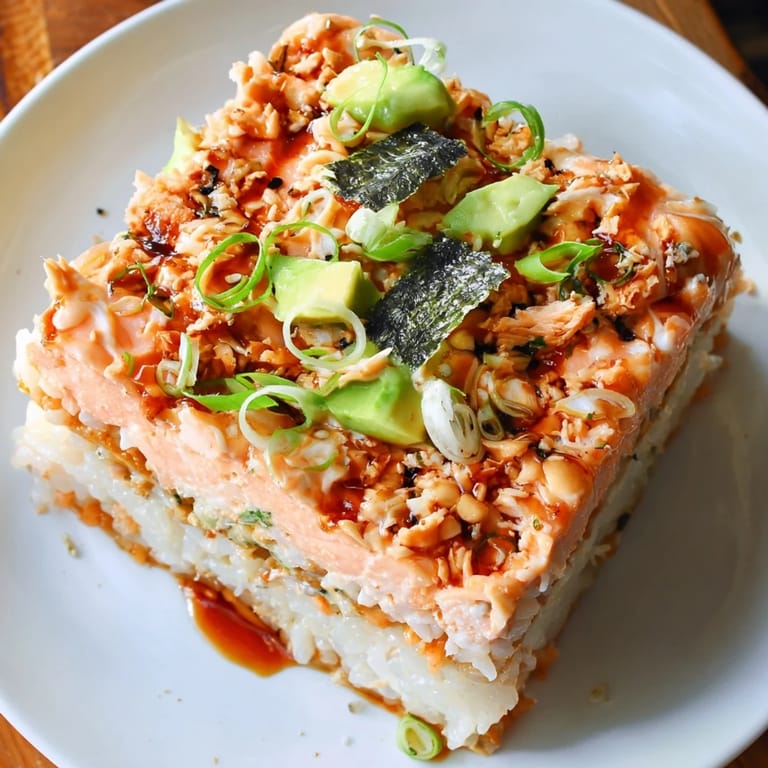
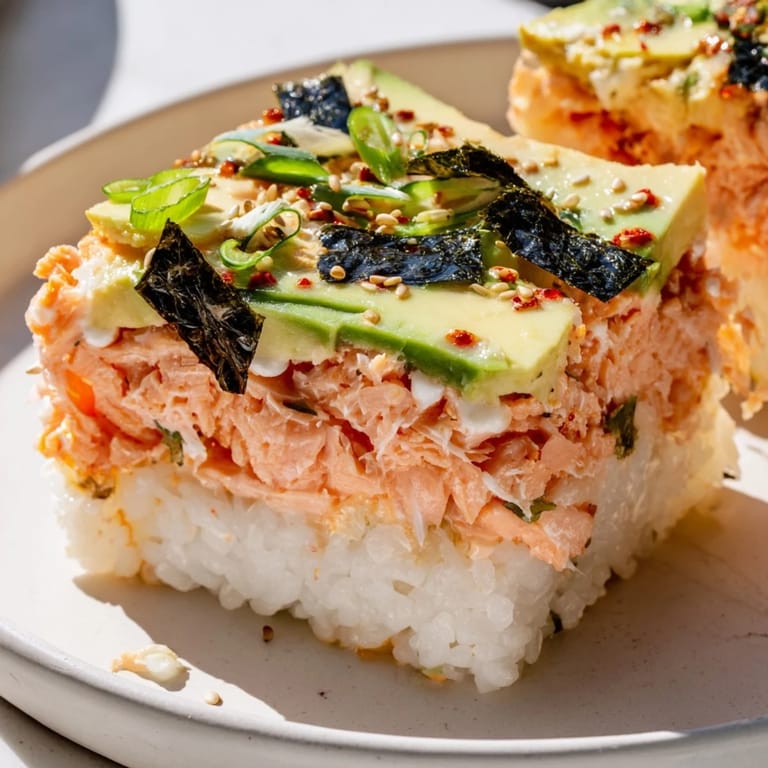
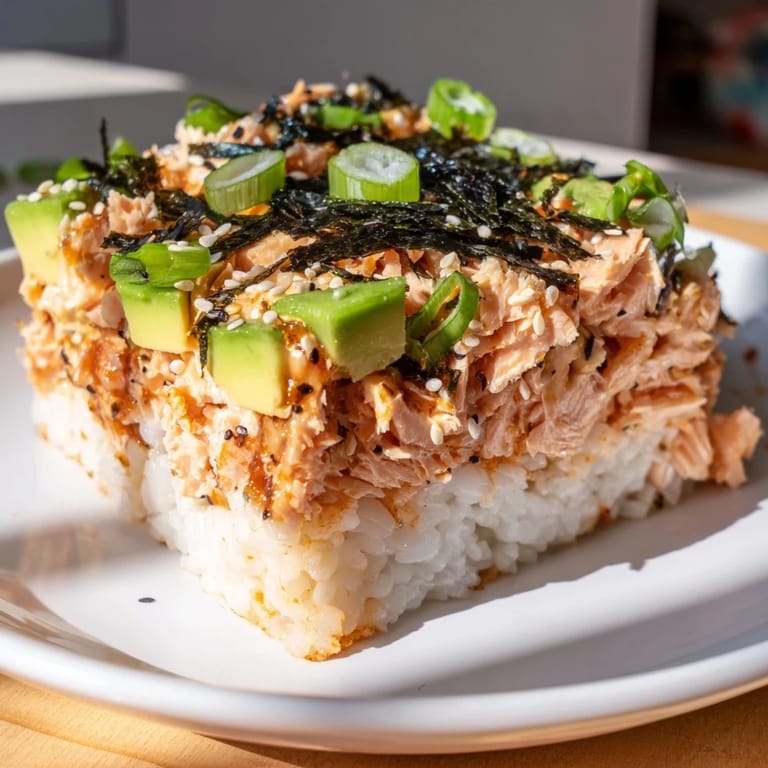
- Slice the casserole into portions and immediately top each one with sliced avocado, nori squares, toasted sesame seeds, and fresh spring onions. Serve warm with soy sauce, pickled ginger, and wasabi on the side so everyone can adjust flavors to their taste.
 Save to Pinterest
 What I love most about this dish is watching people realize they can make something that tastes like a restaurant at home, without complicated technique or specialized equipment. It's one of those recipes that builds confidence in the kitchen and makes you want to cook more.
Why Sushi Bake Changed Everything
Before this recipe, I thought making sushi at home was something only patient people with years of practice could do well. But deconstructing the idea into layers completely freed me from that pressure. Now I see that cooking isn't always about tradition or technique—sometimes it's about understanding why things taste good together and finding your own path to that flavor.
Customization That Actually Works
The beauty of this casserole is that it's more forgiving than rolled sushi, which means you can play around without disaster. I've made versions with crab, shrimp, and even kept one vegetarian by replacing the salmon layer with marinated portobello mushrooms. Each one turned into something delicious because the foundation—seasoned rice and that creamy binding layer—is solid enough to support changes.
Timing and Temperature Tricks
Timing this dish right means having your components ready to layer quickly, so the rice doesn't cool and become stiff. I prep everything before the salmon goes in the oven, which gives me exactly the window I need. The casserole should come out of the oven warm but not hot—if it's steaming, your avocado will start to wilt immediately.
- Cook your salmon a few minutes before the final assembly so it's ready to fold into the cream cheese mixture at the right moment.
- If you're serving guests, you can assemble everything except the avocado and toppings up to 2 hours ahead, then bake and top right before serving.
- Leftovers stay good for two days refrigerated, though the avocado is best fresh—add it only to the portion you're eating.
 Save to Pinterest
 This recipe lives in that perfect space between comfort food and something special—exactly the kind of dish that makes weeknight dinners feel celebratory. Make it once and you'll understand why everyone keeps asking for it.
Questions & Answers
- → What type of rice is best for this dish?
Short-grain sushi rice is ideal as it becomes sticky when cooked, allowing the layers to hold together well.
- → Can I substitute the salmon with other seafood?
Yes, cooked crab meat, canned tuna, or shrimp are great alternatives that maintain the dish’s seafood character.
- → How can I add a crunchy texture to this bake?
Sprinkling panko breadcrumbs on top before baking adds a nice crunch to contrast the creamy layers.
- → What sauces pair well for serving?
Soy sauce is traditional, while pickled ginger and wasabi provide a sharp, tangy kick that complements the flavors.
- → Can this dish be prepared ahead of time?
Yes, you can assemble it and refrigerate before baking, then warm it in the oven just before serving.