 Save to Pinterest
 The kitchen was quiet except for the gentle hiss of butter melting in the pan, that sound that always makes me pause and appreciate the moment. I was trying to recreate a dish from a tiny bistro in Paris where the waiter had winked when I asked what made their lemon chicken so extraordinary. It turned out the secret was simply paying attention and not rushing the sauce. Now this recipe lives in my weekly rotation, a reminder that some of the best things in life are actually quite simple.
Last Tuesday my sister dropped by unannounced after a terrible day at work. I had chicken defrosted and a bag of spinach starting to look a little sad, so this recipe saved the evening. We stood at the counter sharing forks straight from the pan, and somewhere between the bright lemon and the warmth of the butter, her shoulders finally dropped. Sometimes food is just dinner, and sometimes it is exactly what someone needs.
Ingredients
- 4 boneless skinless chicken breasts: Pound them to even thickness so they cook uniformly and stay tender
- 1/2 teaspoon each salt and black pepper: Season generously before dredging for flavor that goes beyond the surface
- 1/2 cup flour or gluten-free blend: Creates a light coating that helps the sauce cling beautifully
- 400 g fresh baby spinach: Baby spinach is sweeter and more delicate than mature spinach
- 3 tablespoons unsalted butter divided: Unsalted lets you control the seasoning perfectly
- 2 tablespoons plus 1 tablespoon olive oil: Olive oil has a higher smoke point than butter for the initial sear
- 4 cloves garlic minced divided: Fresh garlic matters here, and we are using it in both components
- Juice and zest of 1 large lemon: Both the bright juice and fragrant oils in the zest are essential
- 150 ml low-sodium chicken broth: Low-sodium broth prevents the sauce from becoming too salty
- 1 teaspoon Dijon mustard: Just a touch adds depth and helps emulsify the sauce
- 1 tablespoon capers rinsed and drained: These little bursts of brine make everything pop
- 1 tablespoon chopped fresh parsley: Fresh herbs at the end make the dish look and taste vibrant
Tired of Takeout? 🥡
Get 10 meals you can make faster than delivery arrives. Seriously.
One email. No spam. Unsubscribe anytime.
Instructions
- Prepare the chicken:
- Pat the chicken dry with paper towels and season both sides with salt and pepper. Lightly dredge each piece in flour, shaking off any excess so the coating stays light and even.
- Sear the chicken:
- Heat 2 tablespoons olive oil and 1 tablespoon butter in a large skillet over medium-high heat until shimmering. Add chicken in a single layer and cook 3 to 4 minutes per side until golden and just cooked through, then remove to a plate and tent loosely with foil.
- Build the sauce base:
- Lower heat to medium and add remaining 2 tablespoons butter to the pan. Add garlic and sauté for 30 seconds until fragrant but not browned. Pour in chicken broth, lemon juice, and zest, scraping up any browned bits from the bottom.
- Finish the sauce:
- Stir in Dijon mustard and capers if using, then simmer for 2 to 3 minutes until slightly reduced. Return chicken to the skillet, turning to coat in the sauce, and simmer gently for 2 minutes until heated through.
- Wilt the spinach:
- Meanwhile, heat 1 tablespoon olive oil in a separate large skillet over medium heat. Add minced garlic and cook for 30 seconds, then add spinach and a pinch of salt, sautéing for 1 to 2 minutes just until wilted but still bright.
- Plate it up:
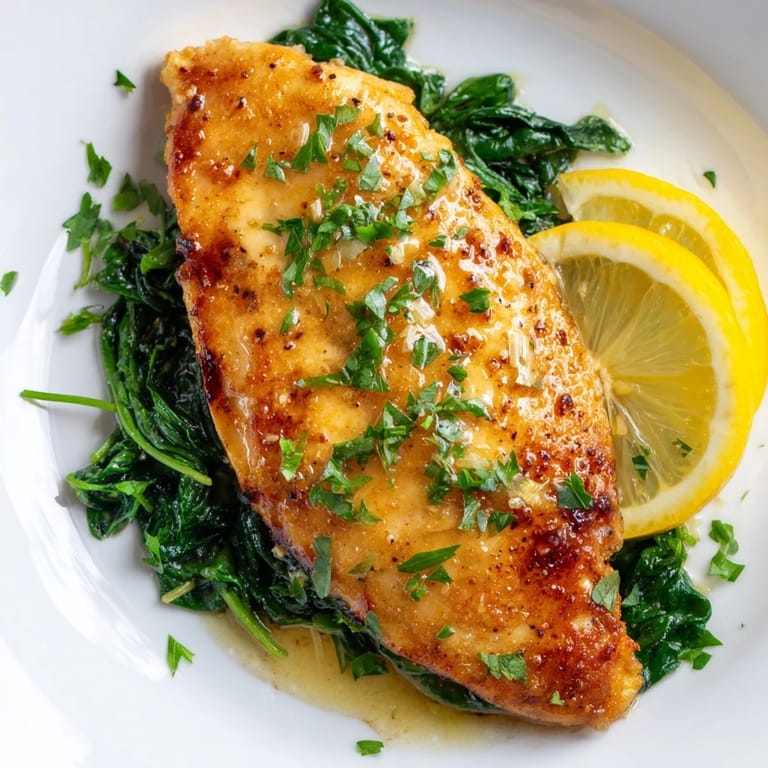
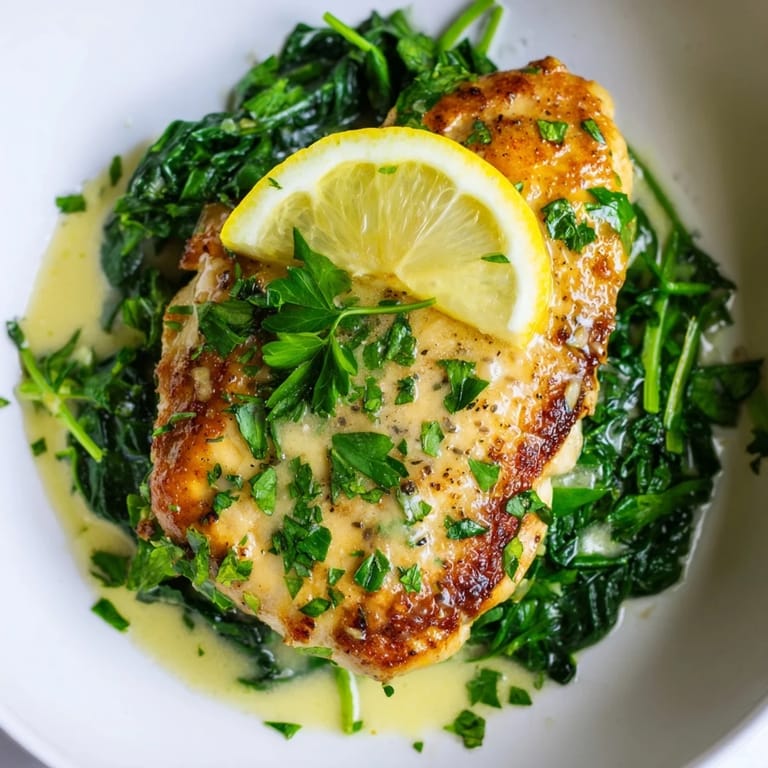
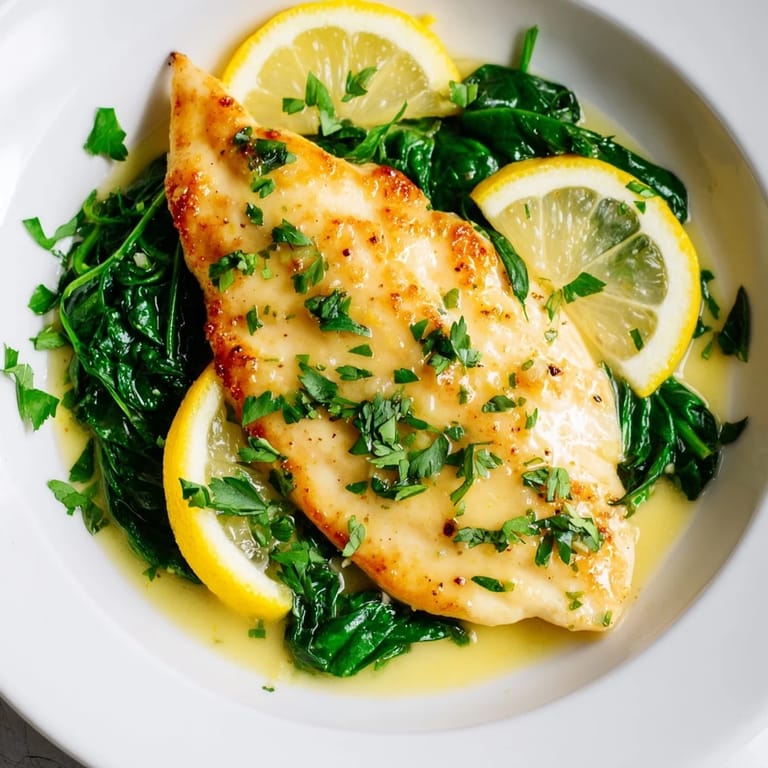
- Arrange wilted spinach on plates and top with chicken cutlets, spooning that gorgeous lemon butter sauce over everything. Garnish with parsley and lemon slices if you are feeling fancy.
 Save to Pinterest
 This recipe has become my go-to for those nights when I want something that feels special but do not have the energy for anything complicated. The way the bright lemon cuts through the richness of the butter just works every single time, and the spinach adds such a lovely earthiness to the plate.
Making It Your Own
Sometimes I swirl in a splash of heavy cream at the end if I am craving something extra luxurious. The sauce becomes velvety and rich, perfect for when comfort food is the priority. You can also swap the spinach for Swiss chard or kale, just adjust the cooking time since heartier greens take a minute longer to wilt.
What To Serve With It
Buttered rice or mashed potatoes are natural choices, soaking up all that incredible sauce. Crusty bread is nonnegotiable in my house because someone always needs to swipe up the last drops from the plate. A crisp Sauvignon Blanc cuts through the richness and highlights the lemon beautifully.
Timing Is Everything
I have learned to start the spinach right after I return the chicken to the sauce so everything finishes at the same moment. There is nothing sadder than perfectly cooked chicken sitting around while spinach turns into a soggy mess. The whole dish comes together in about 35 minutes from start to finish.
- Have all your ingredients prepped before you turn on the stove
- Warm your plates if you are serving this for a dinner party
- The sauce is best immediately, but leftovers reheat gently over low heat
 Save to Pinterest
 I hope this recipe finds its way into your regular rotation like it did mine. There is something profoundly satisfying about a dish that looks impressive but comes together so effortlessly.
Questions & Answers
- → Can I use frozen spinach instead of fresh?
Yes, frozen spinach works well. Thaw and squeeze out excess moisture before sautéing to prevent a watery dish. Use about 250 g frozen spinach, which yields roughly 400 g fresh when thawed.
- → How do I know when the chicken is cooked through?
Cook until the internal temperature reaches 165°F (74°C) using an instant-read thermometer, or until the thickest part is no longer pink. Since the cutlets are pounded thin, they typically need only 3–4 minutes per side.
- → What can I serve with this dish?
Buttered rice, creamy mashed potatoes, or crusty bread are excellent pairings. For a lighter option, serve with roasted vegetables or egg noodles. Sauvignon Blanc complements the lemony sauce beautifully.
- → Can I make the lemon butter sauce ahead of time?
The sauce is best made fresh for optimal brightness, but you can prepare components in advance. Store lemon juice and zest separately, and cook the sauce just before serving. Reheat gently over low heat to avoid breaking the butter emulsion.
- → Is this naturally gluten-free?
It can be made gluten-free by using a gluten-free flour blend for dredging instead of all-purpose flour. All other ingredients are naturally gluten-free, but always verify Dijon mustard labels for potential gluten content.
- → How can I add more flavor to the sauce?
Consider adding a splash of dry white wine, a touch of cream for richness, fresh herbs like thyme or dill, or a teaspoon of honey to balance acidity. Adjust seasonings with extra lemon zest or a pinch of red pepper flakes for subtle heat.