 Save to Pinterest
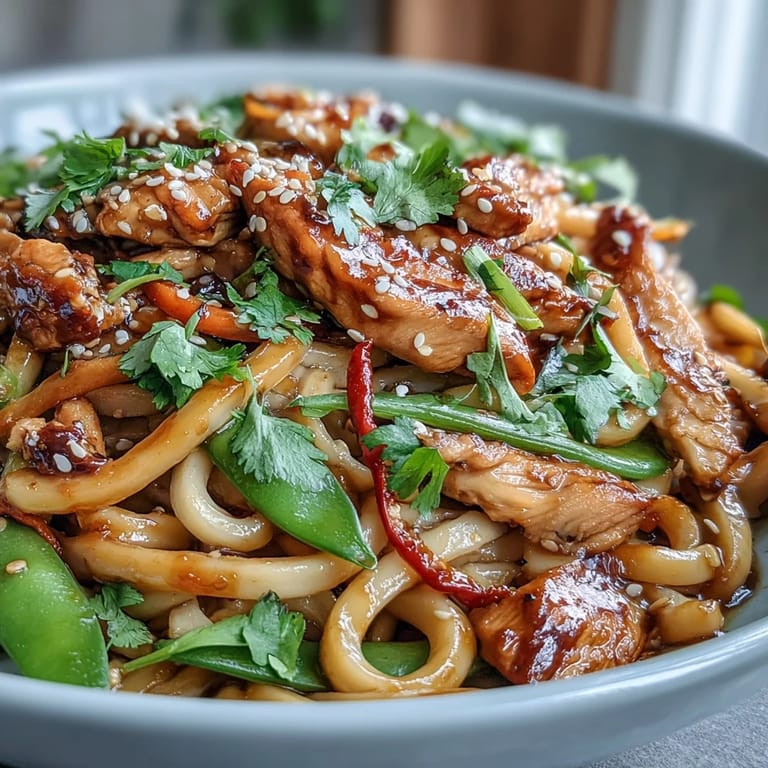
 There's something about the smell of sesame oil hitting a hot pan that makes me stop whatever I'm doing. My neighbor brought over a takeout container one Tuesday evening, and I watched her twirl noodles on her fork while steam rose from the bowl. She mentioned it took her all of fifteen minutes to recreate what she'd had at a restaurant down the street, and something about that casual confidence stuck with me. Now when I need dinner fast but want it to taste like I've been cooking for hours, this is what I make.
I made this for my friend who'd just moved to the city and didn't know where to find good food yet. Watching her face as she took that first bite, then immediately asking for the recipe, reminded me that the best meals are the ones that feel like a small act of care. Now she texts me photos of her own versions with different vegetable combinations.
Ingredients
- Boneless, skinless chicken breast or thighs (500 g or 1 lb), thinly sliced: Thighs stay more tender and forgiving, but breasts work beautifully if you don't overcook them—thin slicing is your insurance policy.
- Dried udon, soba, or rice noodles (250 g or 9 oz): Each brings different texture and personality; udon feels hearty, soba tastes slightly nutty, and rice noodles stay delicate.
- Red bell pepper, thinly sliced (1): The color isn't just pretty—red peppers have a sweeter flavor than green ones, which complements the sesame sauce perfectly.
- Medium carrot, julienned (1): Cut them thin so they cook quickly and stay snappy in texture instead of turning soft.
- Sugar snap peas, trimmed (100 g or 3.5 oz): These stay crisp even with quick cooking, which is exactly what you want in a stir-fry.
- Spring onions, sliced (2): Use both the white and green parts; the whites cook into the sauce while the greens scatter on top like confetti.
- Low-sodium soy sauce (60 ml or 4 tbsp): Low-sodium gives you control over saltiness, which matters when brown sugar and sesame oil are already playing their roles.
- Brown sugar (2 tbsp): This dissolves faster than white sugar and brings a molasses depth that makes the sauce taste rounder and richer.
- Toasted sesame oil (1 tbsp): This is the backbone—toasted oil smells and tastes entirely different from regular sesame oil, so don't skip that detail.
- Rice vinegar (1 tbsp): The acidity cuts through richness and keeps the sauce from feeling heavy; a small but mighty player.
- Fresh ginger, grated (2 tsp): Grating it fresh means you get those little pockets of bright, warming spice that jarred ginger can't quite match.
- Garlic, minced (2 cloves): Mince it fine so it distributes evenly through the sauce instead of sitting in chunks.
- Cornstarch, optional (1 tsp): I use this when I want the sauce to coat the noodles more dramatically, but it's not necessary if you like things saucier.
- Toasted sesame seeds (2 tbsp): Toast them yourself or buy them already toasted; either way, they scatter across the top like edible jewelry.
- Fresh coriander or cilantro, chopped: If you love cilantro, pile it on; if you're one of those people who thinks it tastes like soap, fresh parsley works just as well.
- Lime wedges, optional: A squeeze at the end brightens everything and adds a personal finishing touch that changes the whole taste.
Tired of Takeout? 🥡
Get 10 meals you can make faster than delivery arrives. Seriously.
One email. No spam. Unsubscribe anytime.
Instructions
- Get your noodles ready:
- Boil a pot of salted water and cook the noodles exactly according to the package directions—this matters because overcooked noodles turn mushy once they meet the hot sauce. Drain them and run cold water over them while stirring gently so they don't clump, then set them aside.
- Make the magic sauce:
- In a small bowl, whisk together soy sauce, brown sugar, sesame oil, rice vinegar, ginger, and garlic until the sugar dissolves completely. If you're using cornstarch, whisk it in last so it doesn't clump—this becomes your flavor foundation, so don't rush this step.
- Heat your cooking vessel:
- Whether you use a large skillet or wok, get it properly hot over medium-high heat before you add any oil. You'll know it's ready when a drop of water dances across the surface—this is when the chicken will sear instead of steam.
- Cook the chicken until golden:
- Add a splash of oil, then your sliced chicken, and let it sit for a moment before stirring so it develops that light brown crust. You're looking for about four to five minutes until the chicken is cooked through and no longer pink inside—this goes faster than you'd expect.
- Stir-fry the vegetables:
- Add a little more oil if the pan looks dry, then add the bell pepper, carrot, and snap peas. Keep them moving for two to three minutes so they soften just enough to be pleasant but stay crisp enough to have some bite when you eat them.
- Bring everything together:
- Return the chicken to the pan, pour in that sauce you made earlier, and toss everything so the sauce coats every piece. Let it simmer for a minute or two until the sauce thickens slightly and clings to the chicken and vegetables.
- Add the noodles and finish:
- Toss in the cooled noodles and sliced spring onions, stirring gently until everything is heated through and the sauce distributes evenly. This is where the bowl transforms from separate components into something cohesive.
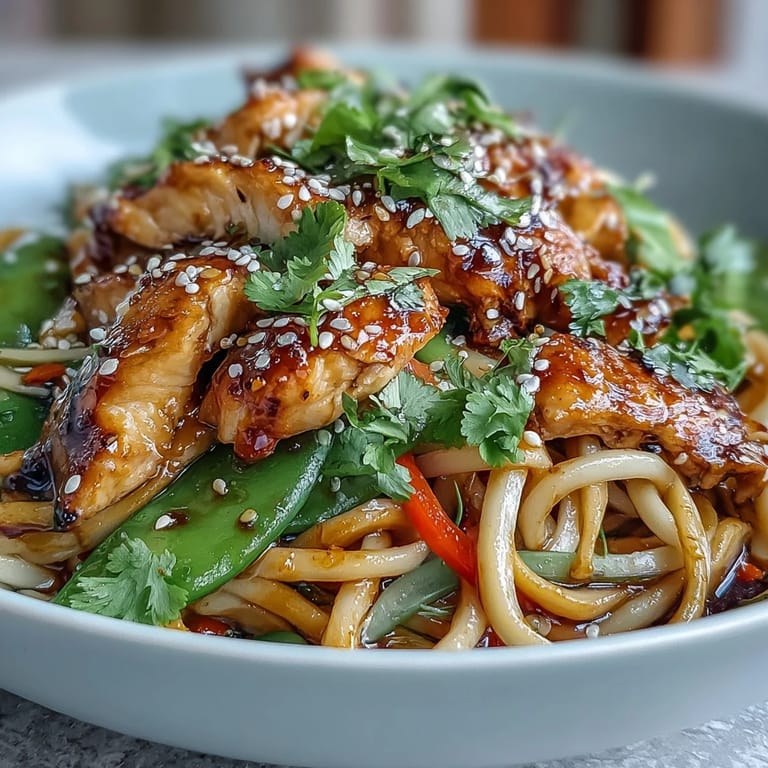
- Plate and celebrate:
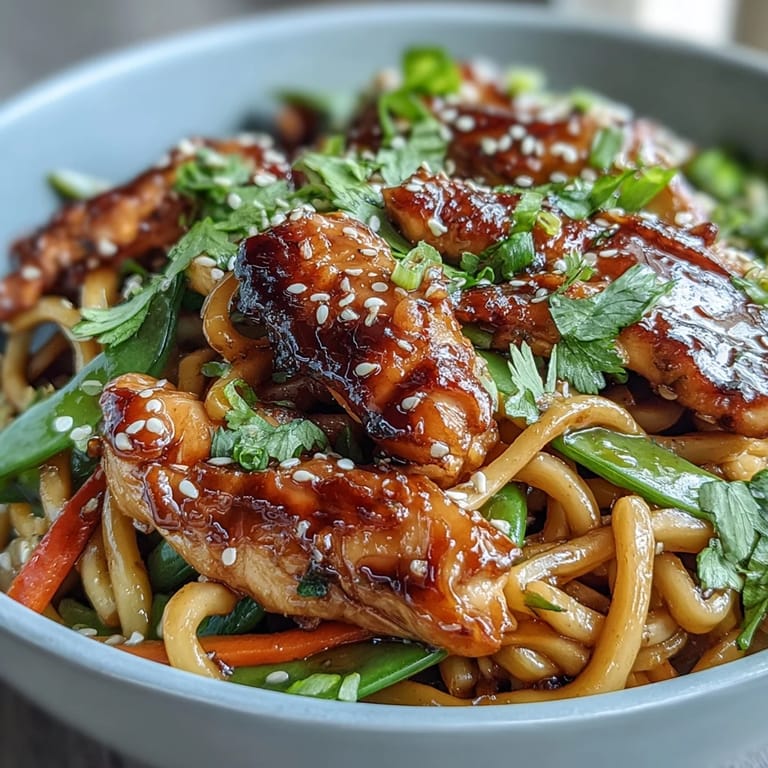
- Divide the bowl among dishes, scatter sesame seeds and cilantro across the top, and add a lime wedge if you have one. The lime is optional, but that little squeeze makes the whole thing sing.
 Save to Pinterest
 My sister called me one afternoon stressed about dinner for her daughter who'd suddenly decided she only ate 'brown food' as a phase, and this was somehow the answer. The noodles are brown, the sauce is brown, and the chicken is brown—and my niece finished her bowl without complaint. That random victory felt bigger than it should have, but that's what good food does sometimes.
Variations That Work
Tofu swaps in seamlessly if you want vegetarian—press it first to remove extra moisture, then cut it into cubes and cook it the same way you'd cook chicken. Mushrooms, broccoli, or baby bok choy slot right in alongside the other vegetables without changing anything else about the recipe. If heat is your thing, fresh red chilies minced into the sauce or chili flakes scattered on top take this in a completely different direction that's equally delicious.
The Sauce Is Everything
This bowl lives or dies by the sesame sauce, which means understanding each ingredient matters. The brown sugar provides sweetness and body, soy sauce brings savory depth, sesame oil adds that toasted richness, rice vinegar keeps everything bright and prevents it from tasting cloying, and the ginger and garlic give it personality and warmth. When these elements balance correctly, the whole bowl tastes like it came from a restaurant that spent years perfecting it, even though you just made it in your kitchen.
Make It Yours
The beauty of a bowl is how personal it becomes once you understand the basic structure. Some nights I add a soft poached egg on top for richness, other times I stir in a spoonful of almond butter to make the sauce silkier. You might prefer more vegetables or less noodles, more sauce or less—this recipe is flexible enough to live in your kitchen exactly as you want it.
- Taste as you go and adjust the brown sugar, soy sauce, or lime juice to match your preferences.
- Leftovers keep in the fridge for three days, though the noodles soften over time—you can refresh them with a splash of water when reheating.
- Make extra sauce and keep it in a jar so you can throw this bowl together on nights when you don't even feel like cooking.
 Save to Pinterest
 This bowl has become my answer to so many situations—the dinner I make when I'm tired, the meal I cook for friends who say they're hungry but don't know what for, the dinner that reminds me why I love cooking in the first place. It's fast, it's bright, it's reliable, and it always feels like more than the sum of its parts.
Questions & Answers
- → Can I use other types of noodles?
Yes, you can substitute udon, soba, or rice noodles with spaghetti, linguine, or even egg noodles. Just cook them according to package directions before adding to the stir-fry.
- → How do I store leftovers?
Store cooled leftovers in an airtight container in the refrigerator for up to 3 days. Reheat gently in a skillet with a splash of water or microwave until warmed through.
- → Can I make this spicy?
Absolutely. Add 1-2 teaspoons of chili garlic sauce, sriracha, or red pepper flakes to the sauce mixture. You can also slice fresh chili peppers into the stir-fry.
- → Is there a vegetarian option?
Yes, substitute the chicken with firm tofu, tempeh, or seitan. Press and pan-fry the tofu first to achieve a crispy texture before adding the sauce.
- → Can I prepare the sauce ahead?
The sauce can be whisked together and stored in the refrigerator for up to 1 week. Give it a good stir before using, as the cornstarch may settle.