 Save to Pinterest
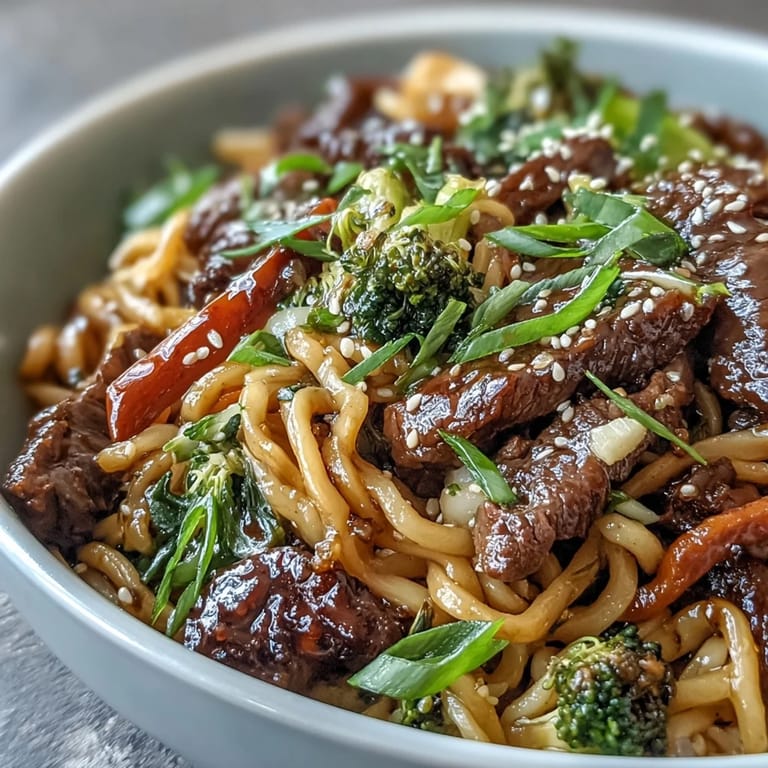
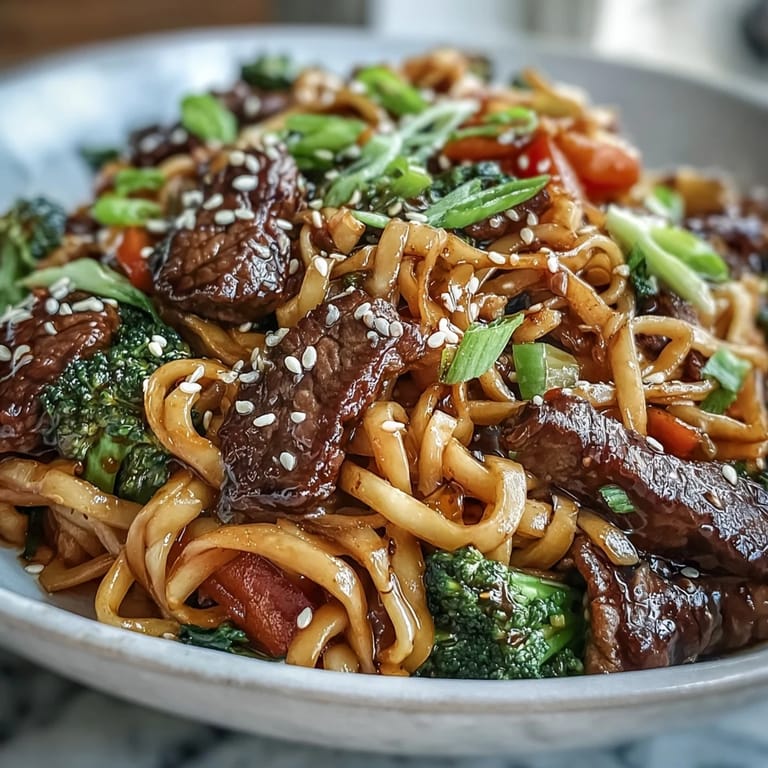
 My neighbor knocked one evening with a bag of rice noodles she'd bought by mistake, thinking they were linguine. I had flank steak thawing and a fridge drawer full of vegetables that needed using, so I promised her dinner in exchange. What came together that night was this dish, a happy collision of textures and sweet-salty gloss that neither of us expected to crave on repeat. She still brings me noodles, but now it's on purpose.
I made this for my brother after he moved into his first apartment with nothing but a hot plate and a single pan. He called it restaurant food, which made me laugh because I'd just dumped everything into the skillet and hoped for the best. Watching him scrape the bowl clean reminded me that good food doesn't need fancy equipment, just heat, timing, and a little confidence.
Ingredients
- Rice noodles: These soften quickly and soak up sauce without getting mushy, so don't overcook them or they'll clump when you toss them in the skillet.
- Flank steak: Slicing against the grain keeps it tender, and a sharp knife makes all the difference when you're working with a firm cut like this.
- Broccoli florets: They add a slight bitterness that balances the sweetness of the sauce, and they stay crisp if you don't crowd the pan.
- Bell pepper: Red or yellow brings color and a gentle sweetness that plays well with soy and sesame.
- Carrot: Julienned carrots cook fast and add a bit of crunch, plus they look beautiful tangled in the noodles.
- Green onions: Chopped at the last minute, they give a fresh bite that cuts through the richness.
- Garlic and ginger: These two are the backbone of the fragrance, and grating the ginger releases more flavor than chopping it.
- Soy sauce: The salty base of the sauce, so taste before adding extra salt.
- Brown sugar: It melts into the soy sauce and creates that glossy, caramelized coating.
- Sesame oil: A little goes a long way, toasted and nutty, it ties everything together.
- Vegetable oil: High smoke point keeps the skillet hot without burning.
- Sesame seeds: Toasted seeds add a final layer of nuttiness and a satisfying crunch.
Tired of Takeout? 🥡
Get 10 meals you can make faster than delivery arrives. Seriously.
One email. No spam. Unsubscribe anytime.
Instructions
- Soften the noodles:
- Cook the rice noodles according to package directions, then drain and rinse them under cool water to stop the cooking. This keeps them from sticking together while you prep everything else.
- Sear the beef:
- Heat vegetable oil in a large skillet or wok over medium-high heat, then add the sliced flank steak in a single layer. Let it sear for 2 to 3 minutes until browned, then remove it to a plate so it doesn't overcook.
- Build the aromatics:
- In the same skillet, add the minced garlic and grated ginger, stirring constantly for about 30 seconds until the smell fills your kitchen. Don't let them burn or they'll turn bitter.
- Stir-fry the vegetables:
- Toss in the broccoli, bell pepper, and carrot, stirring often for about 5 minutes. They should soften but still have a bite, so don't walk away from the stove.
- Mix the sauce:
- While the vegetables cook, whisk together the soy sauce, brown sugar, and sesame oil in a small bowl until the sugar dissolves completely. The sauce should be smooth and glossy.
- Combine and coat:
- Return the beef to the skillet and pour the sauce over everything, stirring to coat. The sugar will start to caramelize and cling to the meat and vegetables.
- Toss in the noodles:
- Add the cooked rice noodles and gently toss everything together with tongs or a spatula until the noodles are evenly coated and heated through, about 2 minutes. Be gentle so the noodles don't break.
- Finish and serve:
- Sprinkle chopped green onions and sesame seeds over the top before dividing into bowls. Serve immediately while the noodles are still glossy and warm.
 Save to Pinterest
 One rainy Saturday, I made this for a friend who'd just broken up with someone and needed comfort that wasn't ice cream. We ate it straight from the skillet, sitting on the floor with chopsticks, and she said the sesame smell alone made her feel better. Sometimes a bowl of noodles and good company is enough to reset the day.
Making It Your Own
I've swapped the flank steak for chicken thighs, tofu, and even shrimp, and each version worked beautifully. The sauce is forgiving, so if you want more heat, stir in a spoonful of gochujang or sriracha before tossing the noodles. Snap peas, zucchini, and mushrooms have all made appearances in my skillet, depending on what's in the crisper drawer.
Storing and Reheating
Leftovers keep in an airtight container in the fridge for up to three days, though the noodles will soften a bit as they sit. I reheat them in a skillet over medium heat with a splash of water or broth to loosen everything up, stirring gently until warmed through. Microwaving works too, but the texture won't be quite as good.
Serving Suggestions
This dish is filling enough to stand alone, but I sometimes serve it with a simple cucumber salad dressed in rice vinegar and a pinch of sugar to cut through the richness. If you're feeding a crowd, double the recipe and keep it warm in a low oven until everyone's ready to eat.
- Serve with chopsticks and small bowls for a more casual, hands-on meal.
- Top with a fried egg if you want extra richness and a runny yolk to stir in.
- Pair with iced barley tea or a crisp lager to balance the sweet and salty flavors.
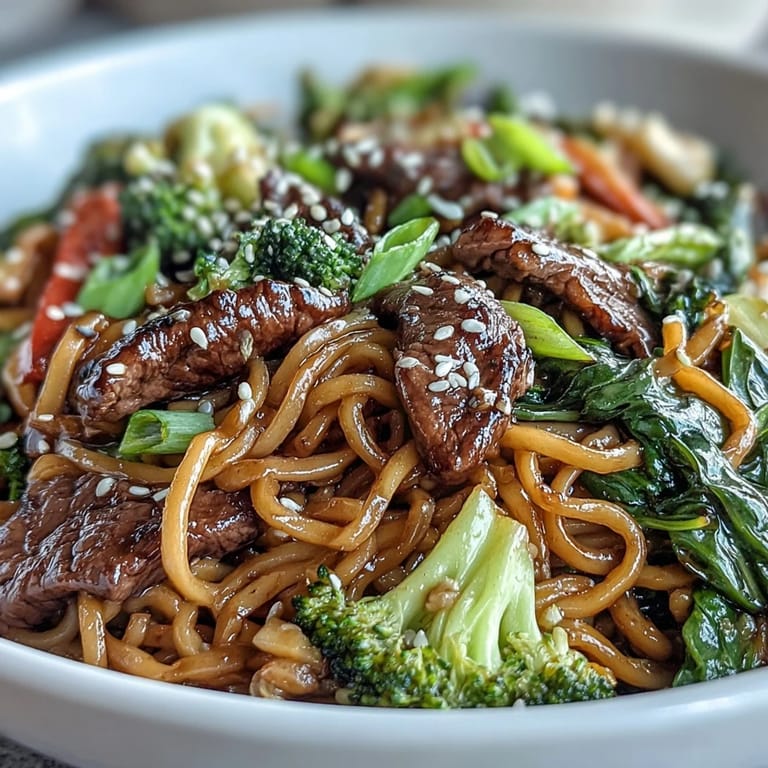 Save to Pinterest
 This recipe has become my answer to busy weeknights and last-minute guests, reliable and never boring. I hope it finds a spot in your rotation too.
Questions & Answers
- → What cut of beef works best?
Flank steak is ideal because it's lean and takes on flavors beautifully. Slice it thinly against the grain for maximum tenderness.
- → Can I make this spicy?
Absolutely. Stir in sriracha or gochujang paste into the sauce mixture for authentic Korean heat. Start with one teaspoon and adjust to taste.
- → What vegetables can I add?
Snap peas, zucchini, mushrooms, or baby corn work wonderfully. Keep pieces uniform for even cooking.
- → How do I store leftovers?
Keep in an airtight container for up to 3 days. Reheat gently with a splash of water to refresh the sauce.
- → Can I use other proteins?
Yes. Chicken thighs, shrimp, or firm tofu all pair beautifully with these bold Korean flavors.