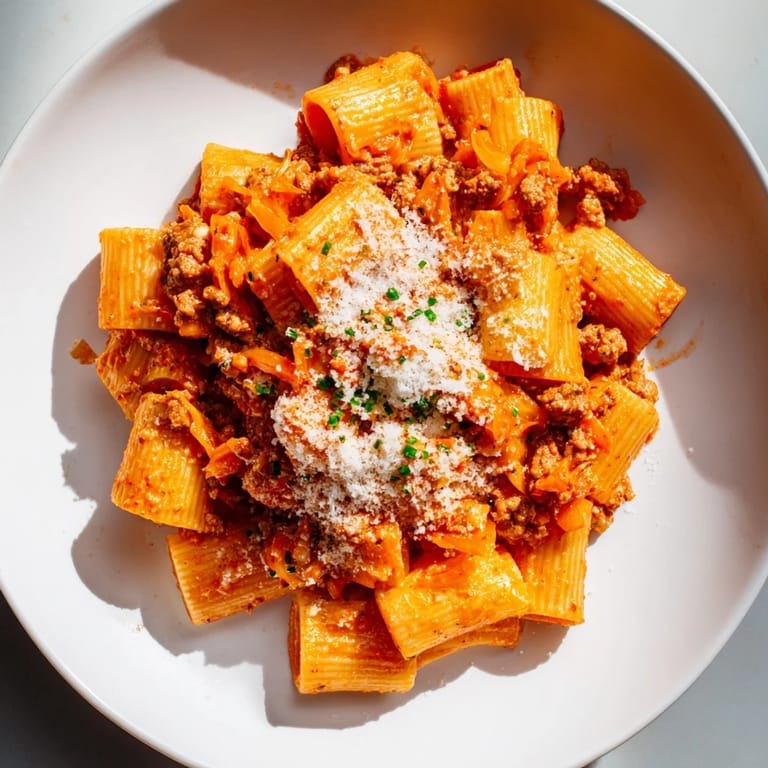
 Save to Pinterest
 I discovered this dish by accident on a Tuesday night when I had leftover kimchi staring at me from the fridge and a craving for something creamy and warm. Instead of tossing it, I wondered what would happen if I threw it into a ragu—that slow-cooked, meaty Italian sauce my grandmother made. The first bite was revelation: spicy, savory, umami-rich, with this unexpected harmony between Korean heat and Italian comfort. Now it's become my go-to move when I want to feel like I'm cooking something clever without actually planning ahead.
I made this for my partner on a night when we were both exhausted, and watching their face when they tasted it reminded me why cooking fusion food is so fun. There's something magical about breaking the rules and having it actually work—tradition meeting improvisation on a plate, steaming and glossy under the kitchen light.
Ingredients
- Ground pork (300 g): The base that holds everything together; use a 50/50 pork-and-beef blend if you want deeper, richer flavor, or go all beef if that's what you have.
- Napa cabbage kimchi (200 g, chopped, plus 2 tbsp juice): This is your secret weapon—the funkiness and spice that transforms a simple ragu into something memorable, so don't skip the juice.
- Onion, carrot, and celery (1 medium onion, 1 carrot, 1 stalk): The holy trinity that builds the foundation; finely dicing these means they dissolve into the sauce rather than sitting as chunks.
- Garlic (2 cloves, minced): Adds warmth and depth without overpowering the kimchi's character.
- Crushed tomatoes (400 g can): The backbone that balances spice with acidity and body.
- Heavy cream (120 ml): Makes the sauce silky and mellows the heat just enough; plant-based cream works beautifully if you're avoiding dairy.
- Olive oil (2 tbsp): For sautéing—use good oil because you'll taste it throughout.
- Soy sauce (1 tbsp): Deepens umami and rounds out the flavors.
- Gochugaru (1 tsp, optional): Korean chili flakes that add color and an extra spice layer if you want to push the boldness further.
- Sugar (1 tsp): A tiny bit to balance the acidity of tomatoes and cut through spice.
- Rigatoni or penne (350 g): Shapes that catch and hold the sauce in every bite.
- Scallions (2 tbsp, chopped) and Parmesan (25 g, grated): Final touches that add brightness and a salty, nutty finish.
Tired of Takeout? 🥡
Get 10 meals you can make faster than delivery arrives. Seriously.
One email. No spam. Unsubscribe anytime.
Instructions
- Build Your Base:
- Heat olive oil in a large skillet over medium-high heat until it shimmers slightly. Add chopped onion, carrot, and celery, stirring often for about 5 minutes until they're soft and fragrant—you'll know it's right when the kitchen smells like the start of something good.
- Wake Up the Garlic:
- Push the vegetables to the side, add minced garlic to the cleared space, and let it cook for just 1 minute until golden and aromatic. This prevents it from burning while building flavor.
- Brown the Meat:
- Increase heat slightly and add your ground meat, breaking it apart with a wooden spoon as it cooks. After 6 to 7 minutes, it should be completely browned with no pink; this is when the Maillard reaction gives you deep, savory notes.
- Introduce the Kimchi:
- Add chopped kimchi and its juice to the pot, stirring often. Let it sauté for 3 to 4 minutes so it softens and releases its funk into the meat—this is when the magic starts happening.
- Simmer the Sauce:
- Pour in crushed tomatoes, soy sauce, gochugaru if using, and sugar. Season lightly with salt and pepper, then lower heat to a gentle simmer, uncovered, for 15 to 20 minutes, stirring occasionally. You're looking for the sauce to thicken slightly and the flavors to meld into something that smells irresistible.
- Cook Your Pasta:
- While the ragu simmers, bring a large pot of salted water to a rolling boil and cook pasta until al dente. Before draining, reserve about 100 ml of that starchy pasta water—it's liquid gold for adjusting sauce consistency later.
- Cream and Combine:
- Turn the ragu heat down to low, then stir in heavy cream and half the reserved pasta water, mixing until everything is silky and cohesive. Taste and adjust seasoning—you might want more salt, pepper, or a pinch more gochugaru depending on your heat preference.
- Marry Pasta and Sauce:
- Add your drained pasta directly to the ragu and toss gently but thoroughly, coating every piece. If the sauce seems too thick, add more pasta water a splash at a time until you reach that glossy, clingy consistency.
- Finish and Serve:
- Divide into warm bowls and scatter scallions and Parmesan across the top. Serve immediately while everything is steaming hot.
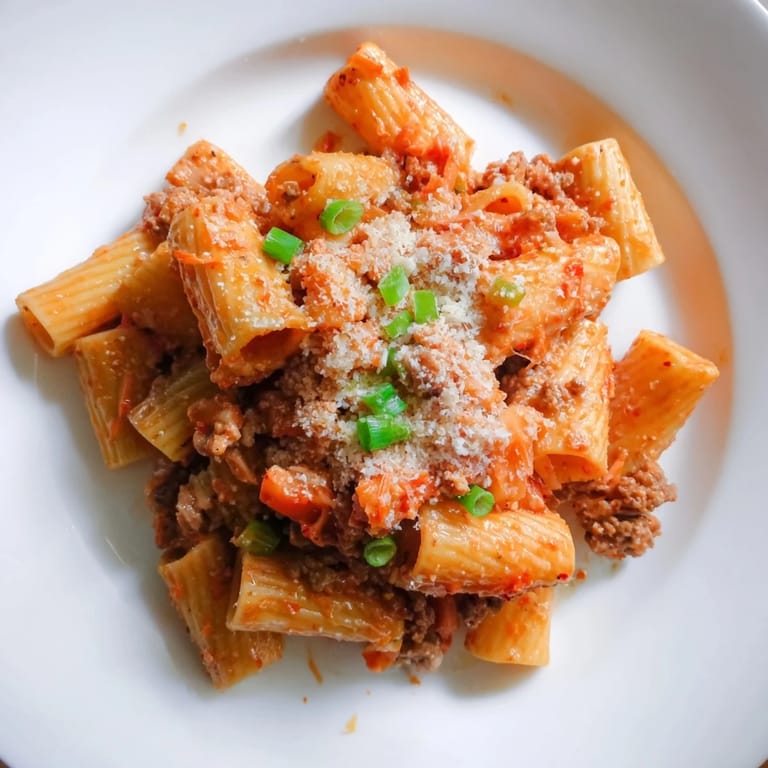 Save to Pinterest
 The first time someone told me this tasted like comfort and chaos at the same time, I knew I'd made something worth repeating. It's become the dish I make when I want to show someone I care—not because it's difficult, but because it's genuinely interesting.
The Korean-Italian Love Story on Your Plate
What makes this dish work isn't just throwing two cuisines together and hoping for the best. It's about understanding what they share: both Italian and Korean cooking are built on depth, fermentation, umami, and feeding people you love. The kimchi's funk and heat find a home in the richness of cream and the earthiness of tomato, like two strangers at a dinner party who discover they have everything to talk about.
Customizing Your Heat Level
This dish has built-in flexibility depending on your comfort with spice. If you're sensitive to heat, use milder kimchi, skip the gochugaru entirely, and use less of the kimchi juice. If you're chasing fire, double the gochugaru, use extra-spicy kimchi, and don't hold back on the juice. The beauty is that the cream and tomato will always balance whatever intensity you choose, never letting one flavor completely overtake the others.
Variations and What Works
Once you've made this once, you'll start seeing variations everywhere. Swap the pork for ground beef or a plant-based alternative, use coconut cream instead of dairy for a slightly sweet, vegan-friendly version, or add sautéed mushrooms for earthiness. The core technique stays the same: build flavor in layers, let the kimchi be your star, and don't skip the pasta water.
- For dairy-free, coconut cream brings richness without heaviness and plays beautifully with the spice.
- Vegetarian versions work best with good plant-based ground meat and nutritional yeast for umami depth.
- Leftover ragu keeps for three days in the fridge and actually tastes better the next day when flavors have settled into each other.
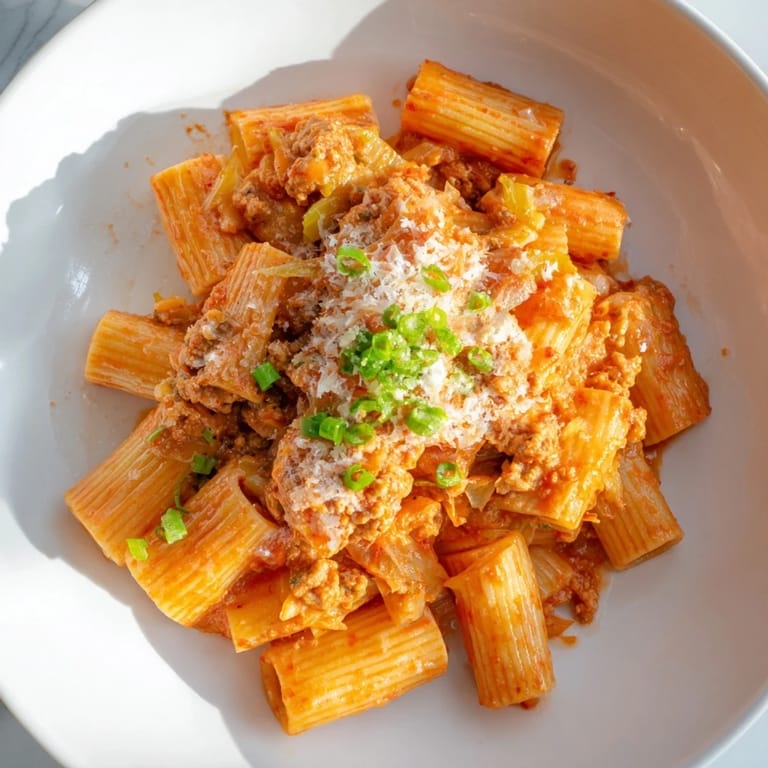 Save to Pinterest
 This is the kind of recipe that reminds you why cooking at home matters: it's fast enough for a weeknight, bold enough to feel special, and weird enough that it becomes conversation. Make it once, and it'll find its way into regular rotation.
Questions & Answers
- → Can I substitute ground beef for pork in this dish?
Yes, ground beef or a blend of pork and beef can be used without affecting the dish’s rich flavor and texture.
- → How spicy is the kimchi ragu pasta?
The spice level depends on the kimchi and optional gochugaru added; it can be adjusted to taste by modifying these ingredients.
- → What pasta types work best for this sauce?
Rigatoni or penne are ideal since their shapes hold the creamy, chunky sauce well, but other ridged pasta can work too.
- → Is there a dairy-free alternative for the cream?
You can replace heavy cream with unsweetened plant-based creams or coconut cream for a dairy-free, slightly sweet variation.
- → How can I make a vegetarian version?
Use plant-based ground meat and omit or replace Parmesan with a vegan alternative to maintain flavor and richness.