 Save to Pinterest
 I discovered this pita combination on a sweltering afternoon when my fridge contained exactly three things: a lonely chicken breast, Greek yogurt, and half a lemon. Instead of ordering takeout, I grabbed a pita and started layering, trusting that Mediterranean flavors would carry me through. What emerged was so bright and satisfying that I've been refining it ever since, turning that improvisational moment into something I now make whenever I need food that feels both nourishing and celebratory.
My roommate once stopped mid-conversation when I opened the door with a fresh pita in hand, the aroma of grilled chicken and dill hitting her before anything else. She asked for one, then two, and by the next week she was requesting I make them for a small gathering. Watching people's faces brighten when they bit through that warm bread and encountered the cool tzatziki was the moment I realized this wasn't just lunch, it was something worth repeating.
Ingredients
- Boneless, skinless chicken breasts (2 large): These cook quickly and absorb the Mediterranean marinade beautifully, staying tender as long as you don't overwork them on the heat.
- Olive oil (3 tablespoons total, divided): This is your golden thread connecting every component, so use something you actually enjoy tasting rather than whatever's cheapest.
- Fresh lemon juice (3 tablespoons total, divided): Fresh squeezes always outperform bottled versions, adding brightness that tastes intentional rather than chemical.
- Dried oregano (2 teaspoons): This herb is the backbone of the chicken's flavor profile, so don't skimp or substitute with Italian seasoning.
- Garlic cloves (2 for chicken, 1 for tzatziki): Mince these yourself right before using, as pre-minced garlic loses its sharp personality sitting in jars.
- Pearl couscous (1 cup): Unlike regular couscous, these little pearls have actual texture and don't turn mushy, holding up beautifully when tossed with fresh vegetables.
- Cherry tomatoes (½ cup, quartered): Choose ones that smell faintly sweet at room temperature, as flavor matters more than color here.
- Cucumber (⅓ cup diced for salad, ½ cup grated for tzatziki): Select firm ones without soft spots, and squeeze the grated version thoroughly so your tzatziki doesn't become watery.
- Red onion (¼ cup, finely diced): The sharp bite mellows slightly as the salad sits, adding depth without overwhelming the other flavors.
- Kalamata olives (¼ cup, pitted and sliced): Pit these yourself if you can, as whole olives give you control over size and preserve their meaty texture.
- Feta cheese (¼ cup crumbled, plus extra for serving): Buy blocks and crumble them roughly by hand rather than using pre-crumbled versions, which dry out faster.
- Fresh parsley (2 tablespoons chopped for salad, extra for serving): Use the flat-leaf variety and chop it just before assembly so it stays vibrant and doesn't bruise.
- Greek yogurt (1 cup): Full-fat versions create silkier tzatziki, and the tanginess provides balance that thinner yogurts can't match.
- Fresh dill (1 tablespoon, chopped): This herb is non-negotiable for authentic flavor, though you can substitute fresh mint if dill isn't available.
- Pita breads (4 large): Look for ones that feel flexible rather than stiff, as they'll pocket more easily and stay softer when stuffed.
Tired of Takeout? 🥡
Get 10 meals you can make faster than delivery arrives. Seriously.
One email. No spam. Unsubscribe anytime.
Instructions
- Prepare your marinade:
- Whisk together olive oil, lemon juice, oregano, minced garlic, salt, and pepper in a shallow bowl until the oregano releases its fragrance and everything feels cohesive. The aroma should make you think of Mediterranean coastlines and warm afternoons.
- Marinate the chicken:
- Add your chicken breasts to the bowl and turn them to coat completely, making sure every surface touches the marinade. Let this sit for at least 15 minutes while you prep everything else, though longer is never wrong and allows deeper flavor penetration.
- Sear the chicken:
- Heat your grill pan or skillet over medium-high heat until a drop of water sizzles on contact, then lay the chicken down and resist the urge to move it immediately. Let it cook undisturbed for 6 to 7 minutes per side until the exterior develops a golden crust and the internal temperature reaches 165 degrees Fahrenheit.
- Rest and slice:
- Transfer the chicken to a cutting board and let it rest for a few minutes, during which time the juices redistribute and the meat becomes more tender. Slice thinly against the grain so each piece is tender enough to tear with your teeth.
- Cook the couscous:
- Bring water or chicken broth to a rolling boil in a saucepan, then stir in pearl couscous and reduce heat to maintain a gentle simmer. Cook uncovered for 8 to 10 minutes, stirring occasionally, until the grains are tender but still distinct, then drain if needed and let cool completely.
- Build the couscous salad:
- Combine cooled couscous with tomatoes, cucumber, red onion, olives, feta, and parsley in a large bowl, then drizzle with olive oil and fresh lemon juice. Toss gently to avoid crushing the vegetables, taste, and adjust seasoning with salt and pepper until it tastes balanced and bright.
- Whip the tzatziki:
- In a small bowl, fold together Greek yogurt, cucumber (which you've squeezed dry to prevent wateriness), minced garlic, fresh dill, lemon juice, and olive oil until smooth and creamy. Season with salt and pepper, then refrigerate until assembly time.
- Warm and assemble:
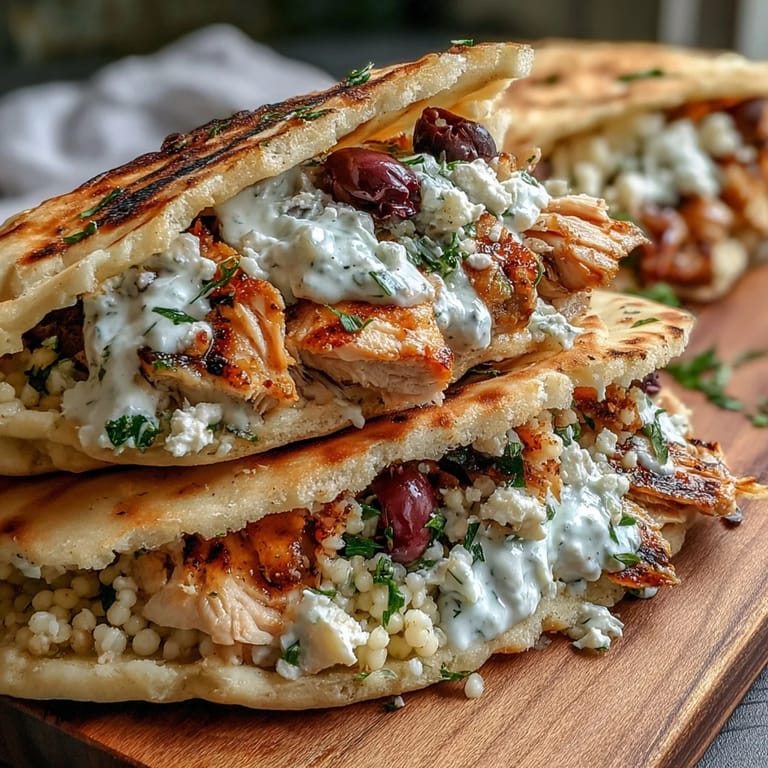
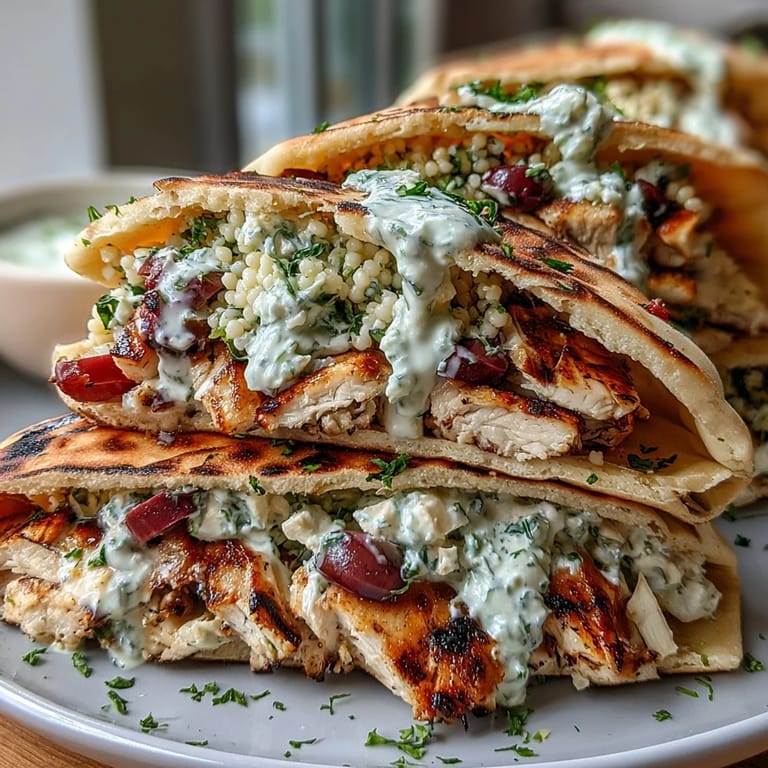
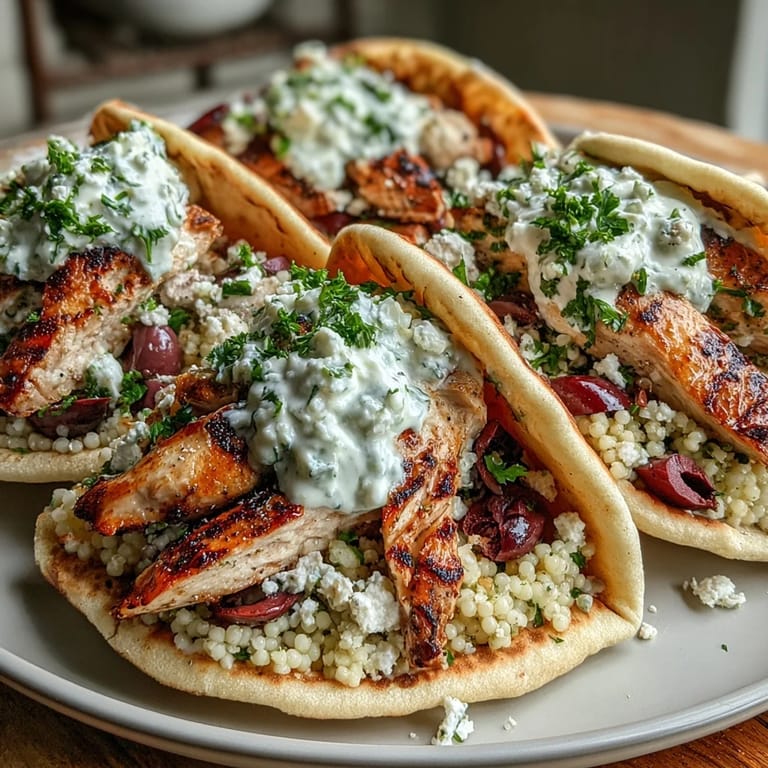
- Heat your pita breads in a dry pan or wrapped in foil in the oven for a minute or two so they become flexible but not brittle. Cut each pita in half to form two pockets, then layer couscous salad and sliced chicken inside, top with a generous dollop of tzatziki, and finish with extra crumbled feta and fresh parsley.
- Serve with intention:
- Eat these immediately while everything is still warm and the textures feel crisp, or wrap them tightly in foil for a portable meal that keeps well in a lunch bag.
 Save to Pinterest
 There's a quiet magic in watching someone discover that warm pita doesn't need to contain expensive ingredients to taste luxurious, that layering simple components with intention creates something that feels like self-care. This dish proved to me that Mediterranean cooking isn't about complexity, but rather respect for each ingredient's role in creating harmony on a plate.
Why This Tastes Like a Vacation
Something about the combination of bright lemon, briny olives, and cooling dill tricks your brain into believing you're somewhere warmer and less rushed than wherever you actually are. The flavors work together in a way that feels intentional but never fussy, as though you've been making this forever rather than discovering it today. Even in the middle of winter, this pita tastes like sunshine and Mediterranean breezes, which might be the highest compliment a dish can receive.
The Substitution Game
This recipe has built-in flexibility that makes it feel more like a template than a rigid formula, which means you can adapt freely without worrying you're doing something wrong. I've swapped quinoa for couscous when the pantry demanded it, added roasted chickpeas when I wanted vegetarian elegance, and even used leftover rotisserie chicken in moments of time poverty. The core concept remains intact as long as you respect the lemon-feta-dill trinity that gives this dish its soul.
Timing and Make-Ahead Strategy
The genius of this recipe lives in its flexibility across the timeline, allowing you to prep components hours in advance without sacrificing quality. The couscous salad actually improves when made ahead, the tzatziki needs refrigeration time anyway, and the chicken can be marinated the night before if your schedule demands it. Warm your pitas and assemble just before eating, which takes literally three minutes and ensures every element maintains its intended temperature and texture.
- Prep vegetables in the morning and store them separately in airtight containers so they stay fresh and crunch when you assemble everything later.
- Make tzatziki up to two days ahead, covering it tightly, as the dill flavor actually deepens in the refrigerator.
- Marinate chicken overnight if it helps your schedule, as extended time in the lemon-herb mixture only improves tenderness and flavor depth.
 Save to Pinterest
 This pita has become my answer to the question of what to cook when you want something that tastes like intention but takes less time than your commute home. It's uncomplicated in the best way possible, which makes it something you return to again and again.
Questions & Answers
- → How do I prevent pita pockets from tearing?
Gently warm the pita breads before assembling to make them more pliable. Cut carefully through the center to create pockets, and don't overfill them. If needed, use toothpicks to secure the openings.
- → Can I make the components ahead of time?
Yes! Marinate the chicken up to 24 hours in advance. The couscous salad and tzatziki can be prepared a day ahead and stored separately in the refrigerator. Assemble the pitas just before serving to prevent them from becoming soggy.
- → What's the best way to grill the chicken?
Use a grill pan or skillet over medium-high heat. Cook the marinated chicken for 6-7 minutes per side until it reaches an internal temperature of 165°F. Let it rest for 5 minutes before slicing to keep the juices locked in.
- → How do I make this vegetarian?
Simply omit the chicken and replace it with roasted chickpeas seasoned with oregano and lemon. You can also add grilled halloumi or extra falafel for protein. The couscous salad and tzatziki are naturally vegetarian-friendly.
- → Can I use regular couscous instead of pearl couscous?
Yes, regular couscous works well too. Just prepare it according to package instructions, which typically involves steeping in boiling water for 5 minutes rather than simmering. Pearl couscous provides a chewier texture that holds up better in the pita pockets.
- → How long will leftover tzatziki stay fresh?
Homemade tzatziki will stay fresh in an airtight container in the refrigerator for up to 4-5 days. The flavors actually develop and intensify over time. Give it a good stir before using leftovers, as some liquid may separate.