 Save to Pinterest
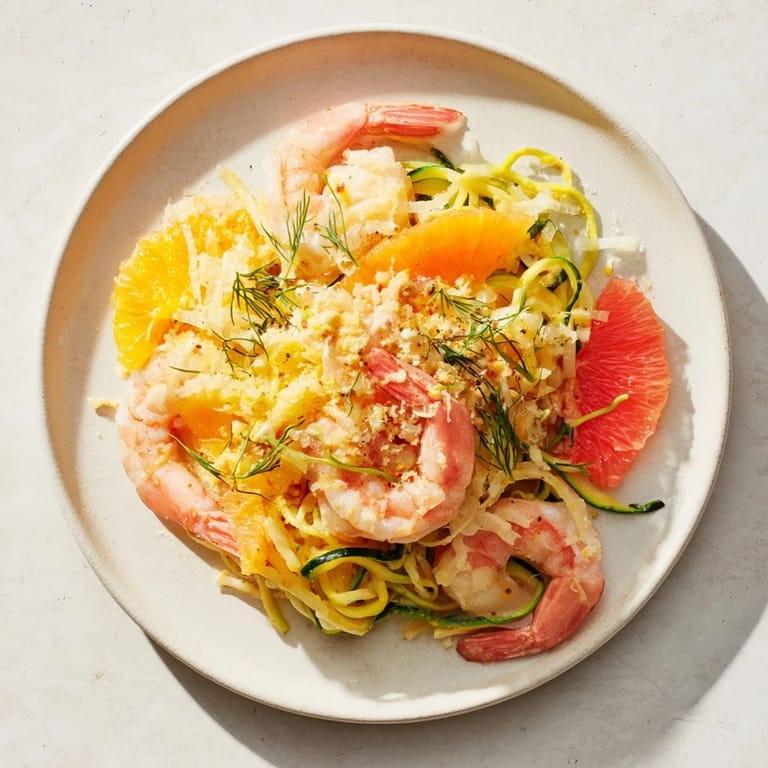
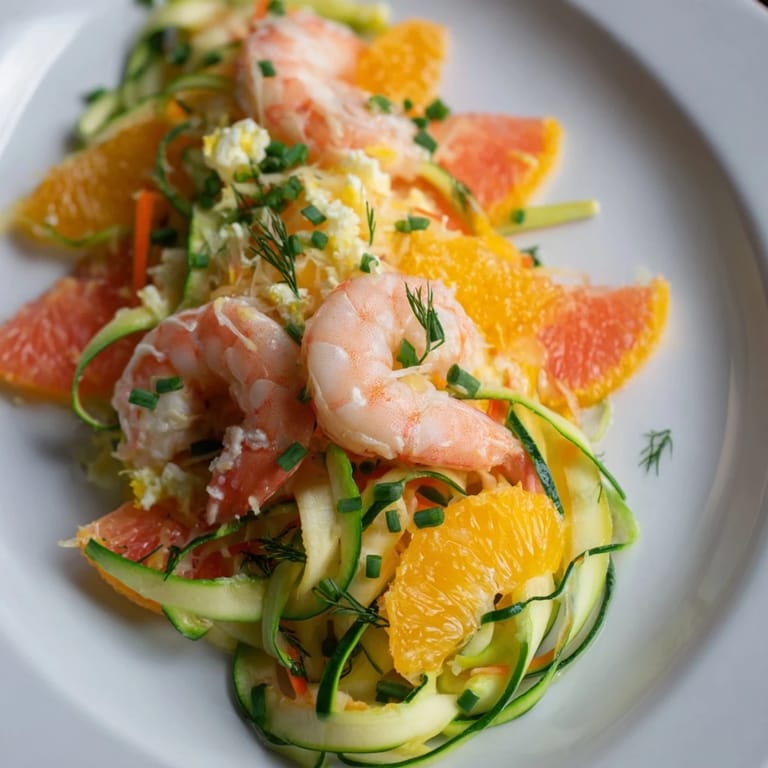
 I was standing in my kitchen on a Tuesday evening, watching the late sun paint everything gold through the window, when I decided to stop cooking what I was supposed to make and start building something wild instead. The shrimp was pink, the citrus was glowing in the bowl, and suddenly I wanted to create edible art—something that looked like an underwater garden right there on the plate. That moment of creative chaos turned into The Coral Reef, a dish that tastes as bright and alive as it looks.
I made this for four friends one summer evening, and what I remember most isn't the compliments—though there were plenty—but the way everyone's faces lit up when I pulled it from under the broiler. The cheese was still crackling slightly, the shrimp glistened with citrus juice, and the plate was honestly too beautiful to eat. Someone said it looked like a piece of the ocean, and that's when I knew it had a name.
Ingredients
- Large pink shrimp, 500 g (1.1 lb): Look for wild-caught if you can—they have better flavor and firmer texture than farmed, and peeling them yourself (if you're up for it) takes just a few minutes longer but feels more intentional.
- Medium oranges, 2 (plus 1 tsp zest): The acidity brightens everything, and fresh zest adds a fragrant punch that bottled zest can't match—grate it just before you use it.
- Small pink grapefruit, 1: The slight bitterness creates depth; if you can't find pink grapefruit, regular works fine, though you'll lose that beautiful coral color.
- Lemon juice, from 1 lemon: Fresh lemon is non-negotiable here—it seasons the shrimp as it cooks and keeps everything tasting bright.
- Gruyère cheese, grated, 120 g (4 oz): It bubbles into golden pools and adds a nutty richness that melts perfectly under the broiler.
- Ricotta cheese, 50 g (1.7 oz): Little creamy clouds of this dotted over the top create soft pockets that contrast with the sharp Gruyère.
- Small zucchini, 1: Ribbon them thinly with a mandoline or vegetable peeler—they cook in seconds and hold the arrangement together visually.
- Small carrot, 1: Julienne it into thin matchsticks for color and sweetness; they stay slightly crisp even after a quick steam.
- Fresh chives, 1 tbsp chopped: Add this right before serving so it stays green and vibrant—cooked chives taste like onion sadness.
- Fresh dill, 1 tbsp torn: Dill and seafood are old friends; tear it with your hands to bruise it slightly and release more flavor.
- Olive oil, 2 tbsp: Use something you actually like the taste of—quality matters when it's one of your few ingredients.
- Salt and freshly ground black pepper: Taste as you go; the citrus and cheese are salty, so hold back until the end.
Tired of Takeout? 🥡
Get 10 meals you can make faster than delivery arrives. Seriously.
One email. No spam. Unsubscribe anytime.
Instructions
- Set your stage:
- Turn your broiler to high and grab an oven-safe platter—this entire final assembly happens on one beautiful plate, so choose something worthy of the view.
- Season the shrimp:
- In a bowl, toss your shrimp with 1 tbsp olive oil, the lemon juice, salt, and pepper, letting them marinate for just a minute while you heat your skillet. The acid starts cooking them even before they hit the pan.
- Cook the shrimp fast:
- Get your skillet screaming hot over medium-high heat and sauté the shrimp for exactly 2 minutes per side—no more, or they'll turn into little rubber bands. You want them just barely opaque in the center with a slight golden edge.
- Wake up the citrus:
- While the shrimp rests, gently toss your orange and grapefruit segments with that orange zest and a tiny pinch of salt in a separate bowl. The salt draws out their juice and makes the flavors sing.
- Steam your vegetables tender:
- Steam your zucchini ribbons and carrot strips for 1 to 2 minutes until they're just barely tender but still have a whisper of crunch. Oversteamed vegetables are sad vegetables.
- Build the reef:
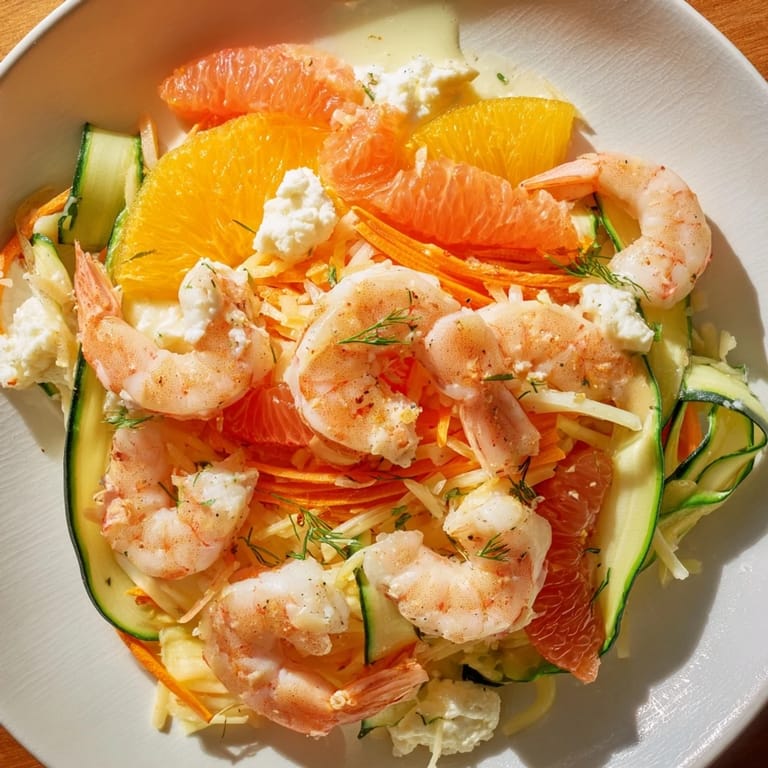
- Arrange the warm vegetables on your platter to form a base, then nestle the shrimp and citrus segments among them, layering colors like you're painting an underwater scene. There's no wrong way to do this—let your instincts guide the arrangement.
- Add the cheese magic:
- Sprinkle your grated Gruyère evenly over everything, then dot small spoonfuls of ricotta around the platter like white coral branches. This is where it stops being food and starts being art.
- Broil until bubbles:
- Slide the platter under the broiler for 2 to 3 minutes, watching carefully—you want the cheese bubbly and golden at the edges, not brown and bitter. The residual heat will finish cooking any vegetables that need it.
- Final flourish:
- Pull it out immediately, scatter your fresh chives and torn dill over top, drizzle with the remaining olive oil, and serve while the cheese is still warm and the plate is still stunning.
 Save to Pinterest
 There's something about putting a plate under the broiler and hearing that little sizzle as the cheese starts to bubble that makes you feel connected to real cooking. My friend reached over to take a photo before eating, and I realized that's when I knew this dish had become something special—when it stopped being just dinner and became a moment worth remembering.
Building Your Coral Reef
The beauty of this dish is that it's as much about the assembly as it is about the cooking. Think of it like setting a stage—the vegetables are your base, the shrimp and citrus are the performers, and the cheese is the spotlight. I learned to arrange everything while it's still slightly warm, because the vegetables hold their shape better and the colors stay vibrant. Take your time with the layering; this is your moment to be creative without any real consequences—worst case scenario, it tastes incredible even if it's not picture-perfect.
Timing Is Everything
The 20-minute prep and 15-minute cooking window feels tight until you realize that most of it is just waiting for water to steam or the broiler to do its thing. I like to have my mise en place ready—all ingredients prepped and in their spots—before I start heating anything. Once you understand the rhythm, you can make this dish on a weeknight and feel like you've created something special, which is exactly the point. The broiler is your secret weapon here; it does most of the heavy lifting in those final minutes.
Variations and Swaps
Gruyère is my first choice because of how it melts and browns, but I've made this with Emmental when that's what was in the fridge, and it's equally delicious—just slightly milder and less nutty. The beauty of a dish like this is that it welcomes small changes: add pomegranate seeds or thin watermelon radish slices for extra color and a different texture, swap the grapefruit for blood orange, or use bay scallops instead of shrimp if that's what calls to you. The core idea—bright citrus, tender seafood, melted cheese, fresh vegetables—stays the same, but the details can dance around based on what you love and what your market has today.
- If you can't find pink grapefruit, use regular grapefruit or add pomegranate seeds instead for that rosy color.
- Mozzarella works in a pinch, though it won't brown quite as beautifully as Gruyère does under the broiler.
- Serve with a crisp white wine—Sauvignon Blanc or a dry rosé both echo the citrus and feel like the ocean in a glass.
 Save to Pinterest
 This dish taught me that sometimes the best meals come from moments when you stop following the rules and start trusting your instincts. The Coral Reef sits on the table looking like an ocean treasure, and everyone who eats it gets to taste the story of that moment when I decided to play with my food.
Questions & Answers
- → What type of shrimp works best?
Large pink shrimp, peeled and deveined, are ideal for tender texture and subtle sweetness.
- → Can I substitute the Gruyère cheese?
Yes, Emmental or a bubbly mozzarella are good alternatives that melt well under the broiler.
- → How do I prepare the citrus components?
Segment oranges and grapefruit carefully to remove pith, then toss with zest and a pinch of salt for brightness.
- → What vegetables complement the dish?
Thin zucchini ribbons and julienned carrots steamed until tender create a colorful base mimicking a coral reef.
- → Any tips for serving?
Serve immediately after broiling to enjoy the bubbly cheese and fresh herb garnish at their best.