 Save to Pinterest
 The first time I encountered chimichurri was at a tiny Argentine steakhouse in Buenos Aires where the waiter brought out three different verde sauces, each more vibrant than the last. I watched diners drizzle it over everything from bread to grilled vegetables, and somewhere between that first bite of crusty baguette and my main course, I knew this herbaceous garlic punch needed to live in my kitchen forever. Back home, I started spooning it over roasted vegetables, then grilled fish, and eventually found myself tossing it with hot pasta and leftover grilled chicken one desperate Tuesday night. That impromptu dinner became the kind of meal that makes you pause between bites and wonder how something so simple can taste so alive.
Last summer my neighbor Sarah came over for what she thought was a quick weeknight catch up, but I was still marinating the chicken when she walked through the door. We ended up standing around the island, glasses of wine in hand, while I showed her how to properly mince parsley without bruising the leaves and why red wine vinegar makes all the difference in chimichurri. She texted me at midnight that night to say she and her husband had demolished the leftovers standing up in their kitchen because they couldnt be bothered to sit down. Now she makes a double batch of the sauce every Sunday just to keep in her fridge.
Ingredients
- Fresh flat leaf parsley: Flat leaf has more essential oils than curly parsley and holds up better when chopped, giving you that bright grassy punch that defines authentic chimichurri
- Fresh oregano: If you can only find dried, use about one third the amount since dried herbs are more concentrated in flavor
- Garlic cloves: Mince these very finely so they distribute evenly throughout the sauce rather than leaving someone with an overwhelming raw garlic bite
- Shallot: Shallots give you that subtle sweetness that onions sometimes lack, plus they break down beautifully in the acid of the vinegar
- Crushed red pepper flakes: Adjust this based on your heat tolerance, but dont skip it entirely because that gentle warmth balances the sharp herbs
- Extra virgin olive oil: Use a decent quality oil here since youll really taste it, and save your fancy finishing oil for another day
- Red wine vinegar: The acidity cuts through the rich oil and helps preserve the bright green color of the herbs
- Boneless skinless chicken breasts: Pound these slightly to an even thickness so they cook at the same rate and stay juicy throughout
- Smoked paprika: This adds a subtle depth and grill flavor even if you are cooking inside on a stovetop
- Penne rigatoni or spaghetti: Choose pasta with plenty of surface area and ridges to catch all that gorgeous sauce
Tired of Takeout? 🥡
Get 10 meals you can make faster than delivery arrives. Seriously.
One email. No spam. Unsubscribe anytime.
Instructions
- Make the chimichurri sauce:
- In a medium bowl, combine the chopped parsley, oregano, minced garlic, finely chopped shallot, red pepper flakes, olive oil, red wine vinegar, salt, and black pepper. Whisk everything together thoroughly and let it sit at room temperature while you prepare the rest of the dish, because those twenty minutes make all the difference as the flavors meld and the garlic mellows slightly.
- Season and cook the chicken:
- Rub the chicken breasts with olive oil, then sprinkle both sides generously with smoked paprika, salt, and pepper. Cook in a hot skillet or grill pan for about 6 to 7 minutes per side until beautifully charred outside and cooked through, then let the chicken rest for a few minutes before slicing.
- Boil the pasta:
- Bring a large pot of generously salted water to a rolling boil, add your pasta, and cook until just shy of al dente because it will finish cooking in the sauce later. Before draining, scoop out about half a cup of the starchy cooking water and reserve it.
- Combine everything:
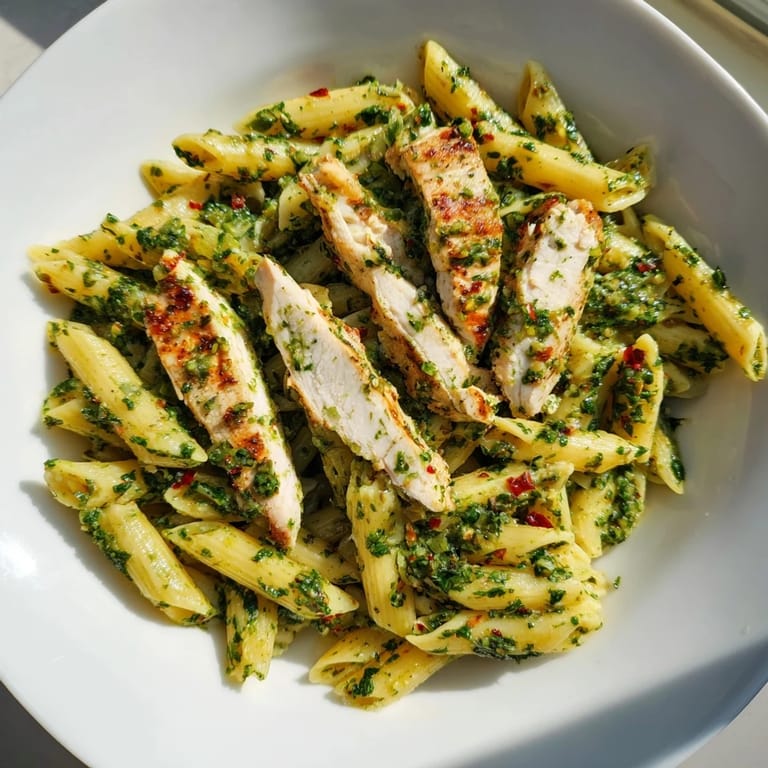
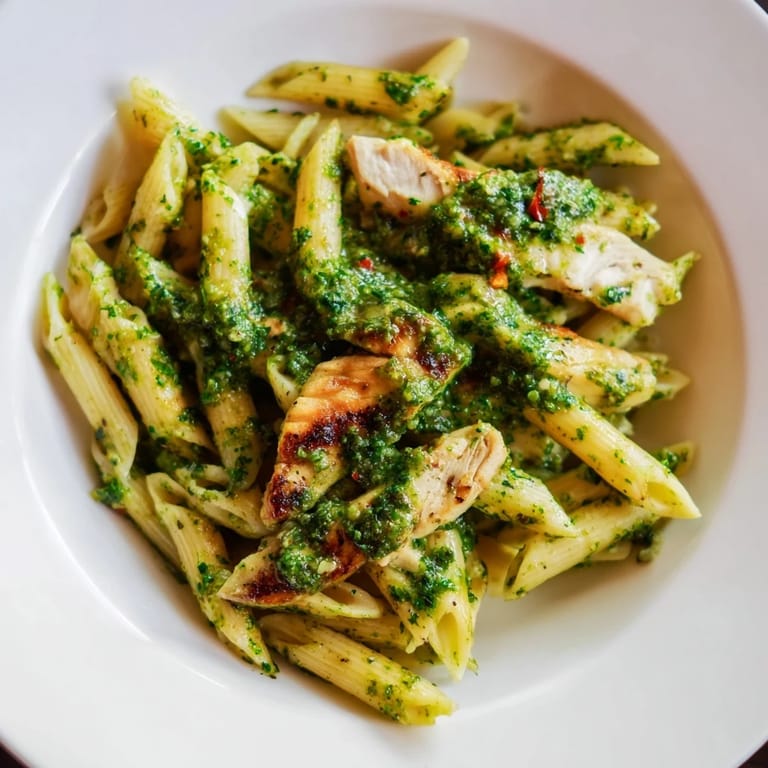
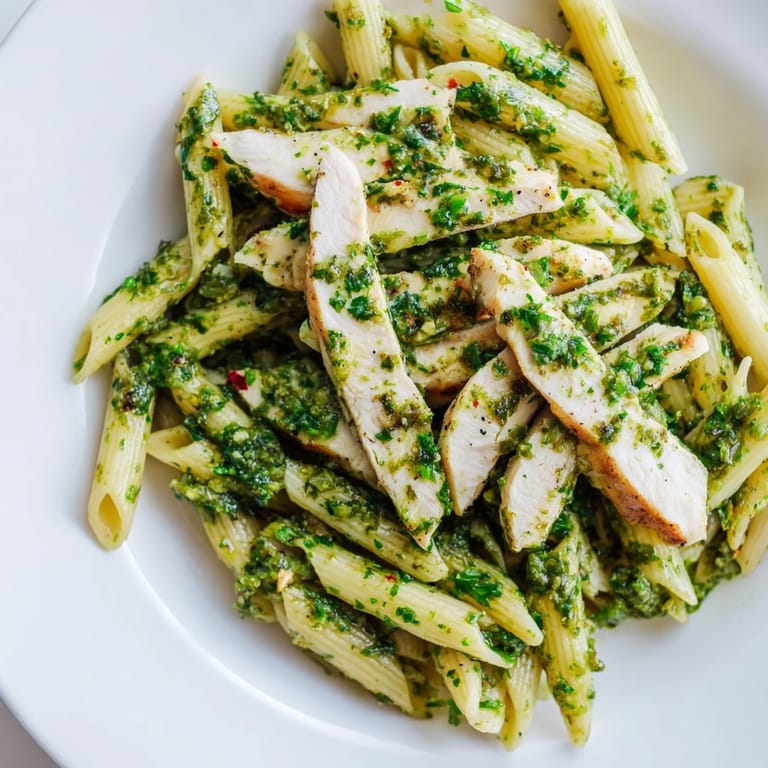
- Toss the hot drained pasta immediately with about two thirds of the chimichurri sauce, adding splashes of pasta water as needed to create a glossy emulsion that clings to every piece. Slice the rested chicken into strips and arrange over the pasta, then drizzle with the remaining chimichurri and any juices from the cutting board.
 Save to Pinterest
 My daughter announced at dinner one night that she wanted to learn how to cook something impressive for her college roommates, so we spent a Sunday afternoon with cutting boards covered in parsley and garlic everywhere. She called me two weeks later, barely able to contain herself, saying she had made this recipe and three people had asked for the recipe before even finishing their plates. Now she sends me photos every time she makes it, slightly different each time but always with that same proud grin.
Making It Your Own
Sometimes I swap in basil or cilantro for half the parsley when the garden is overflowing, and honestly, those variations have become family favorites in their own right. During winter when fresh herbs feel precious and expensive, I add a tablespoon of capers to the sauce for that same briny brightness that makes the original sing. My brother in law throws in a teaspoon of Dijon mustard to the sauce, and while it is not traditional, the way it emulsifies everything into a creamier consistency won me over after one bite.
Serving Suggestions
A crisp green salad with a citrus vinaigrette cuts through the rich sauce beautifully, and I love serving warm crusty bread on the side to mop up any chimichurri that escapes the pasta. For a lighter version, sometimes I skip the pasta entirely and serve the sliced chicken over roasted potatoes or zucchini noodles instead. When I want to make it feel extra fancy for guests, I sprinkle crumbled feta or grated Parmesan over the top, even though it is not traditional, because the salty creaminess plays so nicely with the herbs.
Storage and Reheating
The chimichurri sauce keeps beautifully in a sealed jar in the refrigerator for at least a week, and the solid olive oil might solidify slightly but will reliquify at room temperature. Cooked pasta tends to absorb sauce as it sits, so I always reserve a little extra chimichurri to refresh leftovers before serving. The chicken stays moist for three to four days when stored separately from the pasta, which makes this recipe perfect for meal prep Sundays.
- Microwave leftovers with a splash of water and covered loosely to prevent the pasta from drying out
- Never refrigerate the pasta and sauce together for more than two days or the pasta will become mushy
- If the sauce looks separated after refrigeration, give it a vigorous whisk and let it come to room temperature before using
 Save to Pinterest
 There is something deeply satisfying about a recipe that takes ordinary ingredients and turns them into something that feels like a revelation on the plate. This pasta has become my go to for feeding people because it never fails to make the kitchen smell incredible and everyone feel taken care of.
Questions & Answers
- → Can I prepare the chimichurri sauce in advance?
Yes, chimichurri actually improves when made ahead. Prepare it up to 2 days in advance and store in an airtight container in the refrigerator. This allows the flavors to develop and meld beautifully.
- → What pasta shapes work best for this dish?
Penne, rigatoni, and spaghetti all work wonderfully. Choose shapes that hold sauce well; tubular pastas like penne and rigatoni are particularly good at catching the chimichurri.
- → How should I cook the chicken to keep it juicy?
Pound the chicken breasts to even thickness before grilling, about 3/4 inch. Grill over medium-high heat for 6-7 minutes per side until cooked through. Don't skip the resting period—let it rest 5 minutes before slicing.
- → Can I use dried herbs instead of fresh?
While fresh herbs provide the best flavor, you can substitute dried. Use about one-third the amount of dried herbs. However, reserve some fresh parsley for garnish to maintain the sauce's vibrant character.
- → What makes this dish dairy-free?
This preparation relies on olive oil-based chimichurri sauce rather than cream or cheese. The herbaceous sauce coats the pasta beautifully without dairy, making it naturally suitable for dairy-free diets.
- → Can I meal prep this dish?
Cook the pasta and chicken ahead, then store separately. Keep the chimichurri in its own container. Combine when ready to serve for the best texture and flavor. Components stay fresh for up to 3 days.