 Save to Pinterest
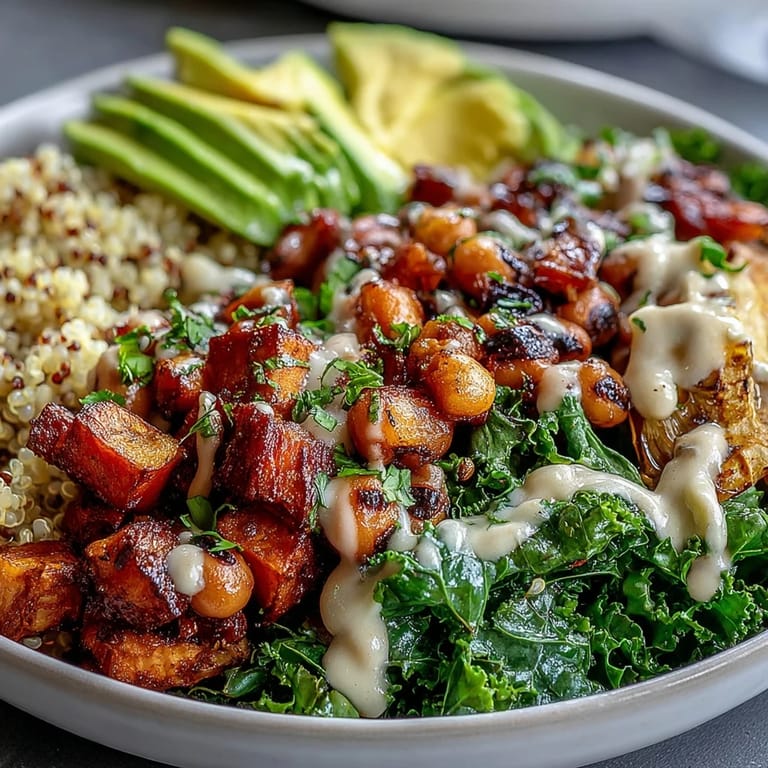
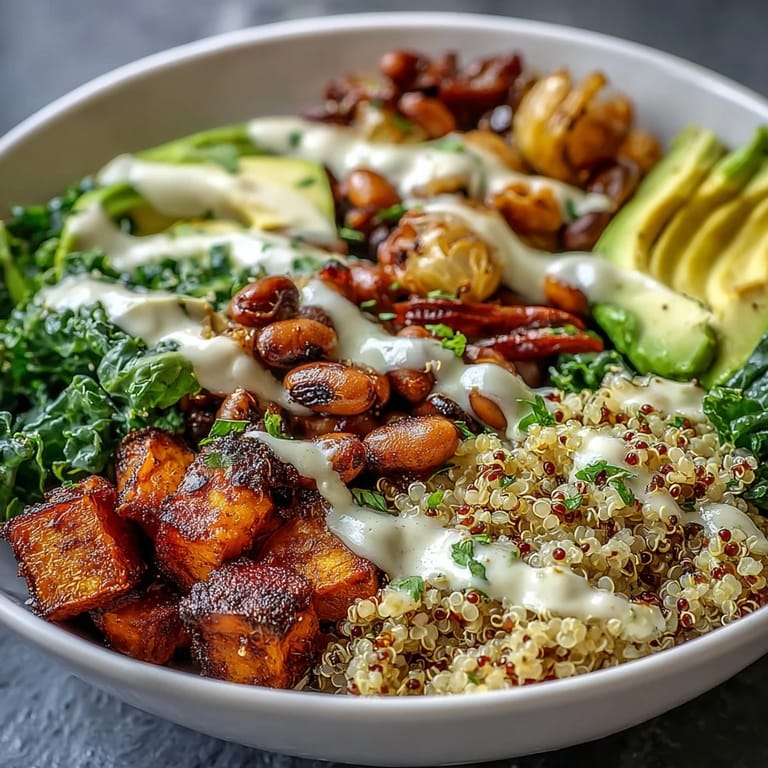
 There's something about assembling a bowl that feels less like cooking and more like creating. I was standing in my kitchen on a Tuesday afternoon, watching the late light hit my cutting board, when I realized I'd been eating the same lunch for weeks. That's when I started layering—quinoa first, then the warm spiced peas, roasted vegetables catching the golden hour glow, and that tahini dressing that somehow tastes like comfort and sophistication at once. This bowl arrived not from a recipe book but from listening to what my body actually wanted: nourishment that didn't feel like deprivation.
I made this for my neighbor who'd just started a new job and kept saying she didn't have energy to cook. She sat at my counter watching the roasted vegetables tumble golden from the oven, and by the time I drizzled that tahini sauce, she was asking for the recipe. Two weeks later she texted me a photo of her own bowl, and something about that small victory—her reclaiming her kitchen—stayed with me longer than any compliment.
Ingredients
- Quinoa (1 cup): This grain is a complete protein, meaning it has all nine amino acids—rinsing it removes the bitter coating, which makes a real difference in taste.
- Sweet potato (1 medium, diced): The natural sweetness balances the earthiness of the peas and becomes caramelized at high heat, almost like nature's candy.
- Red bell pepper (1 whole): Choose one that feels heavy for its size; it'll have more juice and sweetness when roasted.
- Red onion (1 small, sliced): The sharp bite mellows into something almost sweet after roasting, and the color bleeds beautifully into everything else.
- Zucchini (1 small, sliced): Slice it about a quarter-inch thick so it gets crispy edges but stays tender inside; thinner pieces turn to mush.
- Olive oil (2 tbsp for roasting): Don't skimp here—good oil makes the vegetables taste like themselves, just amplified.
- Smoked paprika (1/2 tsp): This spice adds depth without heat; it makes you wonder what that mysterious, delicious something is until you realize it's just paprika.
- Black-eyed peas (2 cups cooked): If using canned, rinse them thoroughly—this removes the excess sodium and the metallic aftertaste some people find off-putting.
- Ground cumin (1/2 tsp): A tiny amount goes a long way; toast it in the warm pan first if you want the flavor to bloom even more.
- Garlic powder (1/2 tsp): Fresh garlic would burn at this stage, but powder distributes evenly and adds savory warmth.
- Baby spinach or kale (2 cups): Spinach is milder and slightly sweet; kale is more assertive and holds its structure better against warm components.
- Avocado (1 whole): Slice it right before assembly so it stays bright green and creamy instead of browning.
- Fresh cilantro or parsley (2 tbsp): These aren't just garnish—they add a fresh contrast that wakes up your palate with each bite.
- Tahini (1/4 cup): Store-bought is fine, but give the jar a good shake first; the oil separates and you want it evenly distributed.
- Lemon juice (2 tbsp): Fresh lemon is non-negotiable here; bottled tastes flat and one-note by comparison.
- Maple syrup (1 tbsp): This balances the tahini's earthiness and the lemon's tartness into something that tastes intentional.
- Water (2 tbsp, plus more as needed): The dressing should be pourable but clingy; you're aiming for the consistency of heavy cream.
- Garlic clove (1 small, minced): Raw garlic in the dressing adds a small sharp note that brings everything together.
Tired of Takeout? 🥡
Get 10 meals you can make faster than delivery arrives. Seriously.
One email. No spam. Unsubscribe anytime.
Instructions
- Heat the oven and prepare your workspace:
- Set your oven to 425°F and line a baking sheet with parchment paper if you have it—it makes cleanup effortless and prevents sticking. Having everything within arm's reach before you start is the move that changes everything.
- Toss and roast the vegetables:
- Combine your sweet potato, bell pepper, onion, and zucchini in a large bowl with olive oil, smoked paprika, salt, and pepper until every piece is coated evenly. Spread them in a single layer on your baking sheet, then roast for 25 minutes, stirring halfway through, until the edges are golden and caramelized—you'll know it's right when your kitchen smells impossibly good.
- Start the quinoa while vegetables cook:
- Rinse your quinoa thoroughly under cold water (you'll see a lot of it go through the sieve), then combine it with 2 cups water and salt in a saucepan. Bring to a boil, then immediately reduce heat to low, cover with a lid, and let it simmer for 15 minutes without peeking.
- Let the quinoa rest and fluff:
- Remove the pan from heat and let it sit, covered, for 5 minutes—this absorbs any remaining liquid and prevents a mushy consistency. Fluff it gently with a fork; each grain should be separate and have a tender bite to it.
- Warm the black-eyed peas with spice:
- In a small skillet over medium heat, combine your drained peas with cumin and garlic powder, stirring occasionally for 3 to 4 minutes until warmed through and fragrant. This brief warming lets the spices bloom and wake up the peas' subtle, nutty flavor.
- Whisk together the tahini dressing:
- In a bowl, add tahini, lemon juice, maple syrup, water, minced garlic, and a pinch of salt, then whisk until smooth and creamy. If it's too thick, add water a tablespoon at a time until it drips from your whisk in a smooth ribbon.
- Assemble your bowls with intention:
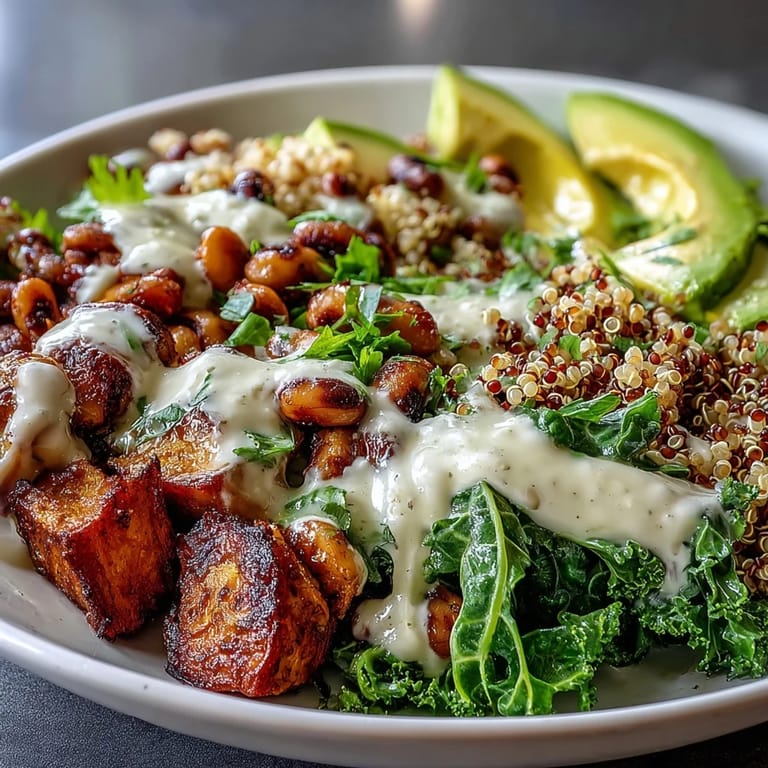
- Divide the fluffy quinoa among four bowls as your base, then layer on the warm roasted vegetables and spiced black-eyed peas. Top each bowl with fresh spinach or kale, then drizzle generously with tahini dressing.
- Finish with fresh elements and serve:
- Fan thin avocado slices over the top and scatter your chopped herbs across everything for color and brightness. Serve immediately while the warm components are still steaming and the fresh elements are crisp.
 Save to Pinterest
 My friend Marcus brought this bowl to a potluck and someone asked if it was from a restaurant. Watching him explain that he'd made it, that it was actually simple, that anyone could—there was a quiet pride in his voice that had nothing to do with cooking skill and everything to do with feeding himself well. That's what this bowl does: it makes you feel capable and nourished in equal measure.
Why This Bowl Works as a Meal
A proper bowl isn't just vegetables thrown together; it's a balance of starches, proteins, healthy fats, and something alive. Your quinoa and black-eyed peas together give you complete protein, so you're not hungry an hour later. The roasted vegetables add fiber and nutrients, the avocado brings satiety through fat, and the tahini dressing ties everything into something that tastes indulgent rather than virtuous. You're not eating this because you think you should; you're eating it because it tastes undeniably good.
Building Flavor Through Layers
The magic isn't in any single ingredient but in how they speak to each other. The earthiness of tahini needs the brightness of lemon to sing. The warm spices in the peas need the cool crispness of fresh herbs to feel balanced. The sweetness of roasted vegetables needs something slightly sharp—the raw garlic in the dressing, the bite of red onion—to feel complete rather than cloying. This is why assembly order matters; you're not just putting food in a bowl, you're composing something.
Customization That Actually Works
The skeleton of this bowl is flexible without becoming formless. You can swap the grain for farro, barley, or even rice if that's what you have. Different seasonal vegetables roast beautifully here—carrots, Brussels sprouts, cauliflower all work. The black-eyed peas are traditional but black beans, chickpeas, or lentils won't ruin anything. What matters is keeping the ratio: grain, protein, vegetables, greens, something creamy, something fresh.
- For extra texture, top with toasted pumpkin seeds or crispy roasted chickpeas that shatter between your teeth.
- If you're not vegan, a soft-boiled egg or crumbled feta transforms this into something different but equally satisfying.
- Make the tahini dressing a day ahead and store it in a jar; it actually tastes better after the flavors have time to meld.
 Save to Pinterest
 This bowl became a ritual for me, something I make when I need to remember that taking care of myself is as simple as choosing good ingredients and paying attention. It's food that loves you back.
Questions & Answers
- → Can I use canned black-eyed peas?
Yes, canned black-eyed peas work perfectly. Drain and rinse them thoroughly before seasoning with cumin and garlic powder. One 15-ounce can equals approximately 1½ cups cooked peas.
- → What grain alternatives work well?
Brown rice, farro, bulgur, or millet make excellent substitutes for quinoa. Adjust cooking time according to package directions. Pre-cooked grains can also shorten preparation time significantly.
- → How long do leftovers keep?
Store components separately in airtight containers for up to 5 days. Keep the dressing in a separate jar and assemble bowls fresh when serving. The roasted vegetables and quinoa reheat beautifully in the microwave or can be enjoyed at room temperature.
- → Is the tahini dressing essential?
The tahini dressing provides creamy richness and ties all elements together, but you can substitute with cashew cream, avocado dressing, or a simple lemon-herb vinaigrette if tahini isn't available or preferred.
- → Can I roast different vegetables?
Absolutely. Brussels sprouts, carrots, cauliflower, or butternut squash all roast beautifully alongside or instead of the suggested vegetables. Cut pieces uniformly for even cooking, adjusting roasting time as needed.
- → Is this bowl protein-dense enough for a main meal?
With 14 grams of protein per serving from black-eyed peas and quinoa, this bowl offers substantial protein. Adding toasted nuts, seeds, or hemp hearts can easily boost protein content further if desired.