 Save to Pinterest
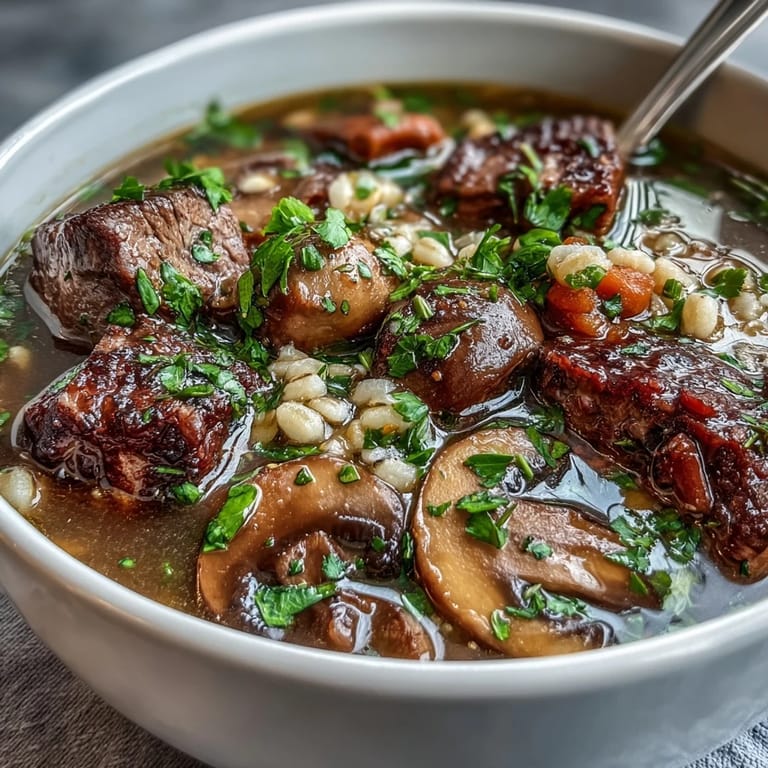
 The aroma of simmering beef and barley soup always transports me back to my grandfather's kitchen. Standing on a stepstool beside him one frigid January afternoon, I watched him brown cubes of beef chuck until they developed that perfect mahogany crust. "The secret's in the sear," he'd whisper conspiratorially, as if sharing classified information. That day, wrapped in the steam and scent of mushrooms and herbs, I learned that patience transforms simple ingredients into something extraordinary.
Last winter, when my friend Sarah was recovering from surgery, I brought over a container of this soup and watched her eyes close in appreciation at the first spoonful. We sat at her kitchen table as snow collected on the windowsill, talking about nothing important while steam rose from our bowls. Sometimes the best medicine isn't medicine at all but a hearty soup that warms you from the inside out.
Ingredients
- Beef chuck roast: Look for well-marbled pieces with some fat running through them for the most tender results after the long simmer.
- Baby bella mushrooms: I once tried substituting white button mushrooms and while still good, the baby bellas bring a deeper earthy flavor that anchors the whole soup.
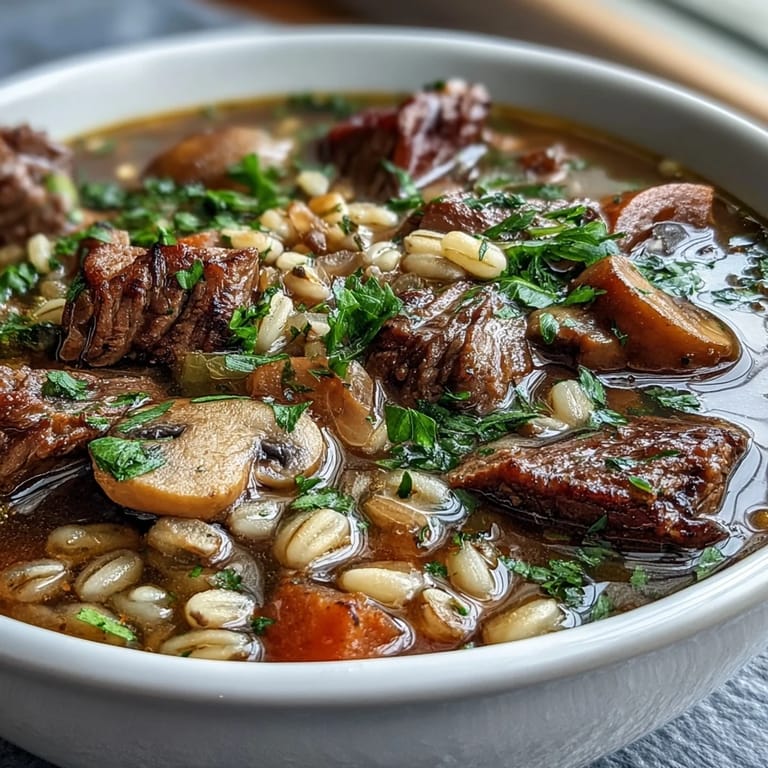
- Pearl barley: Its nutty chew creates the perfect textural contrast to the tender beef, and it holds its structure even when reheated the next day.
- Pancetta: This Italian cured pork adds a subtle smokiness that bacon sometimes overwhelms, but either works beautifully.
- Tomato paste: Just a couple tablespoons deepen the color and provide an umami foundation that ties everything together.
Tired of Takeout? 🥡
Get 10 meals you can make faster than delivery arrives. Seriously.
One email. No spam. Unsubscribe anytime.
Instructions
- Crisp the pancetta:
- Heat olive oil in your Dutch oven until it shimmers, then add diced pancetta and listen for that satisfying sizzle. Youll know its ready when the kitchen fills with a smoky-sweet aroma and the pieces turn golden brown.
- Sear the beef:
- Season your beef chunks generously before adding them to the hot pot. Resist the urge to stir constantly let them develop a rich brown crust that will flavor the entire soup.
- Build the flavor base:
- When the onions, carrots and celery hit the pot, youll hear them sigh as they release their moisture. This is when the kitchen really begins to smell like comfort.
- Brown the mushrooms:
- Give the mushrooms space and time to release their liquid and then brown. The transformation from springy white undersides to caramelized edges makes all the difference.
- Simmer to perfection:
- Once everything comes together, let the pot bubble gently for its full cooking time. The barley will gradually plump and soften while the beef becomes fork-tender.
 Save to Pinterest
 My neighbor Carlo knocked on my door last autumn following the scent of this soup down the hallway of our apartment building. He stood there holding an empty bowl and a hopeful expression. We ended up sharing the meal alongside a bottle of Chianti he ran back to get, trading stories about our grandmothers cooking over steaming spoonfuls. Now its become our monthly tradition whenever the temperature drops below freezing.
Make-Ahead Magic
This soup actually improves after a night in the refrigerator, when all the flavors have had time to mingle and deepen. The barley will continue to absorb liquid, so when reheating, I often add an extra splash of broth to loosen things up. Something magical happens during that rest period the beef becomes even more tender, and the broth takes on a silky quality that wasnt there the first day.
Variations Worth Trying
Some winter evenings, when I want to switch things up, Ill add a splash of red wine to the pot after browning the mushrooms. The alcohol cooks off, leaving behind a subtle complexity that plays beautifully with the beef. Another worthy experiment was adding a parmesan rind to simmer with the broth, which contributed a subtle nutty undertone that complemented the barley. My vegetarian friends enjoy this with extra mushrooms and vegetable broth instead of beef.
Serving Suggestions
While this soup is certainly hearty enough to stand alone as a meal, Ive found certain accompaniments elevate the experience even further. A slice of crusty sourdough bread for dipping into that rich broth turns dinner into an event rather than just sustenance.
- Serve with a simple green salad dressed with a bright vinaigrette to cut through the richness.
- A glass of medium-bodied red wine like Merlot or Chianti complements the earthiness of the mushrooms.
- For extra indulgence, top each bowl with a small dollop of sour cream that slowly melts into the broth.
 Save to Pinterest
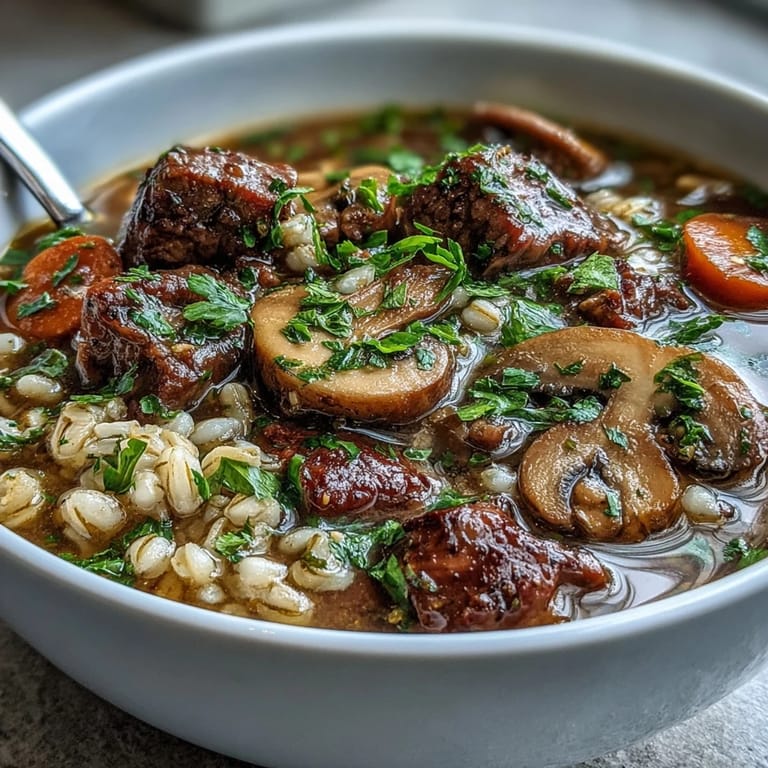
 This beef and barley soup has carried me through countless winter evenings, becoming more than just a meal but a ritual of comfort. Theres something deeply satisfying about creating something so nourishing with your own hands, especially when shared with those you care about.
Questions & Answers
- → Can I make this soup in a slow cooker?
Yes. Brown the beef and pancetta first, then transfer everything to your slow cooker. Cook on low for 6-7 hours or high for 3-4 hours until beef is tender and barley is fully cooked. Add the barley during the last 2 hours so it doesn't become mushy.
- → What cut of beef works best?
Chuck roast is ideal because it becomes tender during long cooking. Other tough cuts like brisket or round work too. Avoid lean cuts like sirloin—they'll become tough and dry. Cut into ½-inch cubes for even cooking.
- → Can I freeze this soup?
Absolutely. Cool completely, then freeze in airtight containers for up to 3 months. The barley may absorb more liquid when reheated, so add extra broth or water when warming up. Thaw overnight in the refrigerator before reheating.
- → How do I make this gluten-free?
Replace pearl barley with brown rice, quinoa, or gluten-free grains. Adjust cooking time accordingly—rice typically needs 45-60 minutes. Also ensure your beef broth is certified gluten-free, as some brands contain additives with gluten.
- → Why should I brown the meat first?
Browning creates a Maillard reaction, adding deep, caramelized flavors that you can't get from simmering alone. Those browned bits on the bottom of the pot (the fond) dissolve into the broth, creating a rich, complex base. Don't skip this step—it makes a huge difference.
- → Can I use fresh herbs instead of dried?
Yes. Use three times the amount of fresh herbs since they're less potent than dried. Add fresh thyme and rosemary during the last 30 minutes of cooking so they retain their flavor. Fresh parsley is best added as a garnish just before serving.